Welcome back, fellow leaf peepers! After a long, warm start to the season, our patience has finally been rewarded. In the last two weeks, a critical drop in night temperatures has accelerated the color change, moving the city past the initial “Minimal” phase.
We are officially in the Partial Color stage, where the leaves have traded their subtle summer yellows for prominent streaks of gold, orange, and early crimson. This is the perfect weekend for scouting!
NYC Foliage Status
SPOTLIGHT: MODERATE / APPROACHING PEAK
These areas are ahead of the city average due to elevation or microclimates (ideal for a day trip!):
Central Park (North Woods/Ramble): Isolated pockets, particularly older trees and those in the quieter, northern sections (like the Ramble or North Woods), are displaying intense yellows and some brilliant reds.
Upper Hudson Valley (Day Trip): Areas like Dutchess and Westchester counties are seeing 40% to 50% change, showing bright reds, yellows, and oranges, signaling a near-peak window.
CURRENT CITY STATUS: Partial Color / Early Moderate
As of October 15th, the bulk of New York City is showcasing Partial Color, marking an exciting progression from the greens of September. Overall color change across the five boroughs is estimated to be between 25% and 50%, with the city center lagging slightly behind the surrounding parks.
The current color palette is dominated by yellows and golds, largely from species like Ash and Honey Locust trees, which are quickly reaching their golden prime. However, you can now find stunning, isolated patches of red, particularly from the early-turning Red Maples in low-lying, well-watered areas of Central Park and Prospect Park.
The city is currently in a transitional phase: the majority of trees are changing, but the famous, uniform Peak of scarlet and bronze is still several weeks away, typically arriving between late October and early November. Now is the time to track those early indicators and plan your visits!
The city’s official Peak Foliage is still expected later in the month, generally from late October to early November. This weekend marks the best time for our early indicators (Maples and Ash), giving you ample time to plan for the full show!
Get your coziest layers ready—the cool air and color are here!
Maple Trees
Maple trees are a common sight in the Northeast and are known for their vibrant fall foliage. But with so many different types of maple trees, how can you tell them apart?
One of the easiest ways is to look at their distinctive shapes.

Another common maple tree is the Norway maple, an invasive species native to Europe that was first introduced to North America in the mid-18th century. I often mistook Norway maples for sugar maples or red maples, but there are a few key differences to look for:
Leaf edges: Red maples have jagged sawtooth edges, while Norway and sugar maples have smooth-edged leaves.
Leaf density: Norway maples have denser foliage.
Seed dispersal: Sugar and red maples produce seeds in early spring, while Norway maples spread their seeds in the fall.
Leaf lobes: Red maple leaves typically have three lobes, while Norway and sugar maple leaves tend to look five-lobed.

Foliage outside NYC
While the city’s foliage is still catching up, now is the perfect time to explore the vibrant colors beyond its borders. Choosing the best location for leaf-peeping can be a daunting task, but fortunately, there are many resources to help you make an informed decision.
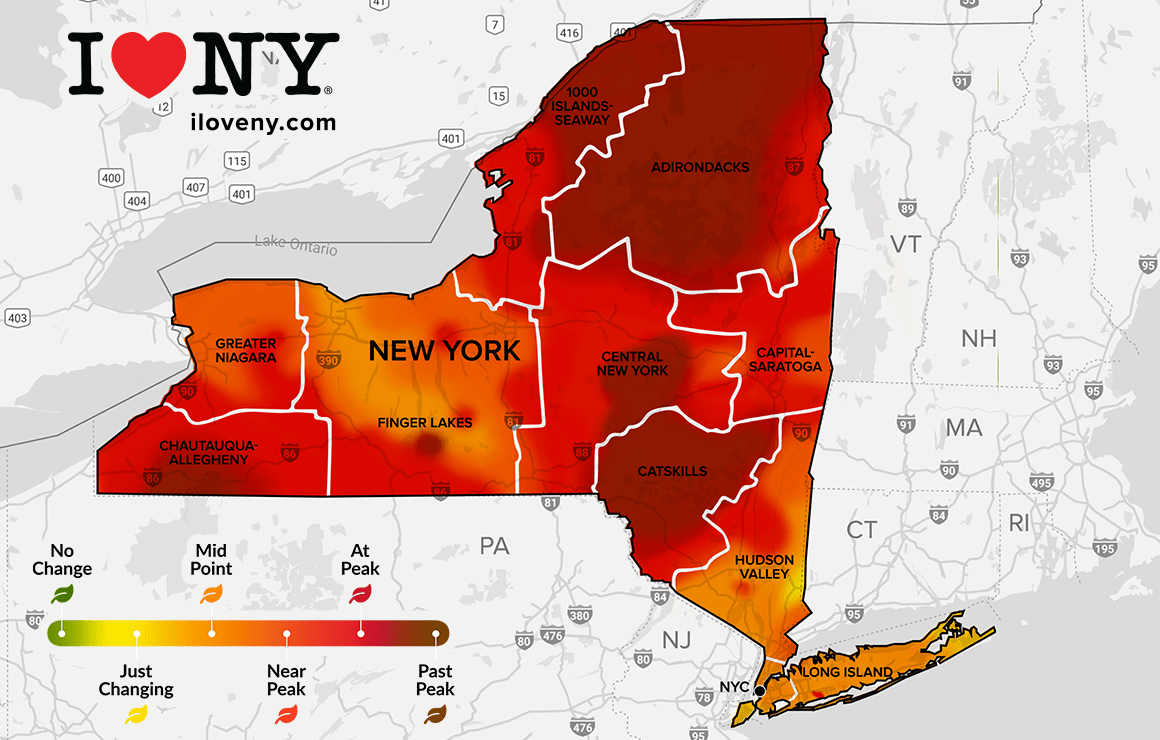
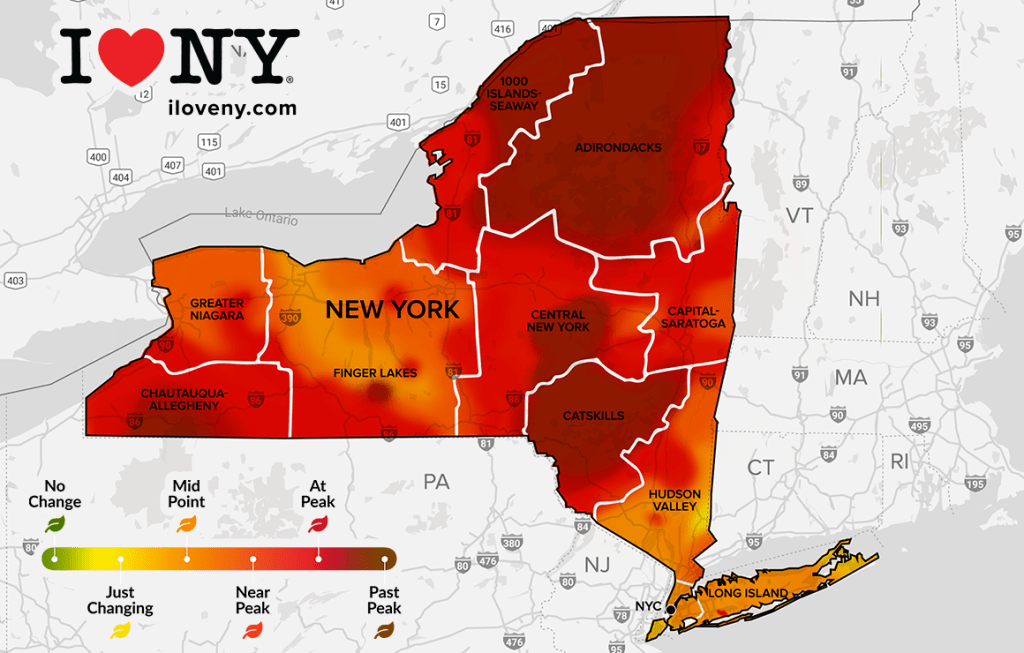
- NY – I love NY foliage report – This popular IG page with a website gives a weekly report on the foliage progression around NY state. Reports are obtained from volunteer field observers and reflect expected color conditions for the coming weekend. Reports are issued every Wednesday afternoon.
- Maine – If you want to visit Maine this fall, you should check out the state’s official website, which gives the foliage report for Maine state. The report covers seven different zones and has six levels of foliage statues.
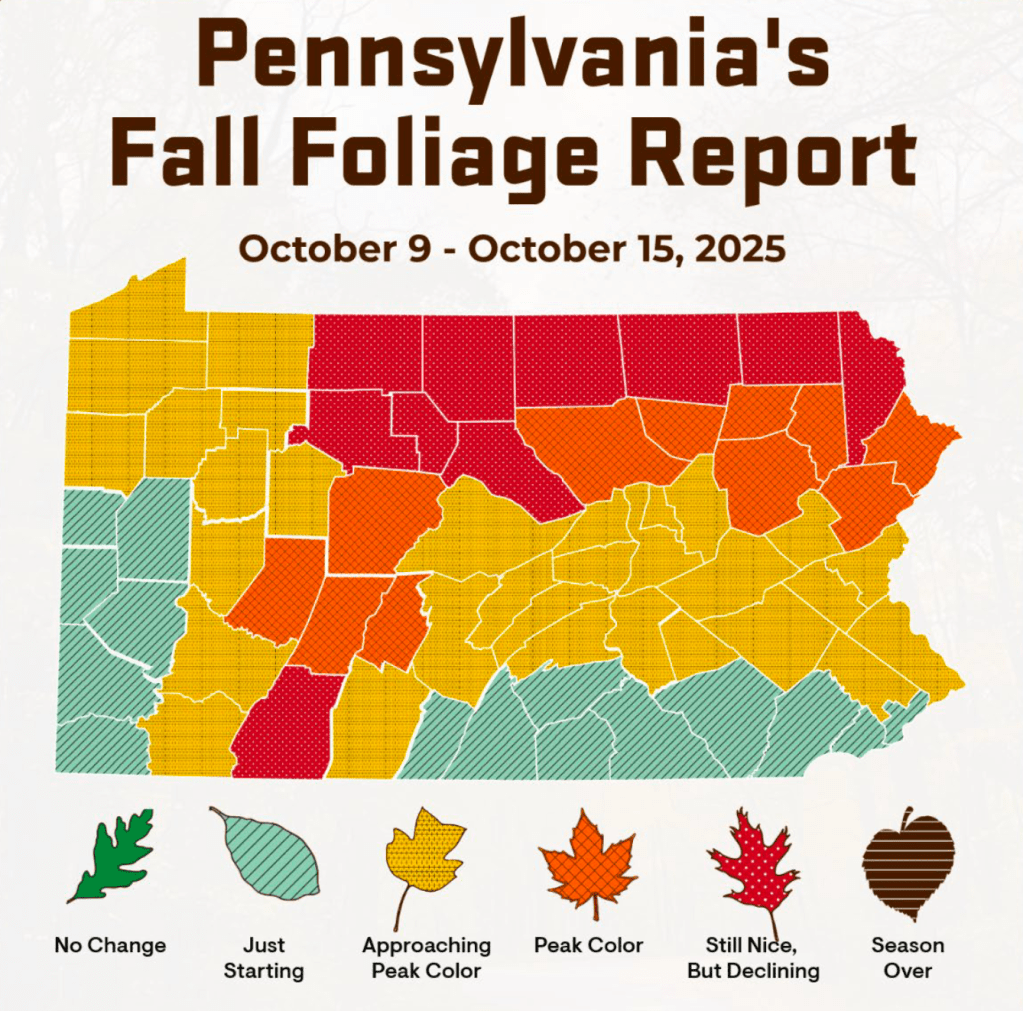
- Pennsylvania – PA DCNR follows the fall season with complete reports with all PA regions. Like Maine, they also set 6 different levels of foliage progression.
- Vermont – Vermont’s official website provides foliage reports based on the Vermont Department of Tourism and volunteer members of their “Leaf Squad” from around the state. Their foliage levels are simple and have only four stages.
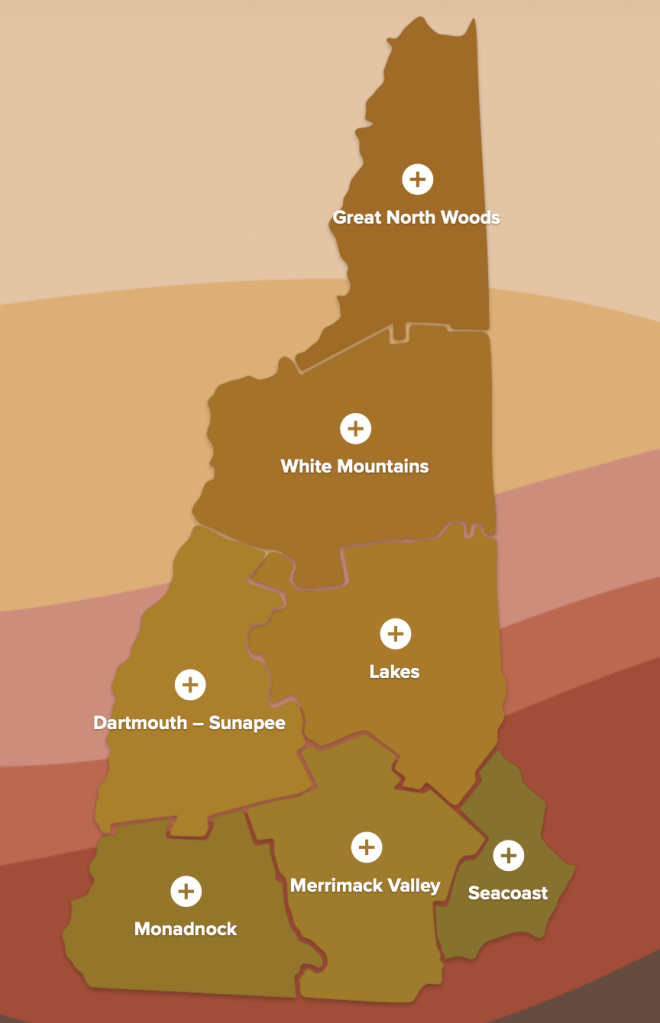
- New Hampshire – VisitNH website gives detailed foliage reports. While others use maps to visualize the foliage progression around the state, NH provides information about the seven zones.


Visit our Instagram and watch our stories to get more live updates.
 NYC SEASON WATCH