November 09, 2025

After a warm start to the season, our patience has finally paid off. Over the past two weeks, a significant drop in nighttime temperatures has sparked a rapid color shift, propelling the city beyond the “Minimal” phase.

We’re now officially in the Peak Color stage, where the leaves have exchanged their subtle summer greens for vibrant streaks of gold, orange, and early crimson. This weekend is the perfect time to head out and witness the city’s stunning autumn transformation.!
NYC Foliage Status

SPOTLIGHT: PEAK COLOR
These areas are ahead of the city average, thanks to elevation or microclimates—perfect for a day trip!

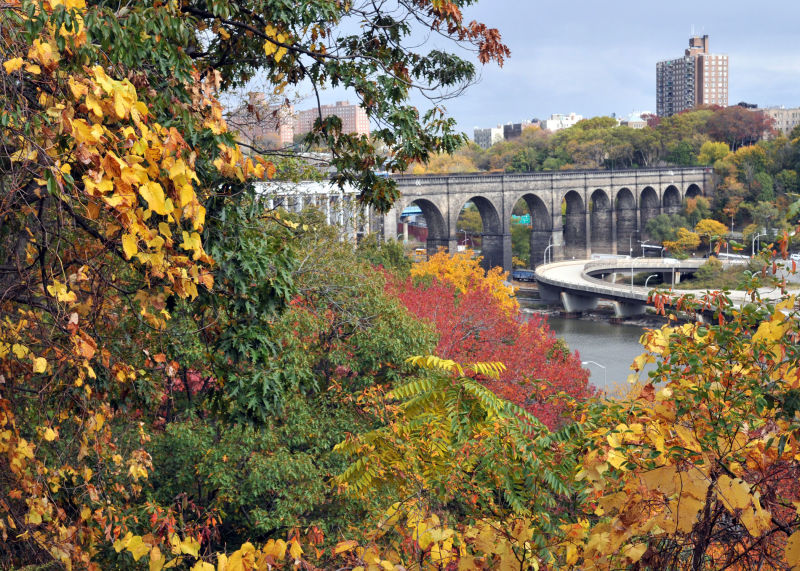
  • Central Park (North Woods/Ramble): Isolated pockets, particularly older trees and those in the quieter, northern sections (like the Ramble or North Woods), are showcasing brilliant yellows and vibrant reds.
  • Upper Hudson Valley (Day Trip): Areas like Dutchess and Westchester counties are now seeing 60% to 75% color change, with bright reds, yellows, and oranges, signaling the peak of the season.

CURRENT CITY STATUS: Peak Color
As of November 9th, New York City is officially in the Peak Color stage, with the majority of trees now fully transformed from their summer greens to vivid hues of yellow, orange, and red. The overall color change across the five boroughs is between 75% and 85%, with the parks leading the charge and the city center catching up.

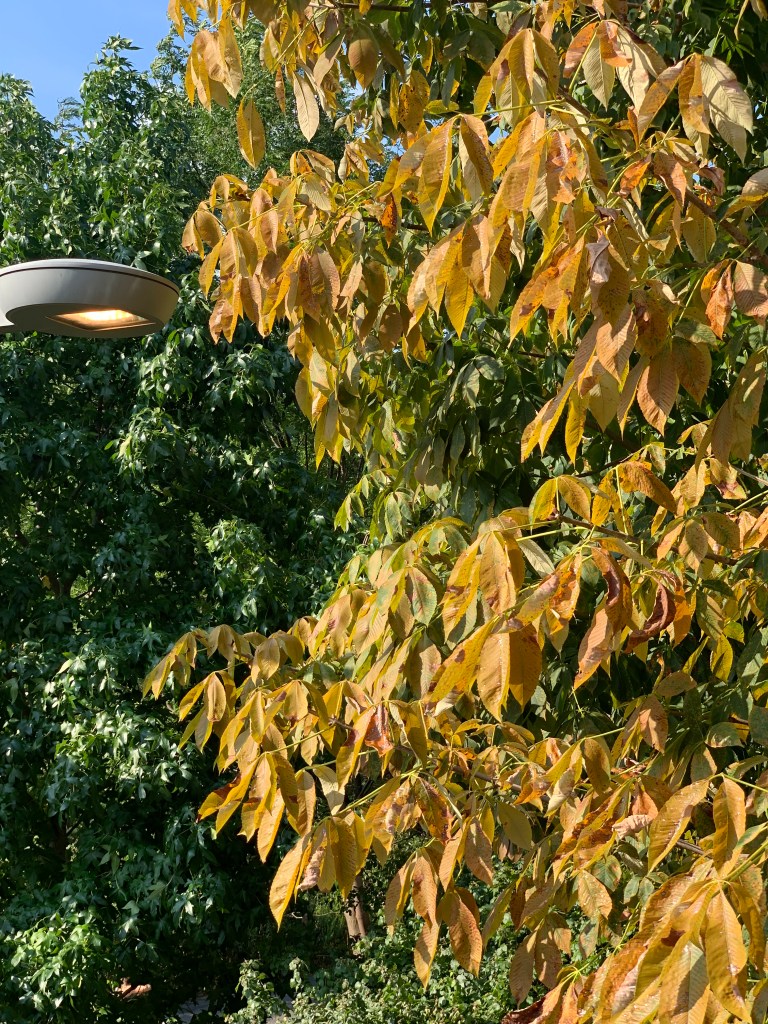
The city’s color palette is now dominated by bright yellows and golds, thanks to species like Ash and Honey Locust trees, which are at their golden prime. Scattered throughout, you’ll find striking patches of red, particularly from the early-turning Red Maples in low-lying, well-watered areas like Central Park and Prospect Park.

We’re now in full transition: the city is displaying its iconic Peak Foliage of scarlet, orange, and golden tones, which typically lasts through late October to early November. If you’ve been waiting for the best fall views, now is the time to get out there!

Enjoy the full show while it lasts—these peak colors won’t stick around for long!

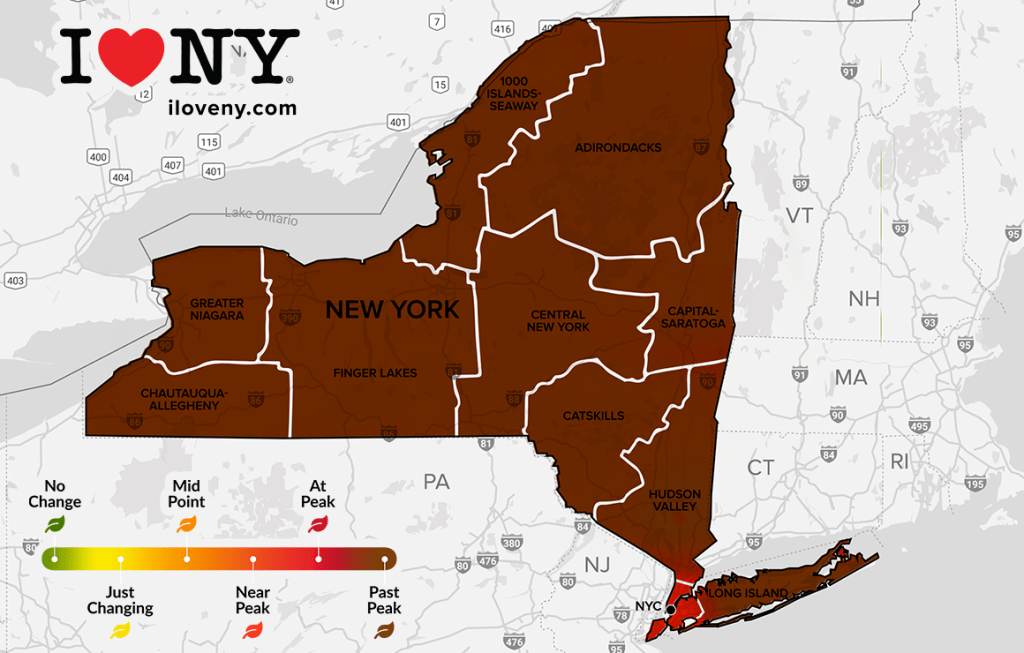
Foliage outside NYC

While the city’s foliage is still catching up, now is the perfect time to explore the vibrant colors beyond its borders. Choosing the best location for leaf-peeping can be a daunting task, but fortunately, there are many resources to help you make an informed decision.

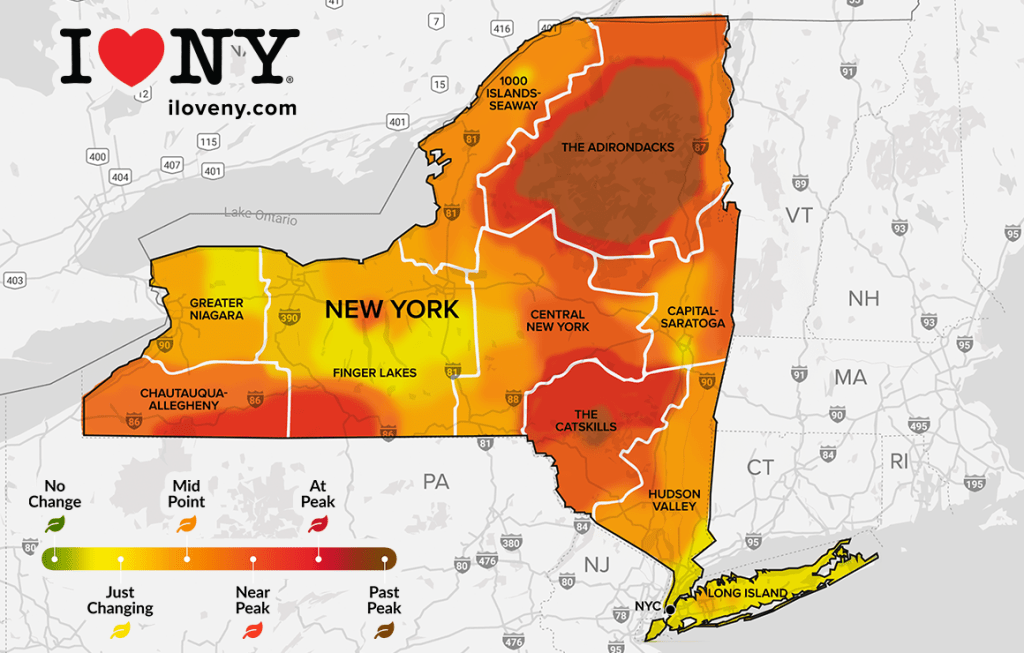
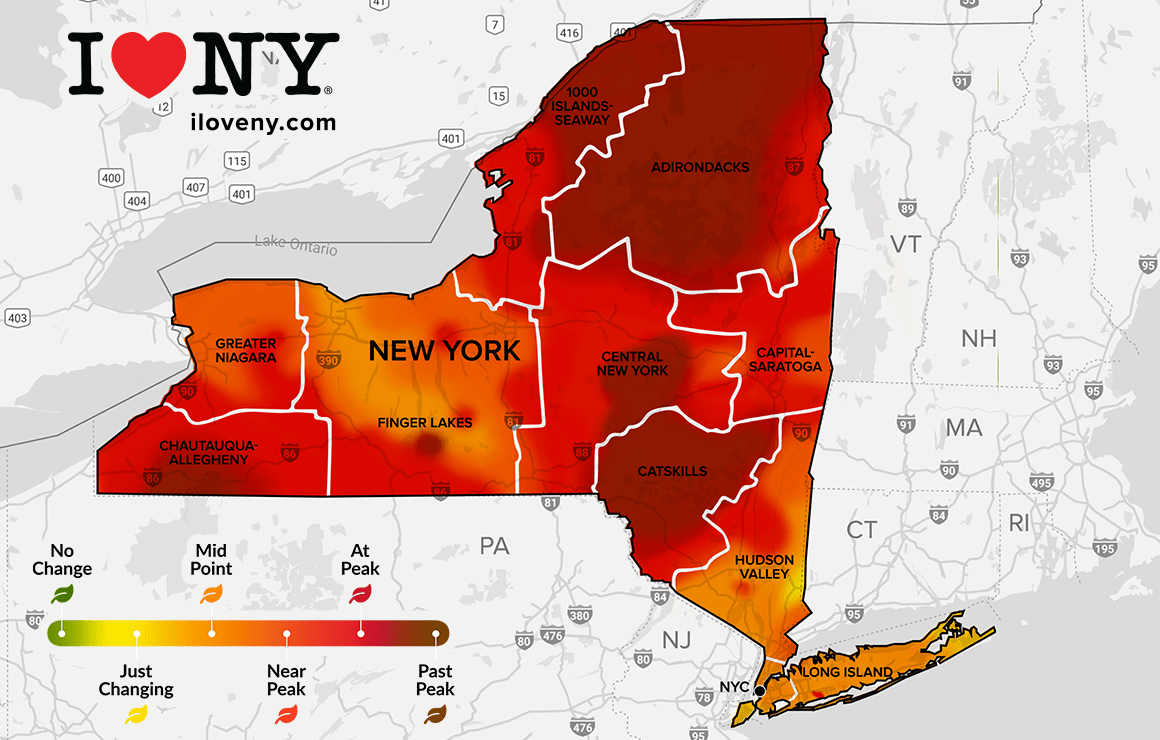
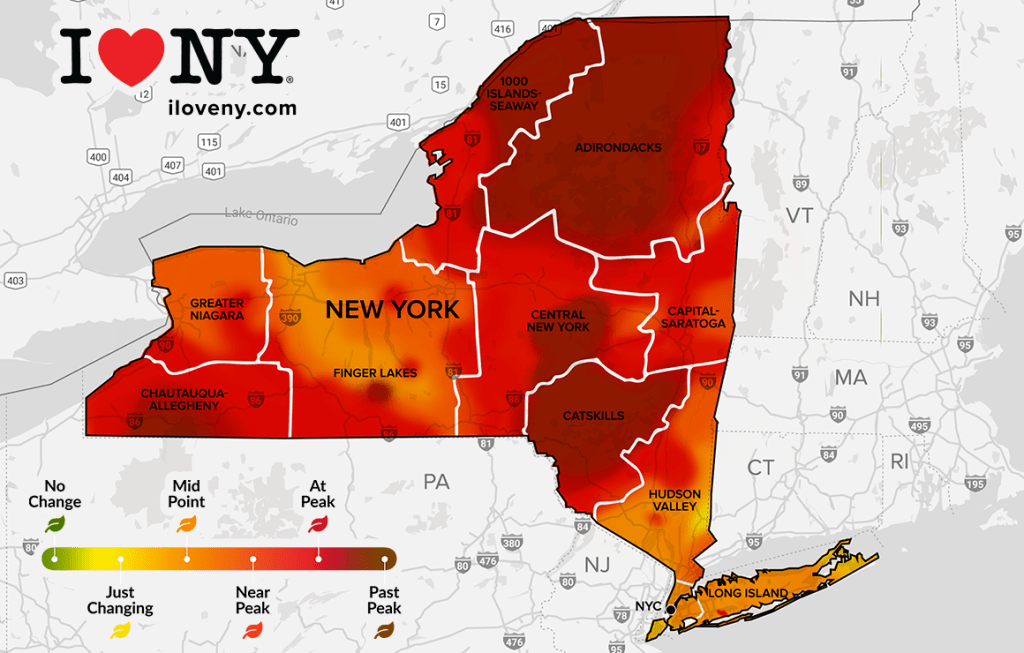
  1. NY – I love NY foliage report – This popular IG page with a website gives a weekly report on the foliage progression around NY state. Reports are obtained from volunteer field observers and reflect expected color conditions for the coming weekend. Reports are issued every Wednesday afternoon.
  2. Maine – If you want to visit Maine this fall, you should check out the state’s official website, which gives the foliage report for Maine state. The report covers seven different zones and has six levels of foliage statues.
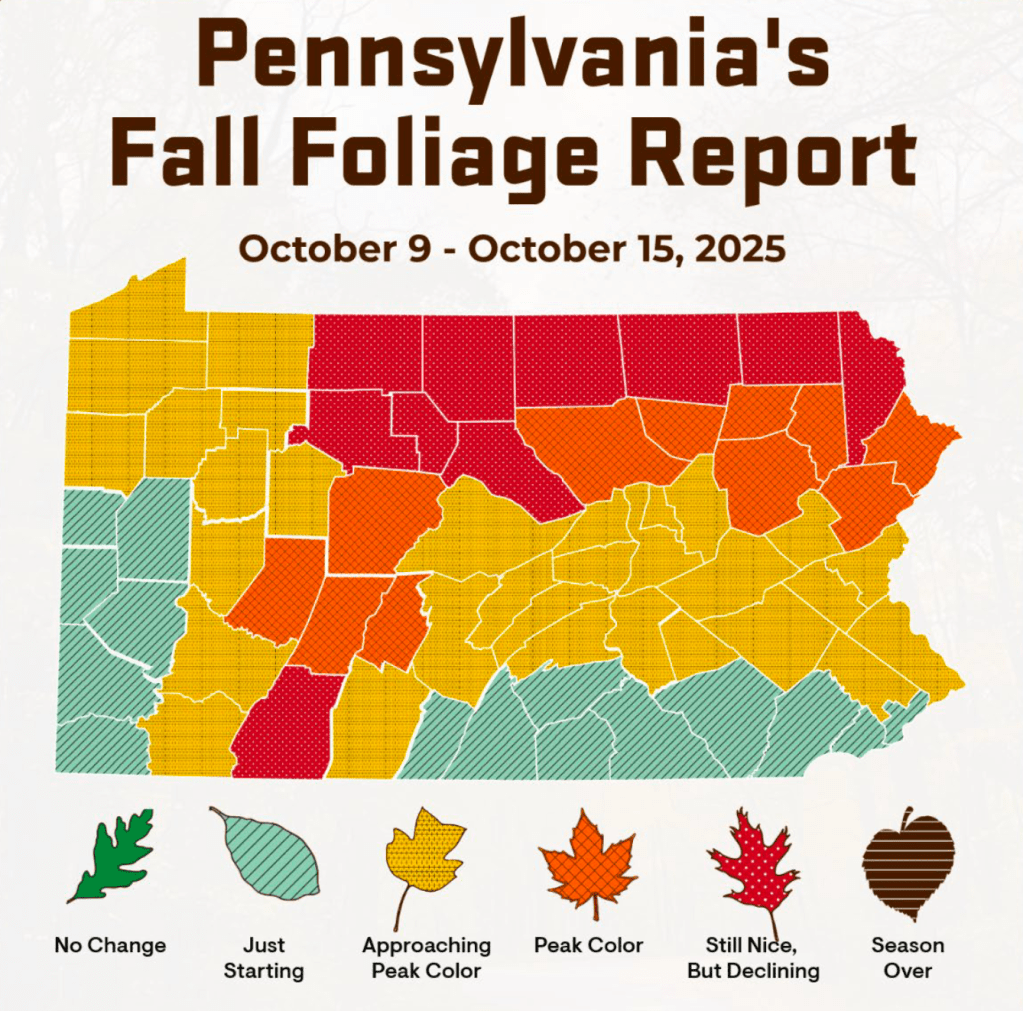
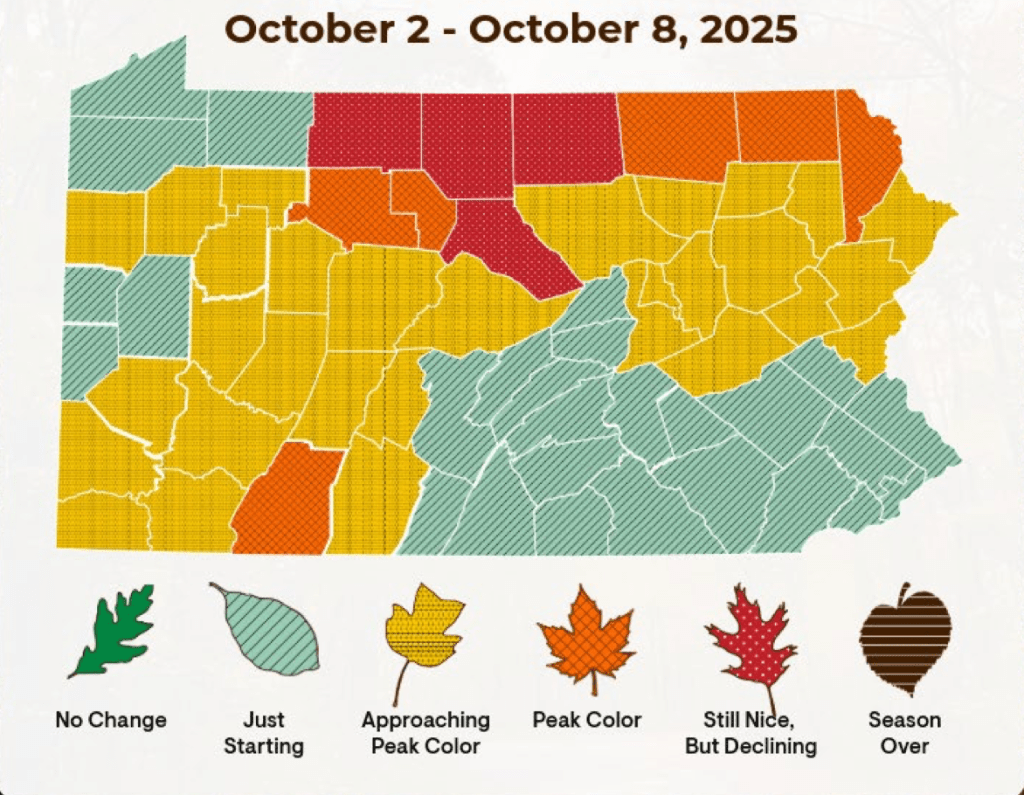
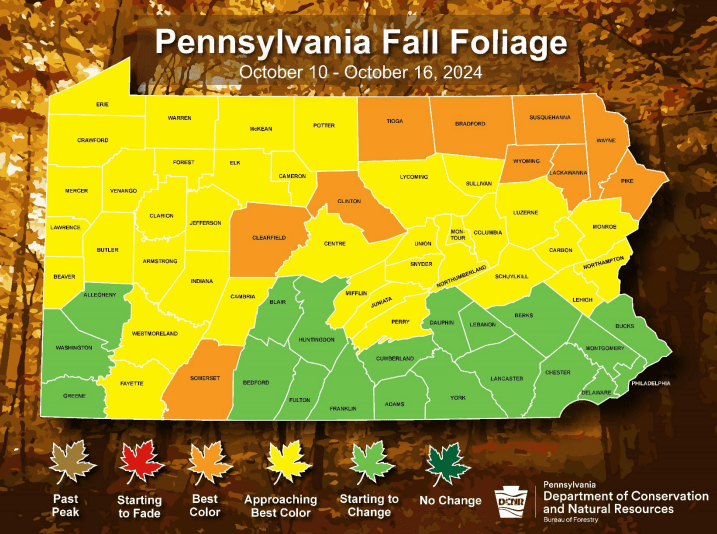
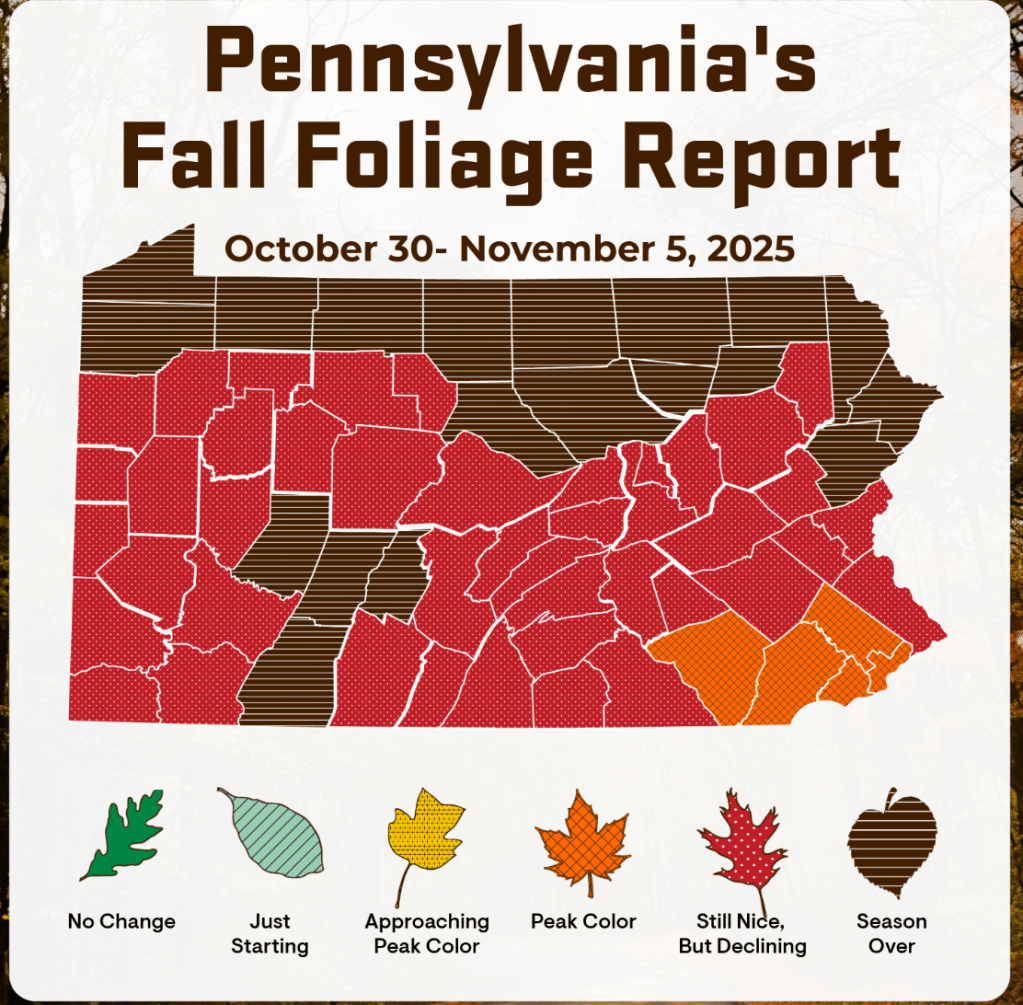
  3. Pennsylvania – PA DCNR follows the fall season with complete reports with all PA regions. Like Maine, they also set 6 different levels of foliage progression.
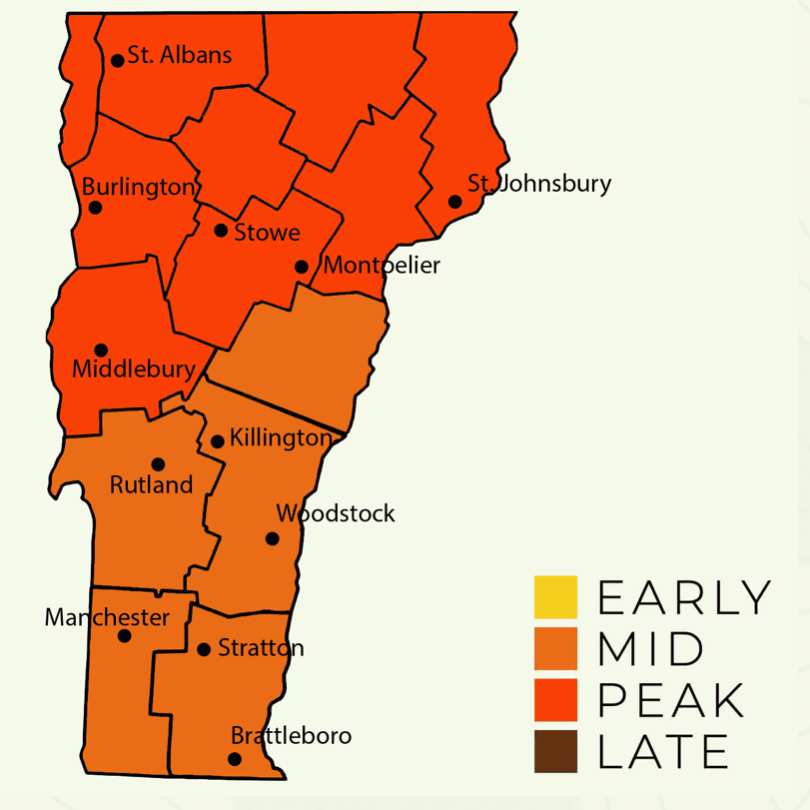
  4. Vermont – Vermont’s official website provides foliage reports based on the Vermont Department of Tourism and volunteer members of their “Leaf Squad” from around the state. Their foliage levels are simple and have only four stages.
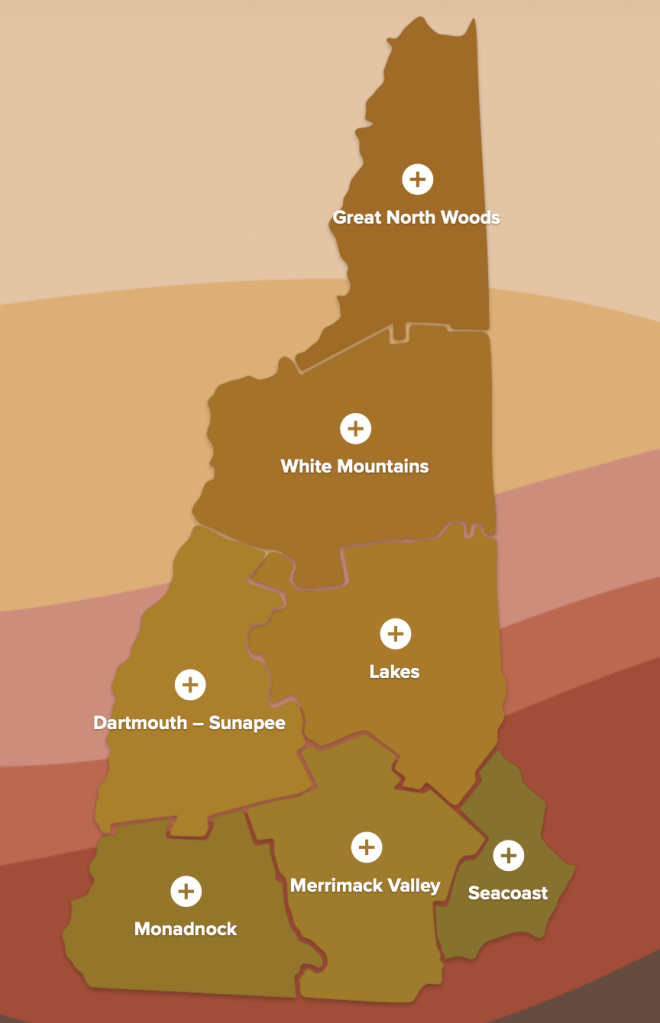
  5. New Hampshire – VisitNH website gives detailed foliage reports. While others use maps to visualize the foliage progression around the state, NH provides information about the seven zones.

Visit our Instagram and watch our stories to get more live updates.

October 15, 2025

Welcome back, fellow leaf peepers! After a long, warm start to the season, our patience has finally been rewarded. In the last two weeks, a critical drop in night temperatures has accelerated the color change, moving the city past the initial “Minimal” phase.

We are officially in the Partial Color stage, where the leaves have traded their subtle summer yellows for prominent streaks of gold, orange, and early crimson. This is the perfect weekend for scouting!

NYC Foliage Status

SPOTLIGHT: MODERATE / APPROACHING PEAK
These areas are ahead of the city average due to elevation or microclimates (ideal for a day trip!):

Central Park (North Woods/Ramble): Isolated pockets, particularly older trees and those in the quieter, northern sections (like the Ramble or North Woods), are displaying intense yellows and some brilliant reds.

Upper Hudson Valley (Day Trip): Areas like Dutchess and Westchester counties are seeing 40% to 50% change, showing bright reds, yellows, and oranges, signaling a near-peak window.

CURRENT CITY STATUS: Partial Color / Early Moderate

As of October 15th, the bulk of New York City is showcasing Partial Color, marking an exciting progression from the greens of September. Overall color change across the five boroughs is estimated to be between 25% and 50%, with the city center lagging slightly behind the surrounding parks.

The current color palette is dominated by yellows and golds, largely from species like Ash and Honey Locust trees, which are quickly reaching their golden prime. However, you can now find stunning, isolated patches of red, particularly from the early-turning Red Maples in low-lying, well-watered areas of Central Park and Prospect Park.

The city is currently in a transitional phase: the majority of trees are changing, but the famous, uniform Peak of scarlet and bronze is still several weeks away, typically arriving between late October and early November. Now is the time to track those early indicators and plan your visits!

The city’s official Peak Foliage is still expected later in the month, generally from late October to early November. This weekend marks the best time for our early indicators (Maples and Ash), giving you ample time to plan for the full show!

Get your coziest layers ready—the cool air and color are here!

Maple Trees

Maple trees are a common sight in the Northeast and are known for their vibrant fall foliage. But with so many different types of maple trees, how can you tell them apart?

One of the easiest ways is to look at their distinctive shapes.

Another common maple tree is the Norway maple, an invasive species native to Europe that was first introduced to North America in the mid-18th century. I often mistook Norway maples for sugar maples or red maples, but there are a few key differences to look for:

Leaf edges: Red maples have jagged sawtooth edges, while Norway and sugar maples have smooth-edged leaves.

Leaf density: Norway maples have denser foliage.

Seed dispersal: Sugar and red maples produce seeds in early spring, while Norway maples spread their seeds in the fall.

Leaf lobes: Red maple leaves typically have three lobes, while Norway and sugar maple leaves tend to look five-lobed.

Foliage outside NYC

While the city’s foliage is still catching up, now is the perfect time to explore the vibrant colors beyond its borders. Choosing the best location for leaf-peeping can be a daunting task, but fortunately, there are many resources to help you make an informed decision.

  1. NY – I love NY foliage report – This popular IG page with a website gives a weekly report on the foliage progression around NY state. Reports are obtained from volunteer field observers and reflect expected color conditions for the coming weekend. Reports are issued every Wednesday afternoon.
  2. Maine – If you want to visit Maine this fall, you should check out the state’s official website, which gives the foliage report for Maine state. The report covers seven different zones and has six levels of foliage statues.
  3. Pennsylvania – PA DCNR follows the fall season with complete reports with all PA regions. Like Maine, they also set 6 different levels of foliage progression.
  4. Vermont – Vermont’s official website provides foliage reports based on the Vermont Department of Tourism and volunteer members of their “Leaf Squad” from around the state. Their foliage levels are simple and have only four stages.
  5. New Hampshire – VisitNH website gives detailed foliage reports. While others use maps to visualize the foliage progression around the state, NH provides information about the seven zones.
Visit our Instagram and watch our stories to get more live updates.

October 8, 2025

The past week of unseasonably warm and dry weather significantly stressed the foliage across the New York region. This combination triggered premature leaf change and early drop in many areas, acting against the natural process. The warm nights, specifically, prevented the trees from effectively trapping sugars, which is essential for producing vibrant reds and purples, setting the stage for a subdued or less brilliant peak season.

Maple Trees

Maple trees are a common sight in the Northeast and are known for their vibrant fall foliage. But with so many different types of maple trees, how can you tell them apart?

One of the easiest ways is to look at their distinctive shapes.

Another common maple tree is the Norway maple, an invasive species native to Europe that was first introduced to North America in the mid-18th century. I often mistook Norway maples for sugar maples or red maples, but there are a few key differences to look for:

Leaf edges: Red maples have jagged sawtooth edges, while Norway and sugar maples have smooth-edged leaves.

Leaf density: Norway maples have denser foliage.

Seed dispersal: Sugar and red maples produce seeds in early spring, while Norway maples spread their seeds in the fall.

Leaf lobes: Red maple leaves typically have three lobes, while Norway and sugar maple leaves tend to look five-lobed.

Foliage outside NYC

The foliage narrative outside the five boroughs is moving rapidly toward its conclusion. While New York City remains largely green, reflecting its delayed schedule, the effects of an early start and recent drought have caused the highest elevations to fail quickly. Specifically, areas in the Adirondacks and Catskills are already past their peak, displaying muted, swift-fading colors and significant leaf drop. Currently, the actual peak viewing window is fleetingly concentrated in Central and Northern New York, including the Thousand Islands-Seaway Region and Steuben County (Finger Lakes area). This compressed timeline confirms the urgent need to travel to these northern zones, as the show will soon sweep south into the Lower Hudson Valley and Tri-State suburbs (currently 20%–40% changed), which are now preparing for their own highly anticipated mid-to-late October peak.

  1. NY – I love NY foliage report – This popular IG page with a website gives a weekly report on the foliage progression around NY state. Reports are obtained from volunteer field observers and reflect expected color conditions for the coming weekend. Reports are issued every Wednesday afternoon.
  2. Maine – If you want to visit Maine this fall, you should check out the state’s official website, which gives the foliage report for Maine state. The report covers seven different zones and has six levels of foliage statues.
  3. Pennsylvania – PA DCNR follows the fall season with complete reports with all PA regions. Like Maine, they also set 6 different levels of foliage progression.
  4. Vermont – Vermont’s official website provides foliage reports based on the Vermont Department of Tourism and volunteer members of their “Leaf Squad” from around the state. Their foliage levels are simple and have only four stages.
  5. New Hampshire – VisitNH website gives detailed foliage reports. While others use maps to visualize the foliage progression around the state, NH provides information about the seven zones.
Visit our Instagram and watch our stories to get more live updates.
February 09, 2025 – Awaiting Spring’s Arrival – Part 2

New York City in winter can feel like a never-ending saga. We’ve endured the blustery winds, the icy sidewalks, and the seemingly perpetual gray skies. Two months into the new year, and the anticipation for spring is reaching fever pitch. We’re all dreaming of warmer days, vibrant colors, and the sweet scent of blooming flowers. But when will we finally see the first signs of spring in NYC, and more importantly, when will those iconic cherry blossoms grace us with their presence?

The wait can be agonizing, especially when glimpses of spring tease us with a slightly warmer day or a fleeting patch of sunshine. We start to crave the simple pleasures: shedding those bulky winter coats, strolling through parks without battling a biting wind, and witnessing the city come alive after its winter slumber.

One of the most anticipated harbingers of spring in NYC is undoubtedly the cherry blossom season. These delicate pink and white blooms transform parks like the Brooklyn Botanic Garden, the New York Botanical Garden, and even smaller neighborhood green spaces into breathtaking displays of natural beauty. They’re a symbol of renewal, hope, and the fleeting nature of beauty itself, making their arrival all the more special.

But predicting the exact timing of the cherry blossom bloom is a tricky business. It depends heavily on the weather conditions leading up to the season. A particularly warm winter might encourage earlier blooming, while a prolonged cold snap could delay the show. Typically, the peak bloom period falls sometime between late March and mid-April, but it’s always best to check the official bloom forecasts closer to the date. We will publish our bloom predictions on our websites and social media, so keep an eye out for updates.

While we eagerly await the cherry blossoms, there are other subtle signs of spring that start to emerge in NYC. Keep an eye out for:

  • The first brave crocuses and daffodils: These colorful flowers often push their way through the soil even before the official start of spring, offering a welcome pop of color against the still-brown landscape.
  • The return of birdsong: As the days get longer, you’ll notice more birds chirping and singing in the parks and trees. This is a sure sign that spring is on its way.
  • Budding trees: Even before the cherry blossoms steal the show, other trees will start to develop buds, hinting at the green canopy that will soon return to the city.
  • Warmer days (and maybe even a hint of sunshine!): While these can be fleeting, those warmer, sunnier days are a vital reminder that winter won’t last forever.

So, while we’re still bundled up and dreaming of warmer days, let’s keep our eyes peeled for these early signs of spring. The cherry blossoms will be here before we know it, and the city will once again burst into life. The wait might be long, but the reward – a vibrant, blossoming New York City – is well worth it. Are you as excited as we are? Share your favorite signs of spring in the comments below!

What are your favorite signs of spring in NYC? Share your thoughts and observations in the comments below!

Visit our Instagram and watch our stories to get more live updates.

January 26, 2025 – Awaiting Spring’s Arrival

Ah, New York City in the winter. A time of blustery winds, icy sidewalks, and that persistent longing for the return of warmer days. While the snow might be falling and the city may be shrouded in a frosty haze, there’s a certain magic in this season, too. It’s a time of anticipation, a time for dreaming of warmer days and the vibrant blooms that will soon grace our parks and gardens.

For many New Yorkers, the arrival of spring is a highly anticipated event. We eagerly watch for the first signs of life – the crocuses pushing through the melting snow, the delicate buds appearing on the trees, the cheerful chirping of birds returning from their winter migration.

This annual “bloom watch” becomes a citywide phenomenon. We share photos of early blooms on social media, debate the arrival of the first robin, and discuss the best spots to witness the city’s springtime awakening.

Here are a few ways to embrace the “bloom watch” this winter:

  • Plant bulbs in the fall: There’s no better way to anticipate spring than to plant your own bulbs in the fall. Watch with delight as daffodils, tulips, and hyacinths emerge from the soil in early spring.
  • Visit the New York Botanical Garden: Even in the winter, the Garden offers a glimpse of hope with its indoor exhibits and conservatory.
  • Explore local nurseries: Many nurseries begin showcasing spring blooms early in the season, offering a vibrant display of color and a welcome escape from the winter blues.
  • Embrace the indoor greenery: Bring the outdoors in by filling your home with houseplants.

While winter may seem long, the promise of spring is always just around the corner. Embrace the anticipation, enjoy the quiet beauty of the winter months, and get ready to witness the city’s spectacular springtime awakening.

What are your favorite signs of spring in NYC? Share your thoughts and observations in the comments below!

Visit our Instagram and watch our stories to get more live updates.

October 12, 2024 – Leaf-Peeping Getaway

The past week brought crisp, cool nights to the Big Apple. These cooler temperatures will help to accelerate the changing of the leaves, and we can expect to see more vibrant colors in the city’s trees soon.

Maple Trees

Maple trees are a common sight in the Northeast and are known for their vibrant fall foliage. But with so many different types of maple trees, how can you tell them apart?

One of the easiest ways is to look at their distinctive shapes.

Another common maple tree is the Norway maple, an invasive species native to Europe that was first introduced to North America in the mid-18th century. I often mistook Norway maples for sugar maples or red maples, but there are a few key differences to look for:

Leaf edges: Red maples have jagged sawtooth edges, while Norway and sugar maples have smooth-edged leaves.

Leaf density: Norway maples have denser foliage.

Seed dispersal: Sugar and red maples produce seeds in early spring, while Norway maples spread their seeds in the fall.

Leaf lobes: Red maple leaves typically have three lobes, while Norway and sugar maple leaves tend to look five-lobed.

Foliage outside NYC

While the city’s foliage is still catching up, now is the perfect time to explore the vibrant colors beyond its borders. Choosing the best location for leaf-peeping can be a daunting task, but fortunately, there are many resources to help you make an informed decision.

  1. NY – I love NY foliage report – This popular IG page with a website gives a weekly report on the foliage progression around NY state. Reports are obtained from volunteer field observers and reflect expected color conditions for the coming weekend. Reports are issued every Wednesday afternoon.
  2. Maine – If you want to visit Maine this fall, you should check out the state’s official website, which gives the foliage report for Maine state. The report covers seven different zones and has six levels of foliage statues.
  3. Pennsylvania – PA DCNR follows the fall season with complete reports with all PA regions. Like Maine, they also set 6 different levels of foliage progression.
  4. Vermont – Vermont’s official website provides foliage reports based on the Vermont Department of Tourism and volunteer members of their “Leaf Squad” from around the state. Their foliage levels are simple and have only four stages.
  5. New Hampshire – VisitNH website gives detailed foliage reports. While others use maps to visualize the foliage progression around the state, NH provides information about the seven zones.

Visit our Instagram and watch our stories to get more live updates.
September 21, 2024 – First Fall report of 2024

As autumn begins to paint the city in vibrant hues, we’re excited to share our first foliage report. While our area is still lush green, a few early birds have already begun to change color.

We anticipate a later-than-usual peak foliage season in New York City, with the most stunning displays expected in late October or early November.

Stay tuned for regular updates on the city’s foliage progression and discover the best spots to experience the autumnal beauty, and the best spots to see the leaves.
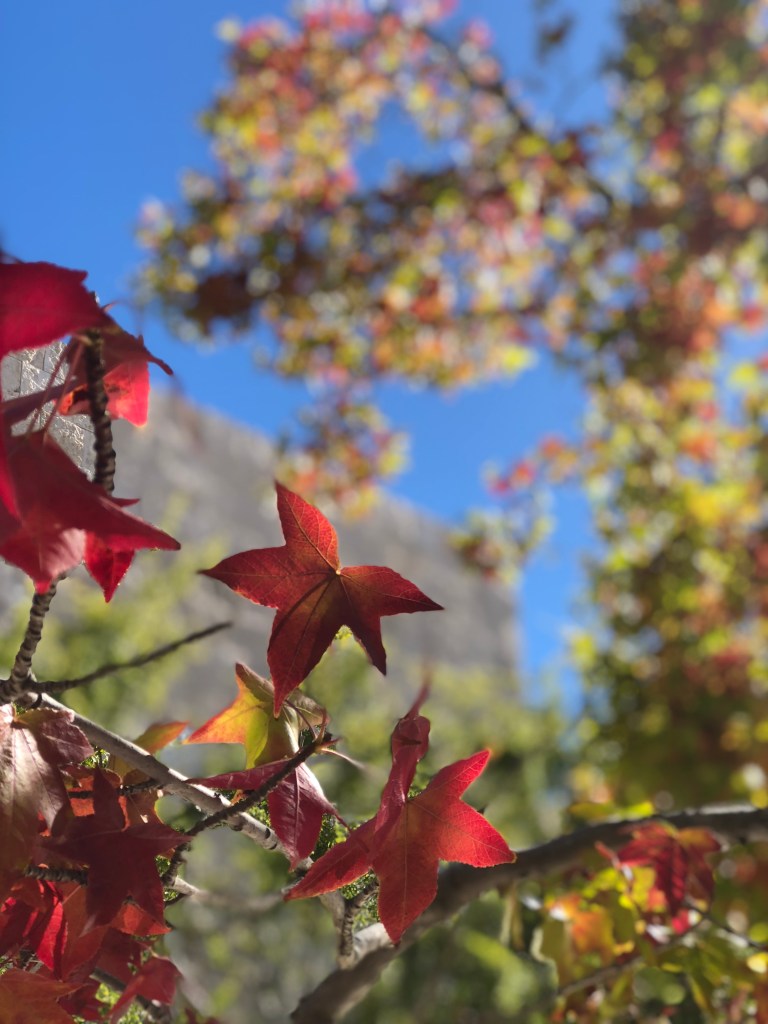
So what is happening now?

Our home page now features a list of trees, updated in real time to show their current foliage status. Discover which trees are at their peak color and plan your autumn adventures accordingly.After witnessing breathtaking displays in 2021, 2022, and 2023, we eagerly anticipate another magnificent fall foliage season this year.

Summer Foliage – A Natural Phenomenon

Summer foliage refers to the early or prolonged loss of leaves by trees during the summer season. This is a protective mechanism, allowing trees to conserve water and regulate their temperature in response to the hot weather. While it’s a normal process, global warming has led to earlier and more extended summer foliage in some regions.

This extended period of stress can increase a tree’s vulnerability to diseases and pests. Therefore, it’s essential to provide extra care to trees experiencing summer foliage, ensuring they receive adequate water and nutrients.

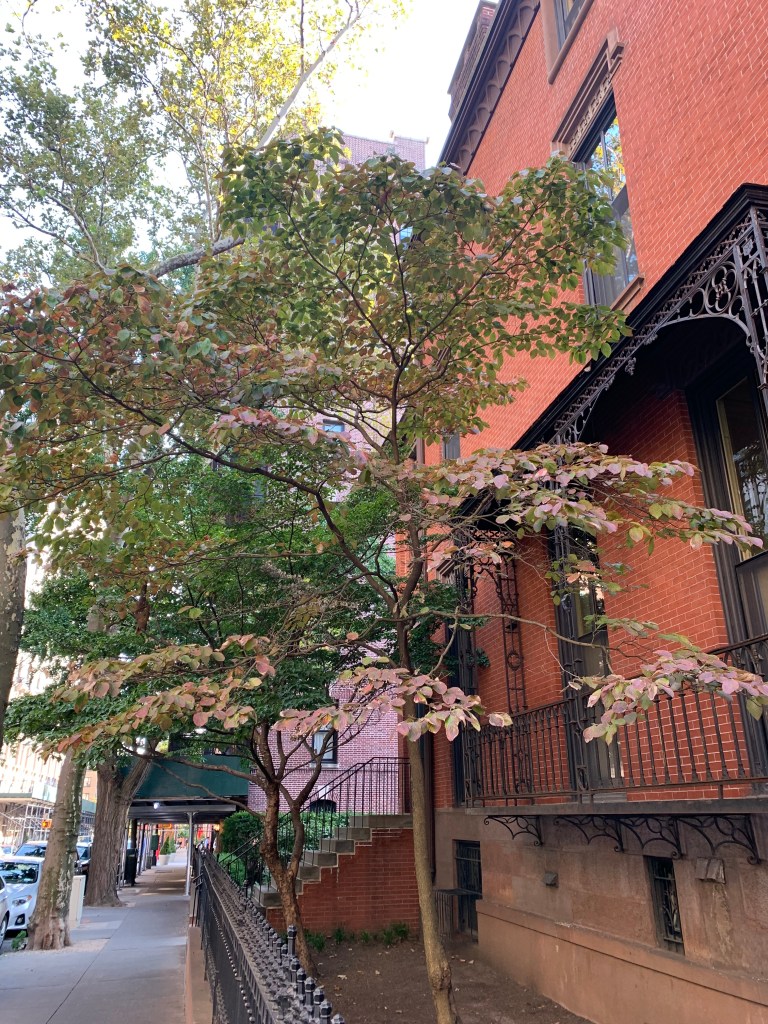
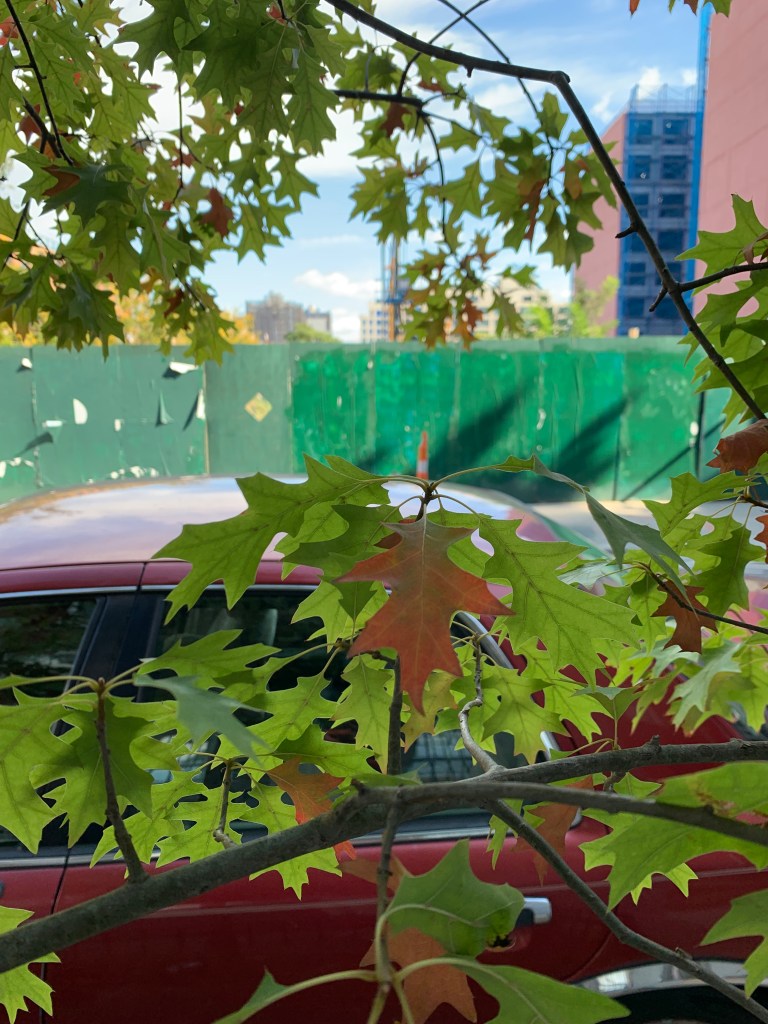
Here are some pictures of trees that are under summer foliage:

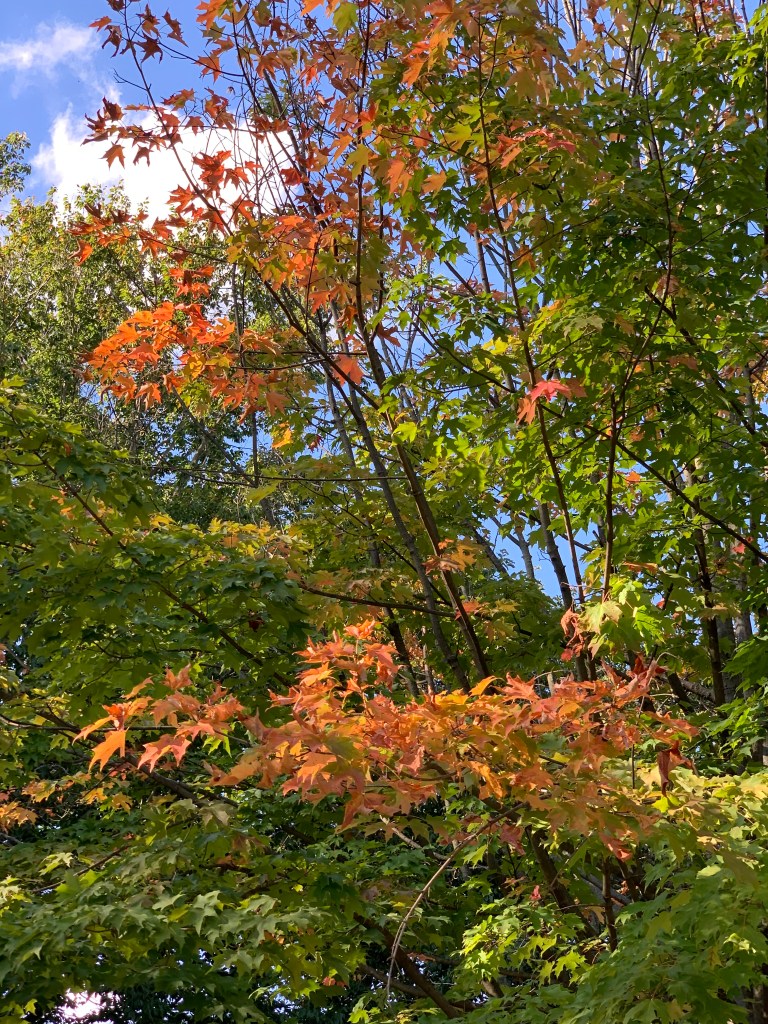
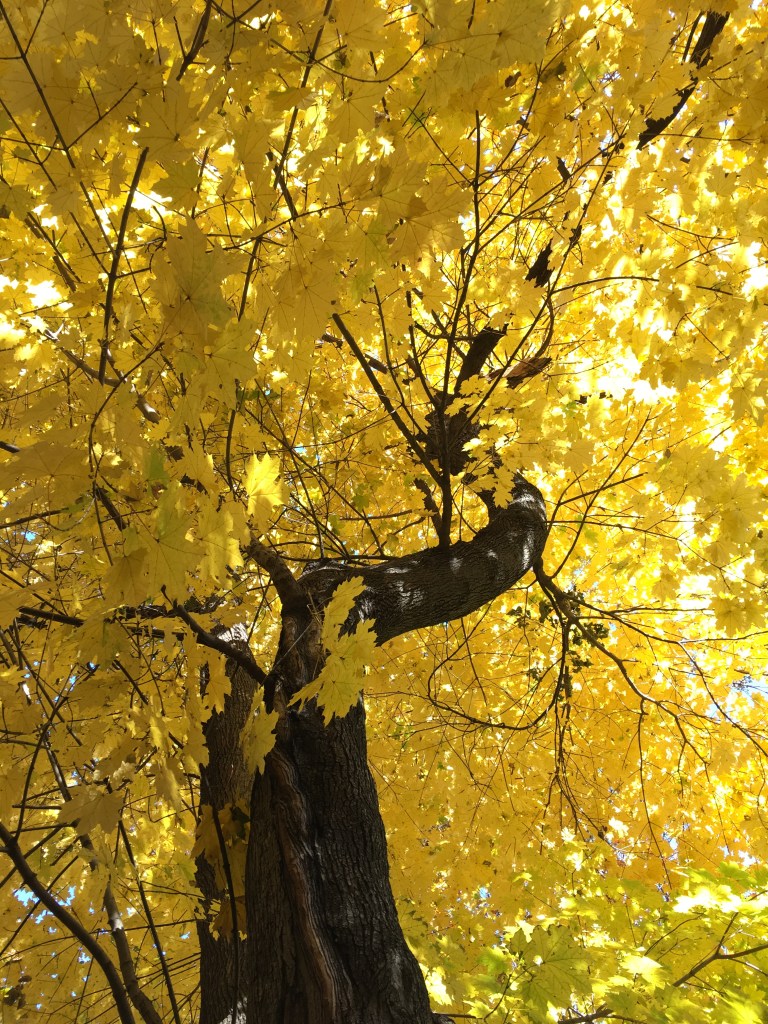
Meanwhile, early fall colors are emerging in a handful of Brooklyn trees:

Factors Influencing Fall Foliage

The vibrant hues of autumn foliage are a result of various environmental conditions. As days shorten and temperatures cool, these factors play a critical role in determining when leaves change color and eventually fall. While weather is a significant influence, understanding foliage progression conditions can help predict peak foliage seasons in different regions.

Sunlight: The amount of sunlight a leaf receives is a primary determinant of its color. Chlorophyll, the pigment responsible for the green color, requires sunlight to produce. As daylight decreases in autumn, chlorophyll production slows, revealing the underlying pigments of red, orange, and yellow.

Soil Type: The acidity or alkalinity of the soil can also impact fall colors. Leaves growing in acidic soil often exhibit red or purple hues, while those in alkaline soil tend to be yellow or orange.

Temperature: A combination of cool nights and warm days is optimal for producing vibrant fall colors. Extreme temperatures, either too hot or too cold, can diminish the intensity of the colors.

Leaf Moisture: Dry leaves tend to change color more rapidly than wet leaves. Adequate moisture is essential for maintaining leaf health and vibrant colors.

Don’t miss the latest updates, and subscribe now:

Visit our Instagram and watch our stories to get more live updates.