
The past week of unseasonably warm and dry weather significantly stressed the foliage across the New York region. This combination triggered premature leaf change and early drop in many areas, acting against the natural process. The warm nights, specifically, prevented the trees from effectively trapping sugars, which is essential for producing vibrant reds and purples, setting the stage for a subdued or less brilliant peak season.

Maple Trees
Maple trees are a common sight in the Northeast and are known for their vibrant fall foliage. But with so many different types of maple trees, how can you tell them apart?
One of the easiest ways is to look at their distinctive shapes.

Another common maple tree is the Norway maple, an invasive species native to Europe that was first introduced to North America in the mid-18th century. I often mistook Norway maples for sugar maples or red maples, but there are a few key differences to look for:
Leaf edges: Red maples have jagged sawtooth edges, while Norway and sugar maples have smooth-edged leaves.
Leaf density: Norway maples have denser foliage.
Seed dispersal: Sugar and red maples produce seeds in early spring, while Norway maples spread their seeds in the fall.
Leaf lobes: Red maple leaves typically have three lobes, while Norway and sugar maple leaves tend to look five-lobed.

Foliage outside NYC
The foliage narrative outside the five boroughs is moving rapidly toward its conclusion. While New York City remains largely green, reflecting its delayed schedule, the effects of an early start and recent drought have caused the highest elevations to fail quickly. Specifically, areas in the Adirondacks and Catskills are already past their peak, displaying muted, swift-fading colors and significant leaf drop. Currently, the actual peak viewing window is fleetingly concentrated in Central and Northern New York, including the Thousand Islands-Seaway Region and Steuben County (Finger Lakes area). This compressed timeline confirms the urgent need to travel to these northern zones, as the show will soon sweep south into the Lower Hudson Valley and Tri-State suburbs (currently 20%–40% changed), which are now preparing for their own highly anticipated mid-to-late October peak.
- NY – I love NY foliage report – This popular IG page with a website gives a weekly report on the foliage progression around NY state. Reports are obtained from volunteer field observers and reflect expected color conditions for the coming weekend. Reports are issued every Wednesday afternoon.
- Maine – If you want to visit Maine this fall, you should check out the state’s official website, which gives the foliage report for Maine state. The report covers seven different zones and has six levels of foliage statues.
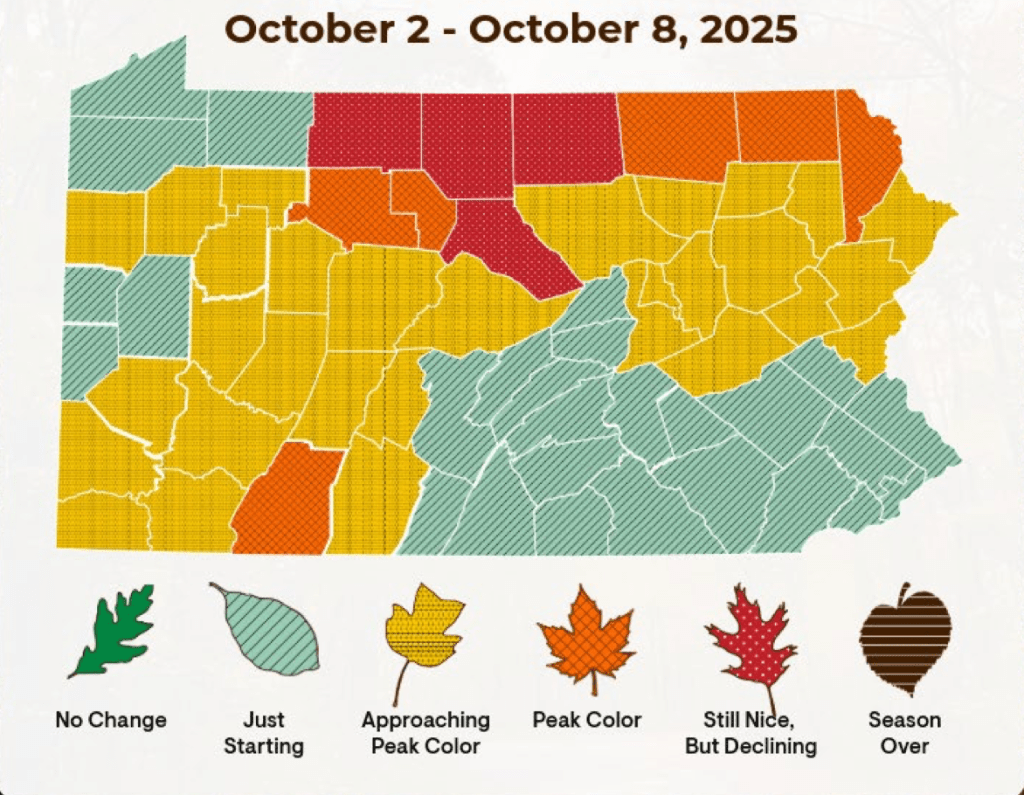
- Pennsylvania – PA DCNR follows the fall season with complete reports with all PA regions. Like Maine, they also set 6 different levels of foliage progression.
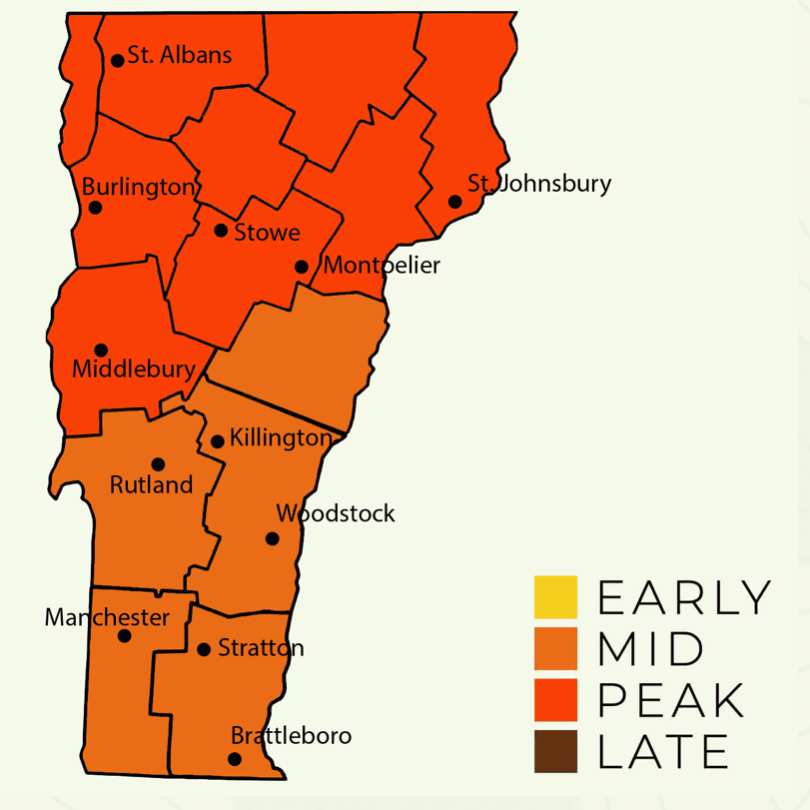
- Vermont – Vermont’s official website provides foliage reports based on the Vermont Department of Tourism and volunteer members of their “Leaf Squad” from around the state. Their foliage levels are simple and have only four stages.
- New Hampshire – VisitNH website gives detailed foliage reports. While others use maps to visualize the foliage progression around the state, NH provides information about the seven zones.

Visit our Instagram and watch our stories to get more live updates.


 NYC SEASON WATCH