After a warm start to the season, our patience has finally paid off. Over the past two weeks, a significant drop in nighttime temperatures has sparked a rapid color shift, propelling the city beyond the “Minimal” phase.
We’re now officially in the Peak Color stage, where the leaves have exchanged their subtle summer greens for vibrant streaks of gold, orange, and early crimson. This weekend is the perfect time to head out and witness the city’s stunning autumn transformation.!
NYC Foliage Status
SPOTLIGHT: PEAK COLOR These areas are ahead of the city average, thanks to elevation or microclimates—perfect for a day trip!
Central Park (North Woods/Ramble): Isolated pockets, particularly older trees and those in the quieter, northern sections (like the Ramble or North Woods), are showcasing brilliant yellows and vibrant reds.
Upper Hudson Valley (Day Trip): Areas like Dutchess and Westchester counties are now seeing 60% to 75% color change, with bright reds, yellows, and oranges, signaling the peak of the season.
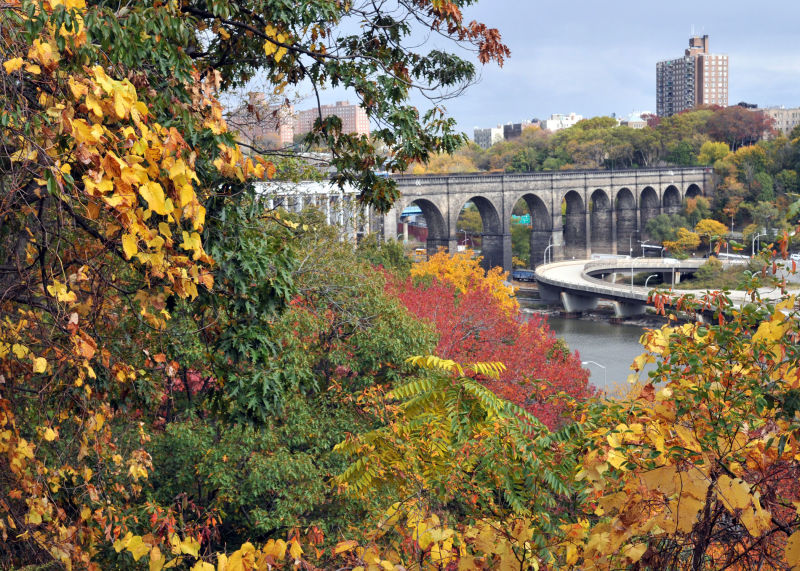
CURRENT CITY STATUS: Peak Color As of November 9th, New York City is officially in the Peak Color stage, with the majority of trees now fully transformed from their summer greens to vivid hues of yellow, orange, and red. The overall color change across the five boroughs is between 75% and 85%, with the parks leading the charge and the city center catching up.
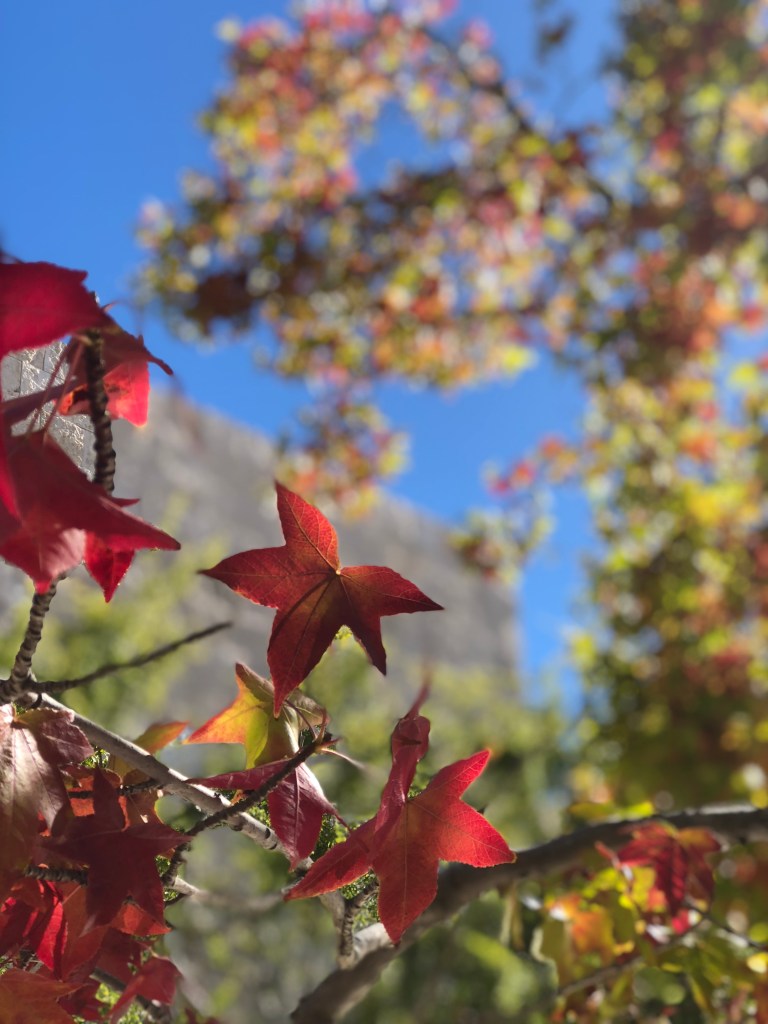
The city’s color palette is now dominated by bright yellows and golds, thanks to species like Ash and Honey Locust trees, which are at their golden prime. Scattered throughout, you’ll find striking patches of red, particularly from the early-turning Red Maples in low-lying, well-watered areas like Central Park and Prospect Park.
We’re now in full transition: the city is displaying its iconic Peak Foliage of scarlet, orange, and golden tones, which typically lasts through late October to early November. If you’ve been waiting for the best fall views, now is the time to get out there!
Enjoy the full show while it lasts—these peak colors won’t stick around for long!
Foliage outside NYC
While the city’s foliage is still catching up, now is the perfect time to explore the vibrant colors beyond its borders. Choosing the best location for leaf-peeping can be a daunting task, but fortunately, there are many resources to help you make an informed decision.
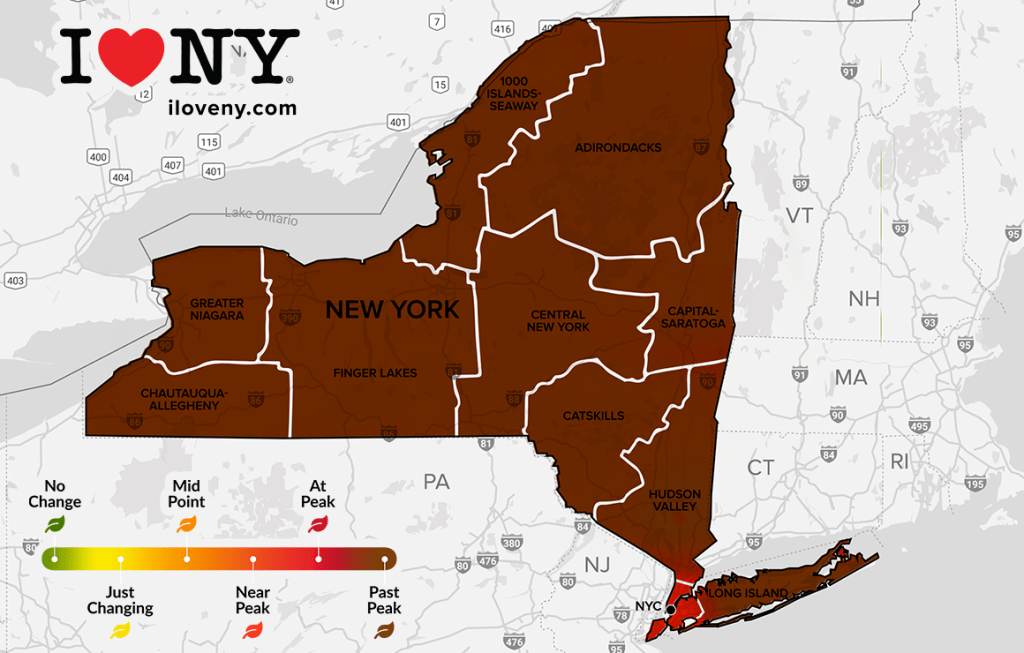
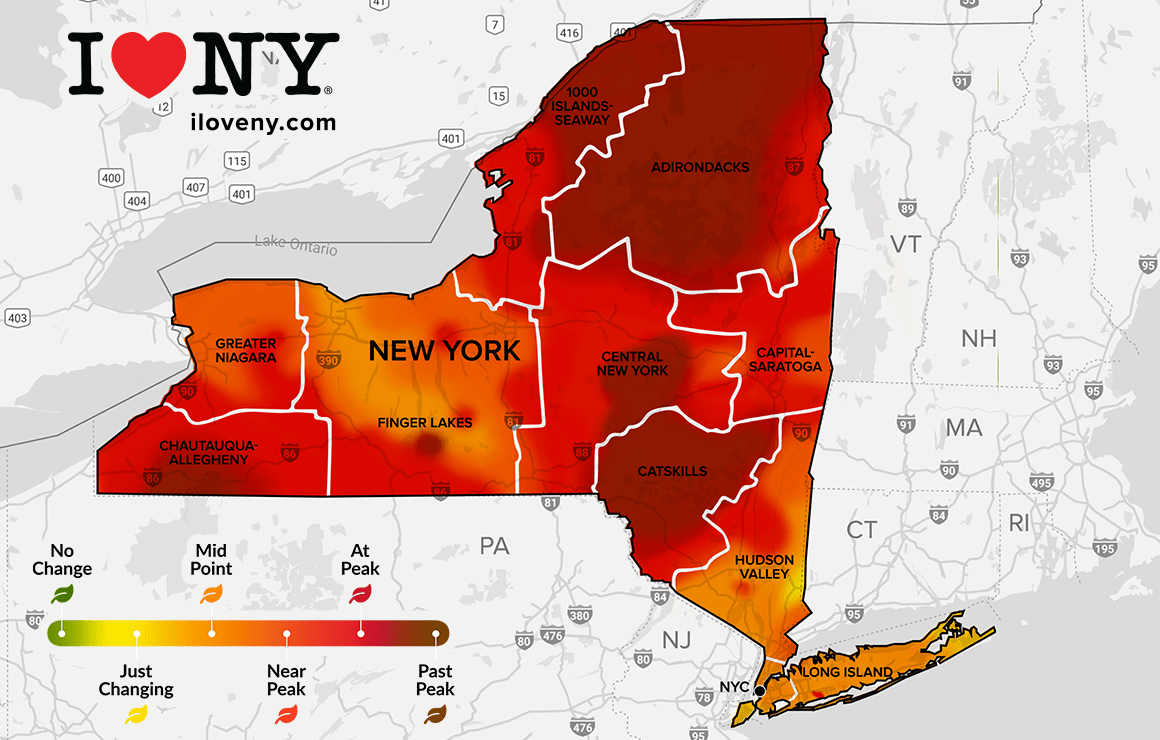
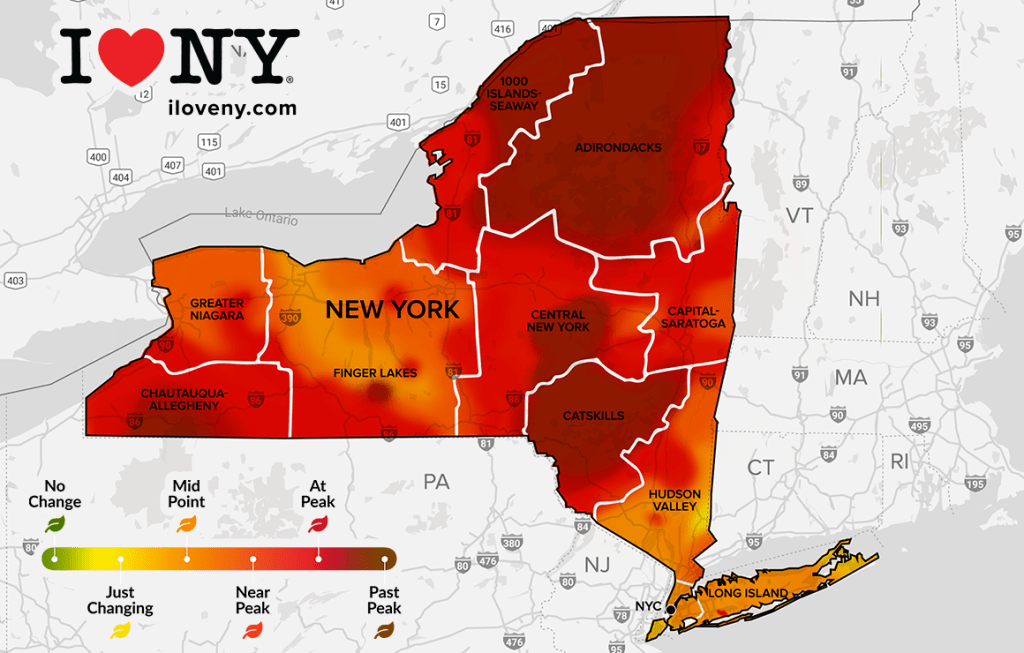
NY – I love NY foliage report – This popular IG page with a website gives a weekly report on the foliage progression around NY state. Reports are obtained from volunteer field observers and reflect expected color conditions for the coming weekend. Reports are issued every Wednesday afternoon.
Maine – If you want to visit Maine this fall, you should check out the state’s official website, which gives the foliage report for Maine state. The report covers seven different zones and has six levels of foliage statues.
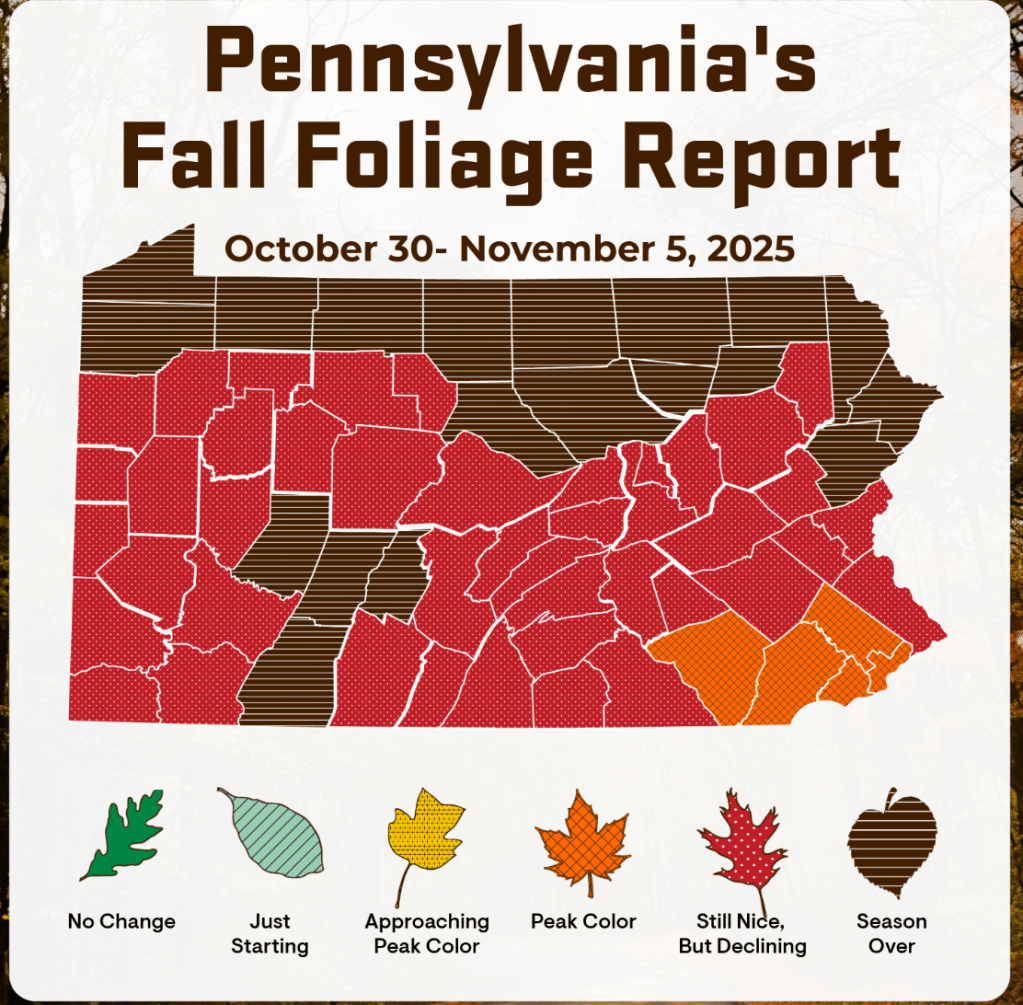
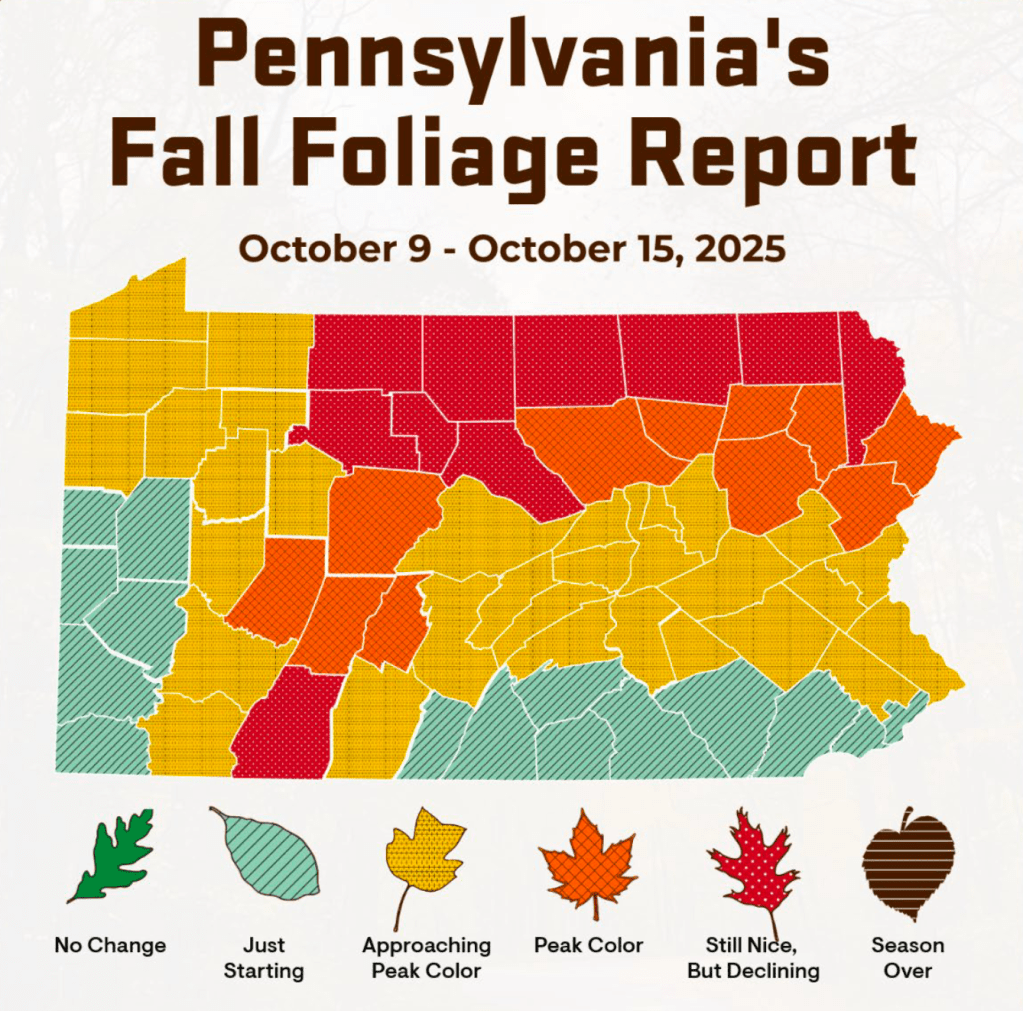
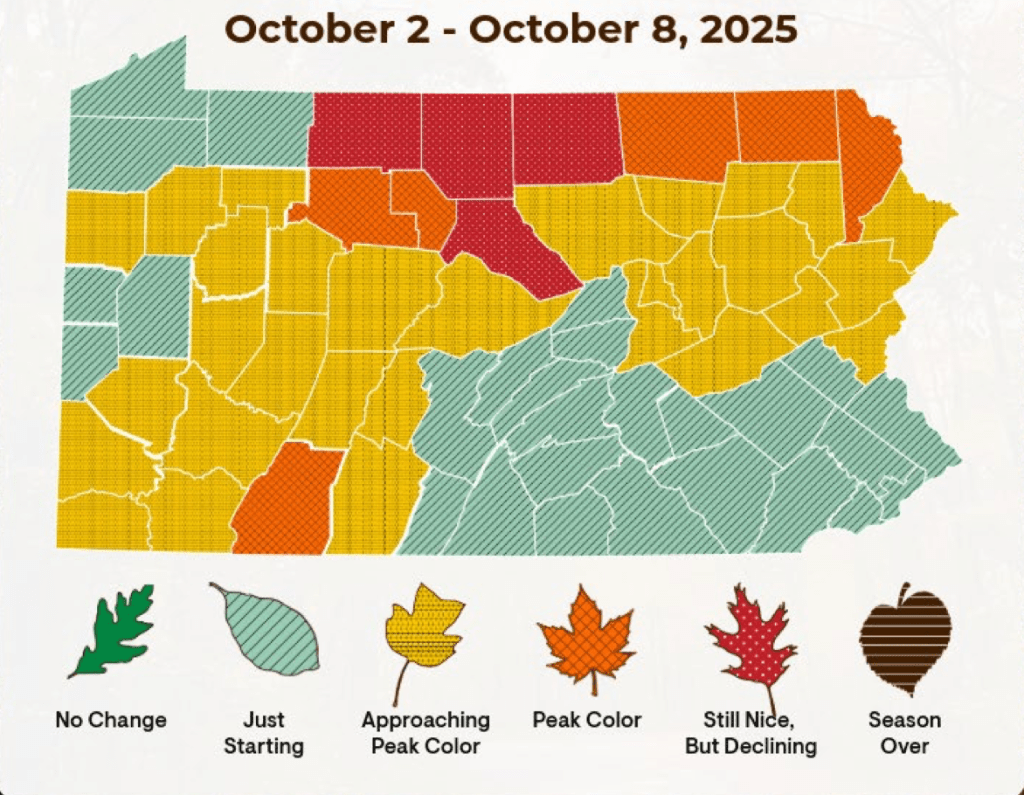
Pennsylvania – PA DCNR follows the fall season with complete reports with all PA regions. Like Maine, they also set 6 different levels of foliage progression.
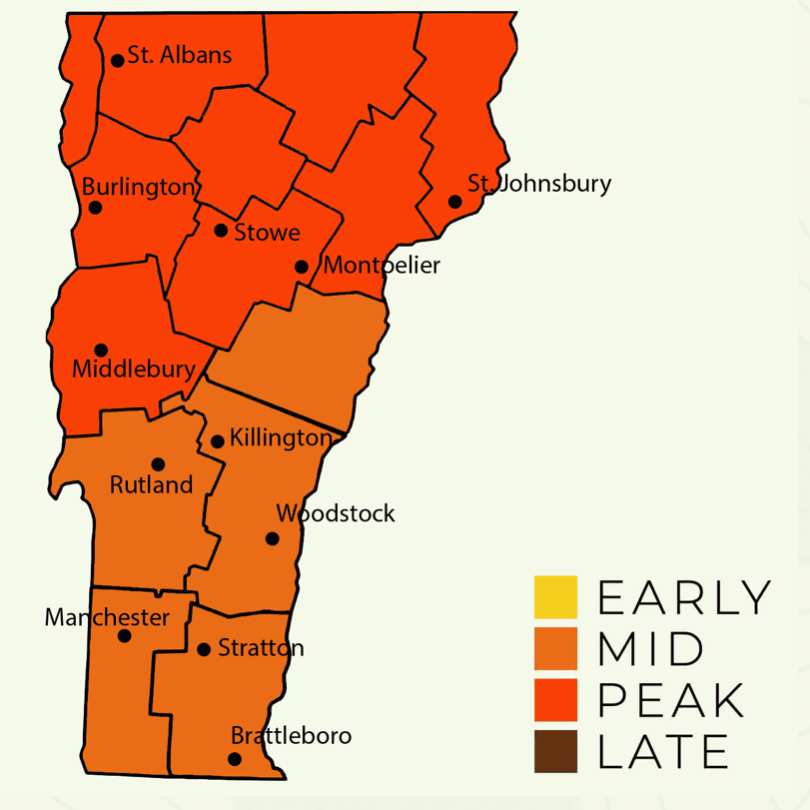
Vermont – Vermont’s official website provides foliage reports based on the Vermont Department of Tourism and volunteer members of their “Leaf Squad” from around the state. Their foliage levels are simple and have only four stages.
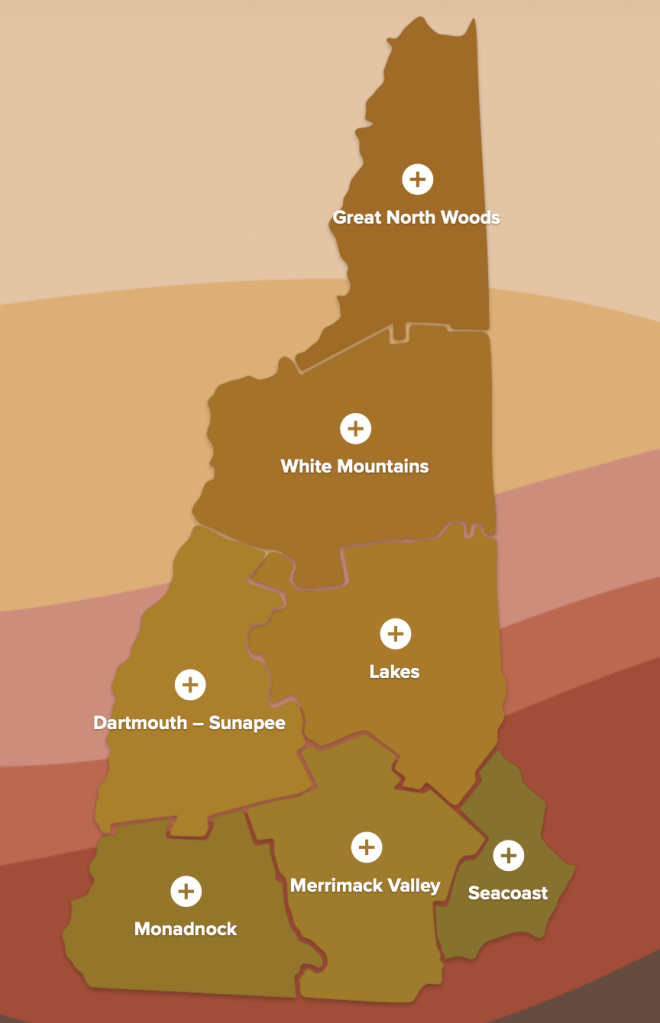
New Hampshire – VisitNH website gives detailed foliage reports. While others use maps to visualize the foliage progression around the state, NH provides information about the seven zones.
Visit our Instagram and watch our stories to get more live updates.
Welcome back, fellow leaf peepers! After a long, warm start to the season, our patience has finally been rewarded. In the last two weeks, a critical drop in night temperatures has accelerated the color change, moving the city past the initial “Minimal” phase.
We are officially in the Partial Color stage, where the leaves have traded their subtle summer yellows for prominent streaks of gold, orange, and early crimson. This is the perfect weekend for scouting!
NYC Foliage Status
SPOTLIGHT: MODERATE / APPROACHING PEAK These areas are ahead of the city average due to elevation or microclimates (ideal for a day trip!):
Central Park (North Woods/Ramble): Isolated pockets, particularly older trees and those in the quieter, northern sections (like the Ramble or North Woods), are displaying intense yellows and some brilliant reds.
Upper Hudson Valley (Day Trip): Areas like Dutchess and Westchester counties are seeing 40% to 50% change, showing bright reds, yellows, and oranges, signaling a near-peak window.
CURRENT CITY STATUS: Partial Color / Early Moderate
As of October 15th, the bulk of New York City is showcasing Partial Color, marking an exciting progression from the greens of September. Overall color change across the five boroughs is estimated to be between 25% and 50%, with the city center lagging slightly behind the surrounding parks.
The current color palette is dominated by yellows and golds, largely from species like Ash and Honey Locust trees, which are quickly reaching their golden prime. However, you can now find stunning, isolated patches of red, particularly from the early-turning Red Maples in low-lying, well-watered areas of Central Park and Prospect Park.
The city is currently in a transitional phase: the majority of trees are changing, but the famous, uniform Peak of scarlet and bronze is still several weeks away, typically arriving between late October and early November. Now is the time to track those early indicators and plan your visits!
The city’s official Peak Foliage is still expected later in the month, generally from late October to early November. This weekend marks the best time for our early indicators (Maples and Ash), giving you ample time to plan for the full show!
Get your coziest layers ready—the cool air and color are here!
Maple Trees
Maple trees are a common sight in the Northeast and are known for their vibrant fall foliage. But with so many different types of maple trees, how can you tell them apart?
One of the easiest ways is to look at their distinctive shapes.
Another common maple tree is the Norway maple, an invasive species native to Europe that was first introduced to North America in the mid-18th century. I often mistook Norway maples for sugar maples or red maples, but there are a few key differences to look for:
Leaf edges: Red maples have jagged sawtooth edges, while Norway and sugar maples have smooth-edged leaves.
Leaf density: Norway maples have denser foliage.
Seed dispersal: Sugar and red maples produce seeds in early spring, while Norway maples spread their seeds in the fall.
Leaf lobes: Red maple leaves typically have three lobes, while Norway and sugar maple leaves tend to look five-lobed.
Foliage outside NYC
While the city’s foliage is still catching up, now is the perfect time to explore the vibrant colors beyond its borders. Choosing the best location for leaf-peeping can be a daunting task, but fortunately, there are many resources to help you make an informed decision.
NY – I love NY foliage report – This popular IG page with a website gives a weekly report on the foliage progression around NY state. Reports are obtained from volunteer field observers and reflect expected color conditions for the coming weekend. Reports are issued every Wednesday afternoon.
Maine – If you want to visit Maine this fall, you should check out the state’s official website, which gives the foliage report for Maine state. The report covers seven different zones and has six levels of foliage statues.
Pennsylvania – PA DCNR follows the fall season with complete reports with all PA regions. Like Maine, they also set 6 different levels of foliage progression.
Vermont – Vermont’s official website provides foliage reports based on the Vermont Department of Tourism and volunteer members of their “Leaf Squad” from around the state. Their foliage levels are simple and have only four stages.
New Hampshire – VisitNH website gives detailed foliage reports. While others use maps to visualize the foliage progression around the state, NH provides information about the seven zones.
Visit our Instagram and watch our stories to get more live updates.
The past week of unseasonably warm and dry weather significantly stressed the foliage across the New York region. This combination triggered premature leaf change and early drop in many areas, acting against the natural process. The warm nights, specifically, prevented the trees from effectively trapping sugars, which is essential for producing vibrant reds and purples, setting the stage for a subdued or less brilliant peak season.
Maple Trees
Maple trees are a common sight in the Northeast and are known for their vibrant fall foliage. But with so many different types of maple trees, how can you tell them apart?
One of the easiest ways is to look at their distinctive shapes.
Another common maple tree is the Norway maple, an invasive species native to Europe that was first introduced to North America in the mid-18th century. I often mistook Norway maples for sugar maples or red maples, but there are a few key differences to look for:
Leaf edges: Red maples have jagged sawtooth edges, while Norway and sugar maples have smooth-edged leaves.
Leaf density: Norway maples have denser foliage.
Seed dispersal: Sugar and red maples produce seeds in early spring, while Norway maples spread their seeds in the fall.
Leaf lobes: Red maple leaves typically have three lobes, while Norway and sugar maple leaves tend to look five-lobed.
Foliage outside NYC
The foliage narrative outside the five boroughs is moving rapidly toward its conclusion. While New York City remains largely green, reflecting its delayed schedule, the effects of an early start and recent drought have caused the highest elevations to fail quickly. Specifically, areas in the Adirondacks and Catskills are already past their peak, displaying muted, swift-fading colors and significant leaf drop. Currently, the actual peak viewing window is fleetingly concentrated in Central and Northern New York, including the Thousand Islands-Seaway Region and Steuben County (Finger Lakes area). This compressed timeline confirms the urgent need to travel to these northern zones, as the show will soon sweep south into the Lower Hudson Valley and Tri-State suburbs (currently 20%–40% changed), which are now preparing for their own highly anticipated mid-to-late October peak.
NY – I love NY foliage report – This popular IG page with a website gives a weekly report on the foliage progression around NY state. Reports are obtained from volunteer field observers and reflect expected color conditions for the coming weekend. Reports are issued every Wednesday afternoon.
Maine – If you want to visit Maine this fall, you should check out the state’s official website, which gives the foliage report for Maine state. The report covers seven different zones and has six levels of foliage statues.
Pennsylvania – PA DCNR follows the fall season with complete reports with all PA regions. Like Maine, they also set 6 different levels of foliage progression.
Vermont – Vermont’s official website provides foliage reports based on the Vermont Department of Tourism and volunteer members of their “Leaf Squad” from around the state. Their foliage levels are simple and have only four stages.
New Hampshire – VisitNH website gives detailed foliage reports. While others use maps to visualize the foliage progression around the state, NH provides information about the seven zones.
Visit our Instagram and watch our stories to get more live updates.
Following the elegant blush of the magnolias and the delicate charm of the Okame cherry blossoms, New York City is now bursting forth in a more vibrant display of late spring color. Prepare to be greeted by fields of dazzling tulips, the fluffy pink clouds of Kwanzan cherry trees reaching their peak, and the delicate magenta hues of redbud blossoms. The city is truly coming alive with color, and the increasing greenery on our beloved trees signals even more beauty on the horizon. Let’s dive into the current stars of the show!
April 26, 2025 –
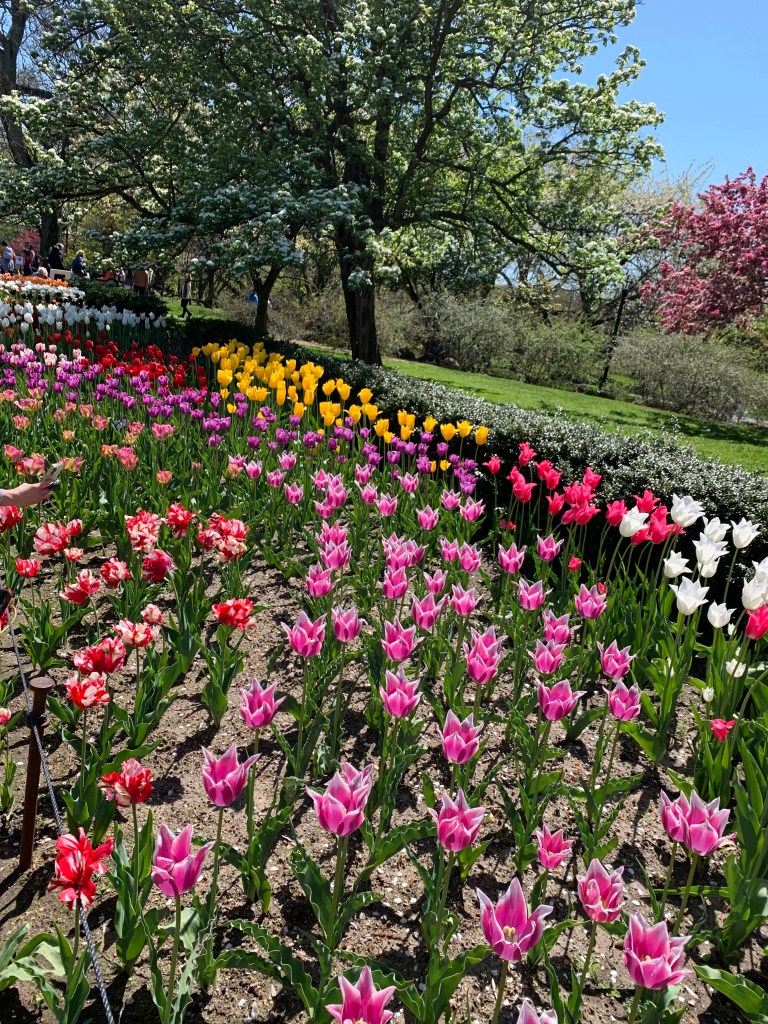
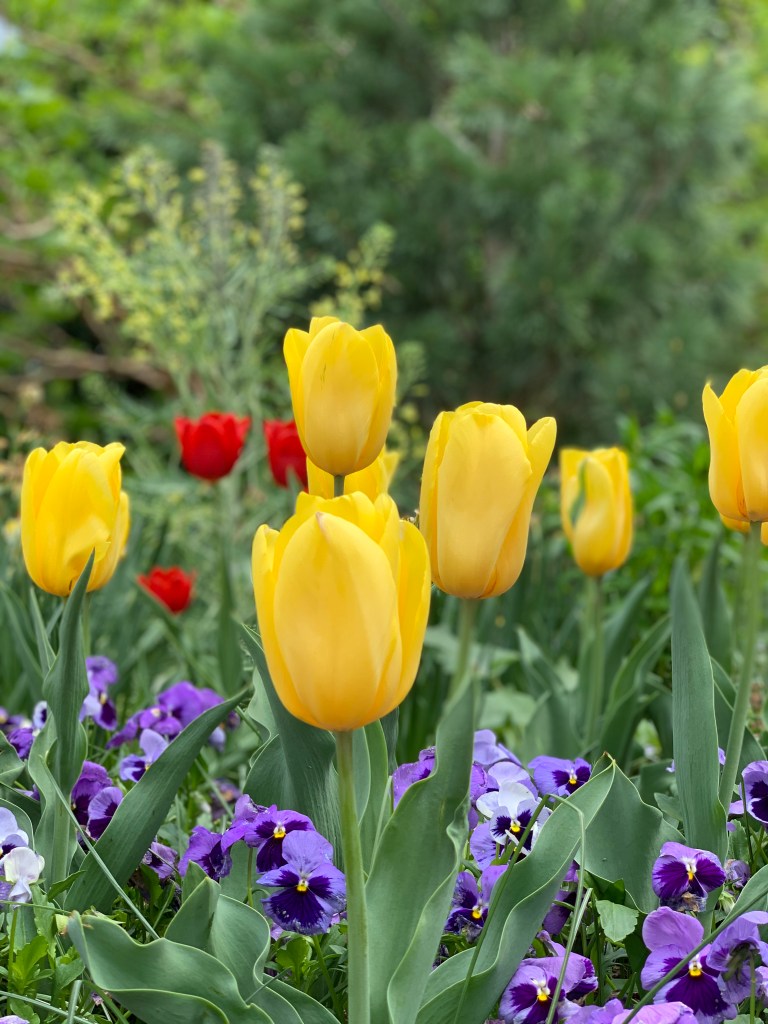
Tulip Peak Bloom:
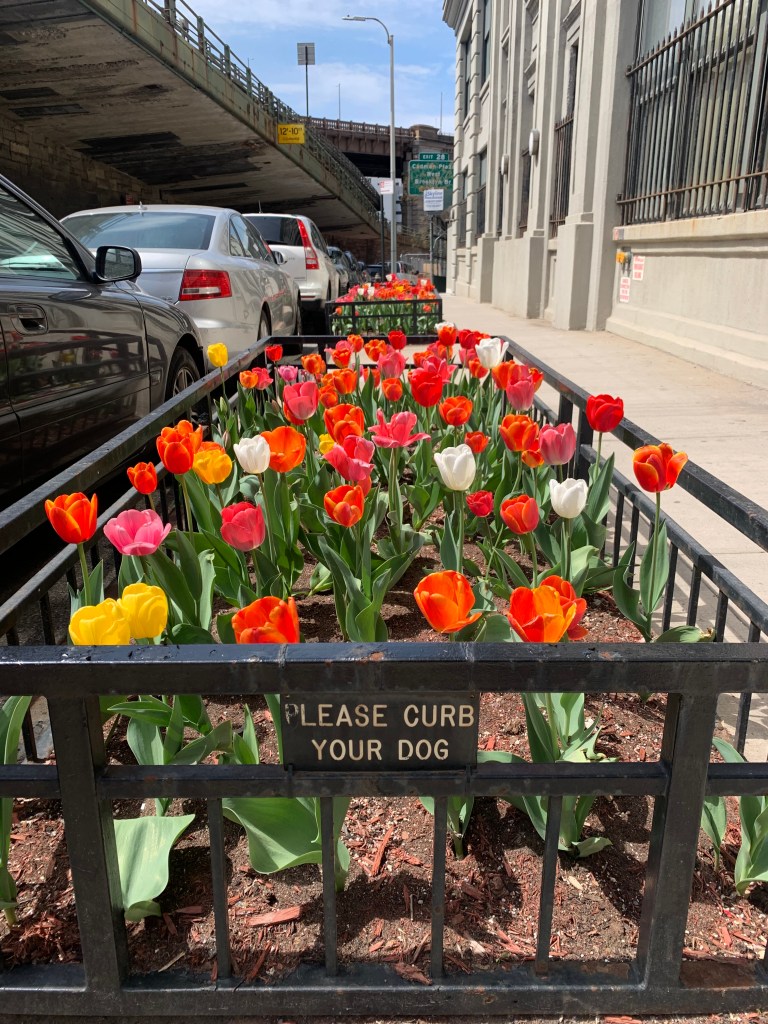
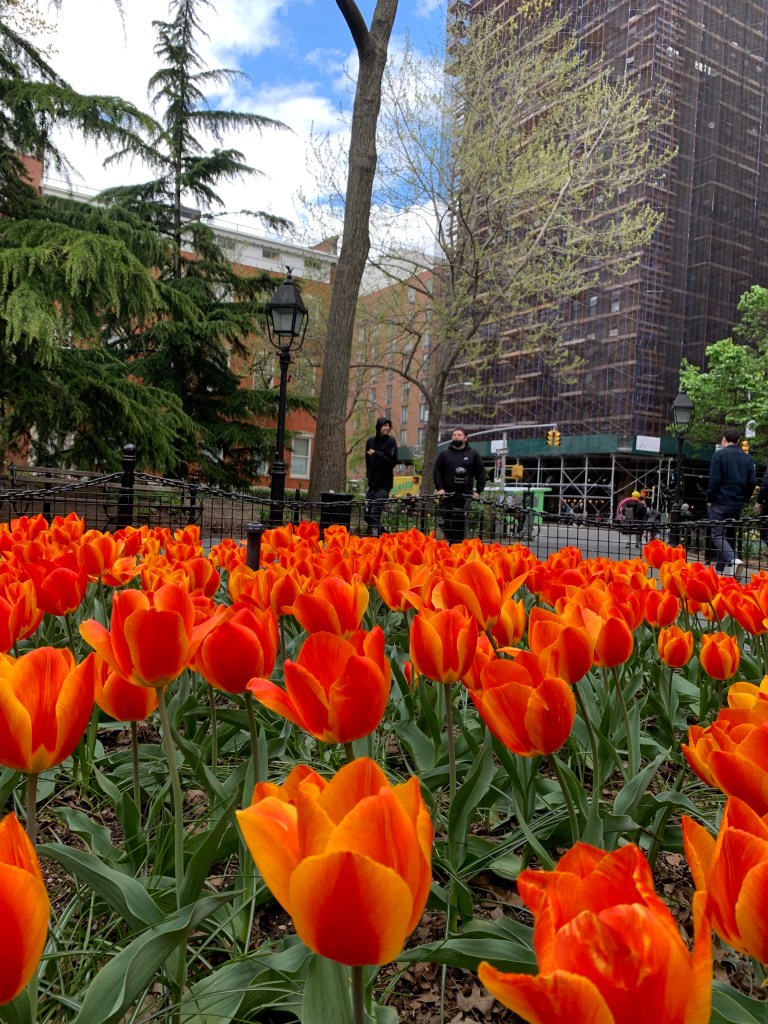
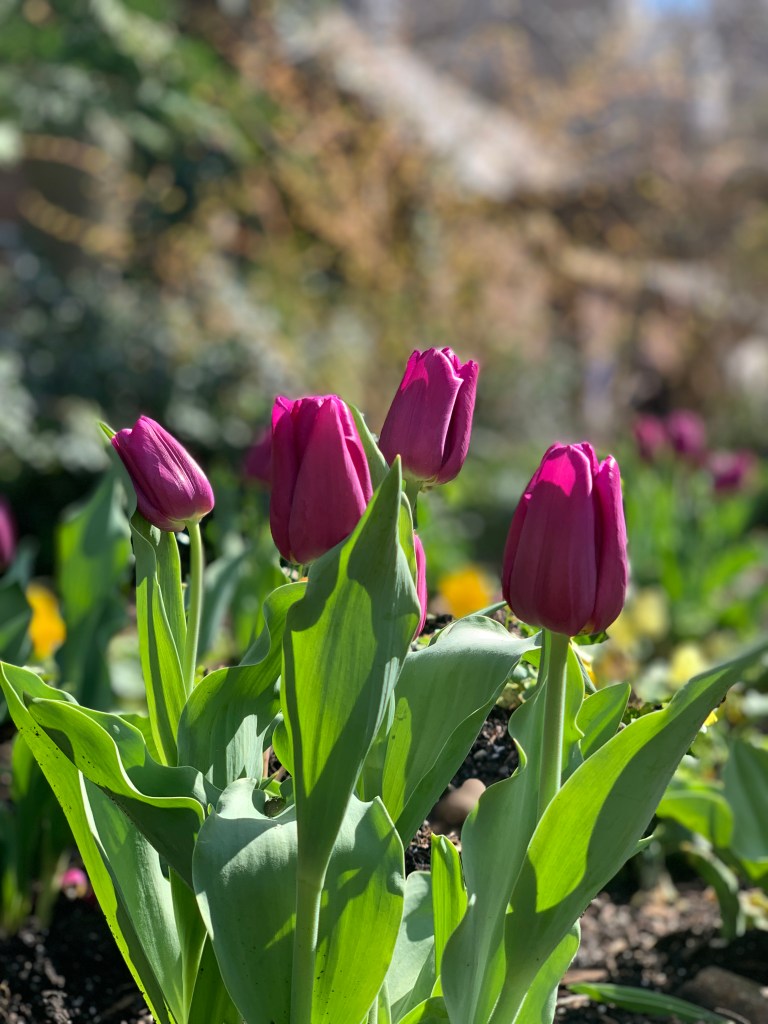
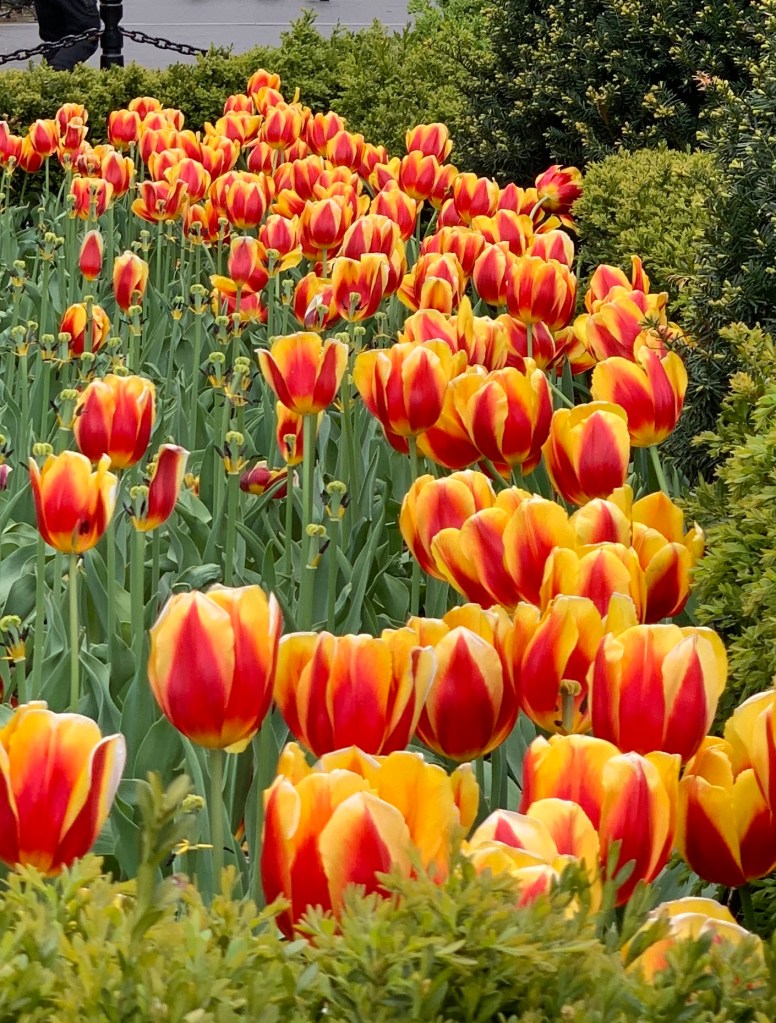
Now is the time to witness the peak bloom of tulips across the city! These cheerful, cup-shaped flowers bring an explosion of color in a seemingly endless variety of shades, from fiery reds and sunny yellows to soft pastels and striking bicolors.
A Bit About Tulips: Native to Central Asia and Turkey, tulips were introduced to Europe in the 16th century and quickly became a sensation, even sparking a period known as “Tulip Mania” in the Netherlands. They are beloved for their vibrant colors and elegant form, symbolizing perfect love.
Where to Find Tulips in NYC:
Conservatory Garden, Central Park: The formal gardens here boast stunning and meticulously arranged tulip displays in various beds, creating a truly breathtaking spectacle.
Brooklyn Botanic Garden: Wander through the diverse gardens here, and you’ll find impressive collections of tulips in dedicated sections and mixed plantings.
Union Square Park: The flower beds around the perimeter of the park often feature vibrant tulip displays, adding a splash of color to this bustling urban oasis.
Riverside Park: Explore the various gardens and pathways along Riverside Park, especially around the 79th Street Boat Basin and the northern sections, for beautiful tulip sightings.
Street Plantings and Community Gardens: Keep an eye out for smaller but equally delightful tulip plantings in traffic medians, community gardens, and even window boxes throughout different neighborhoods.
Tulips
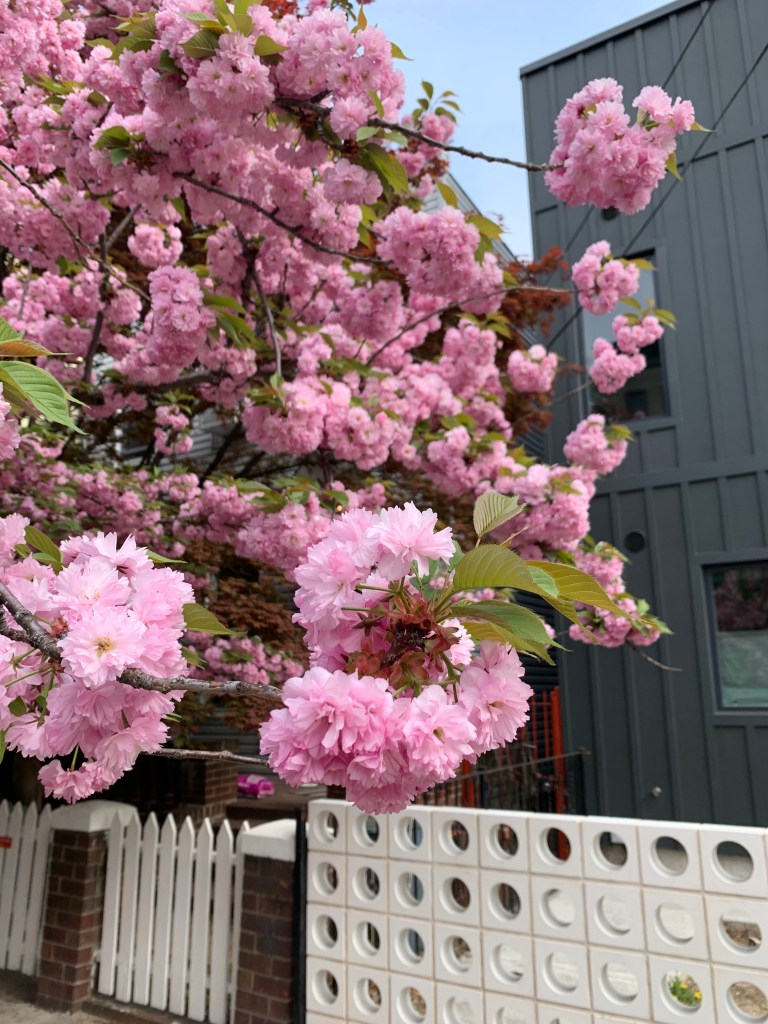
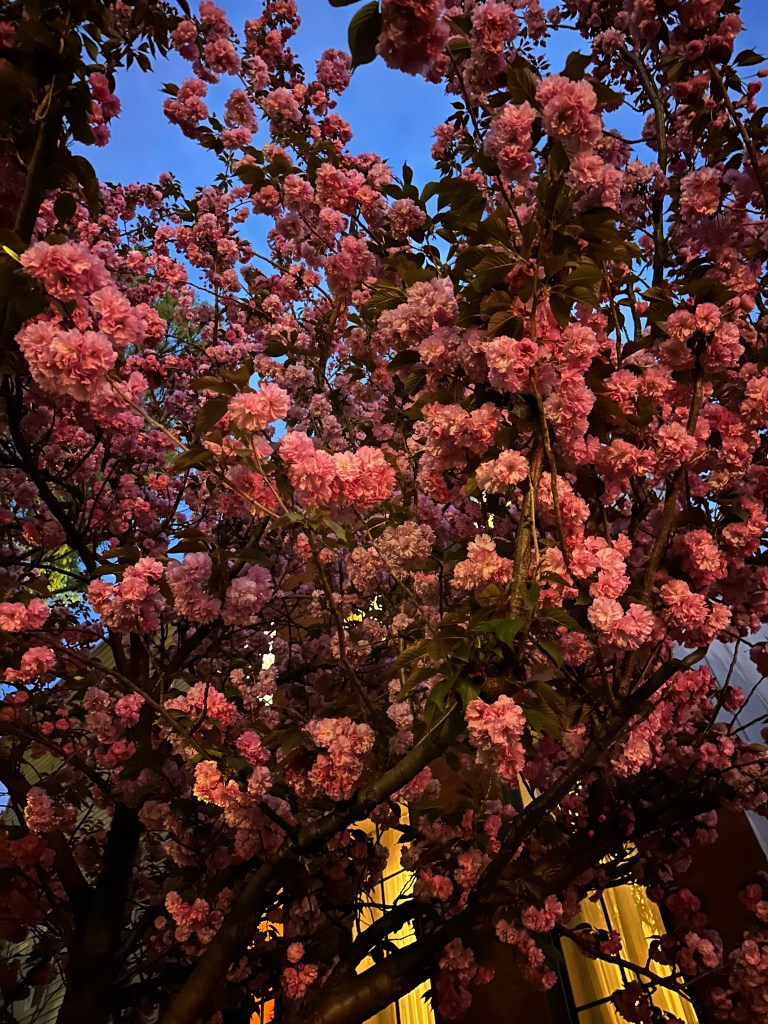
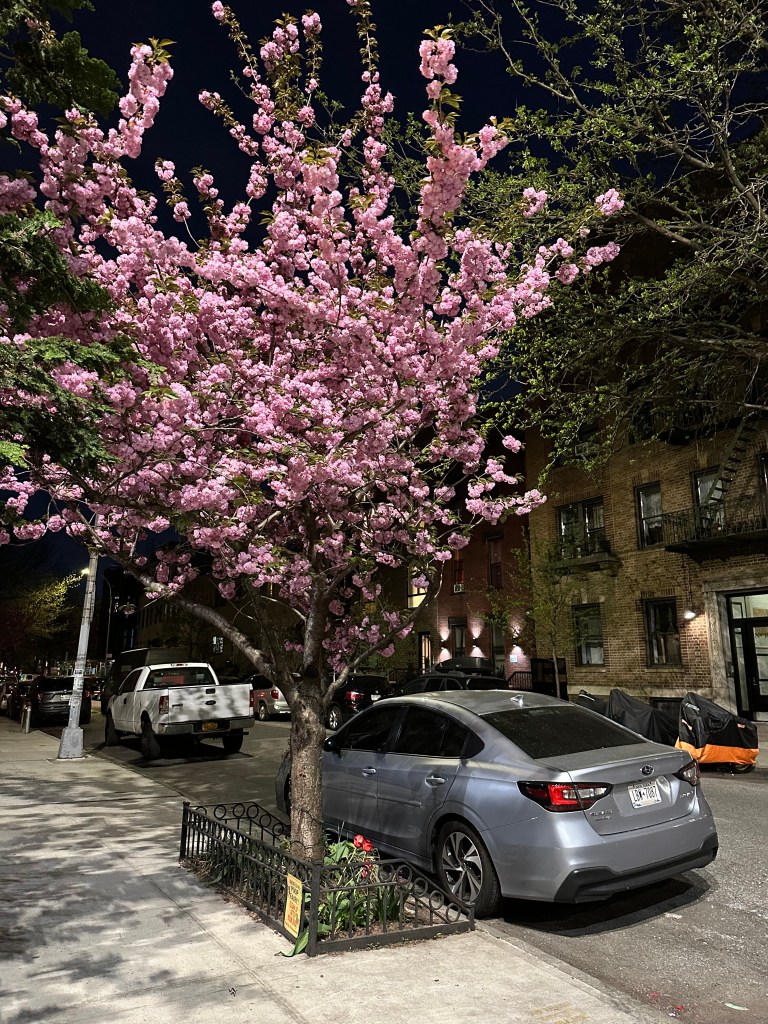
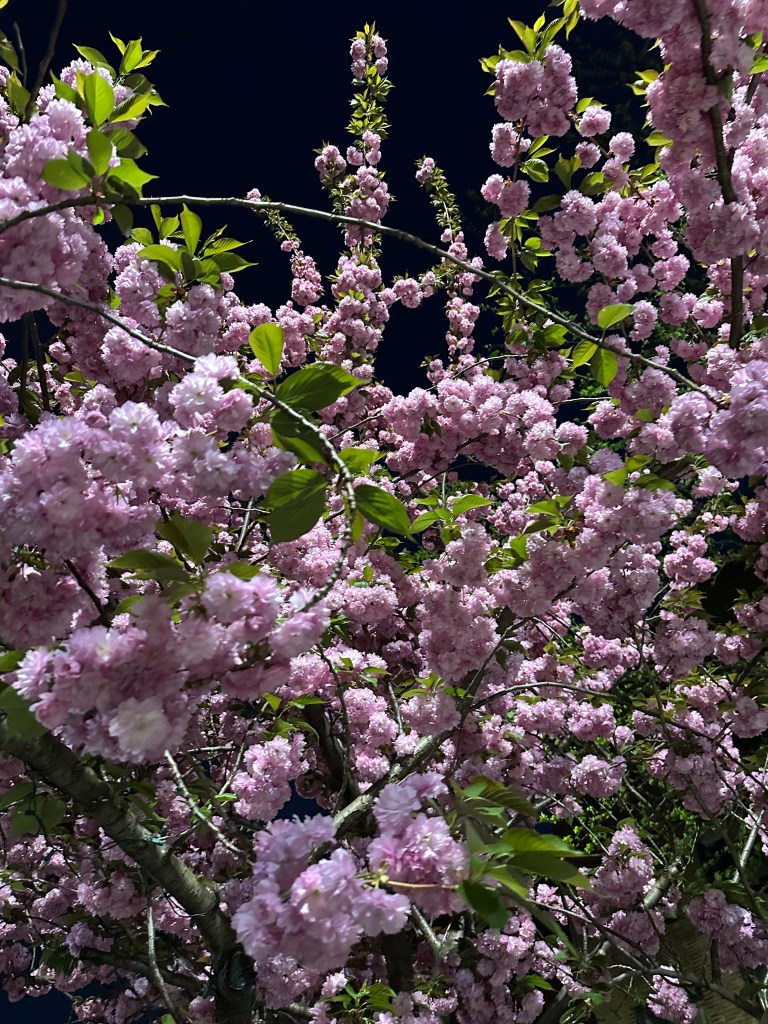
Kwanzan Cherry Peak Bloom:
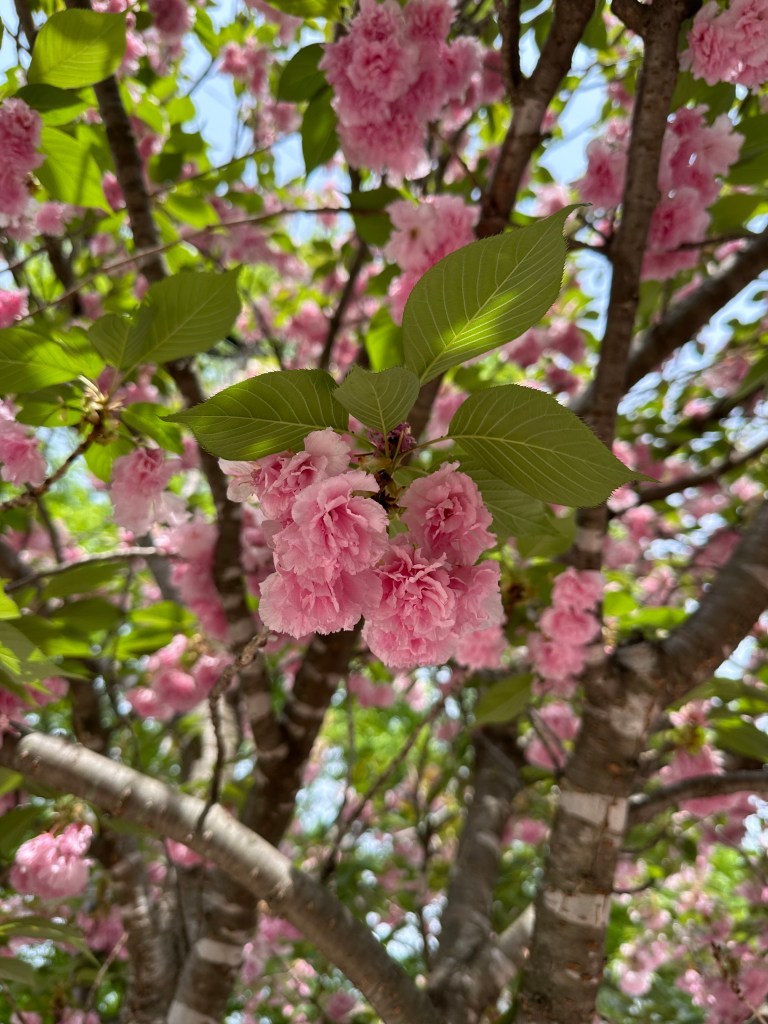
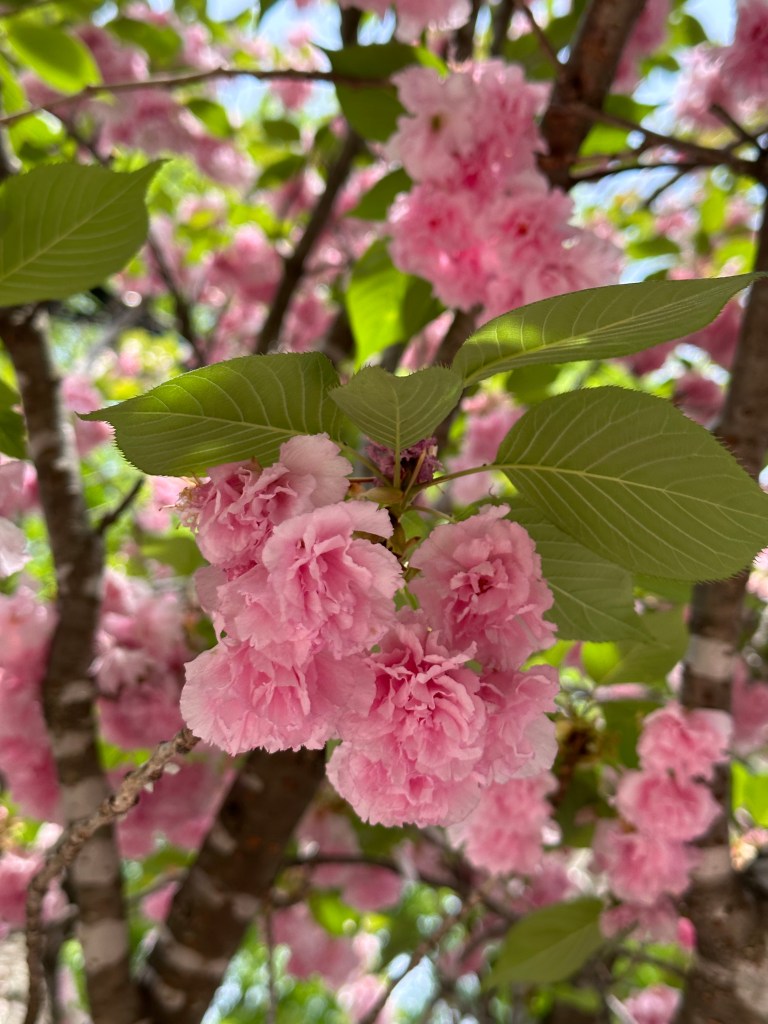
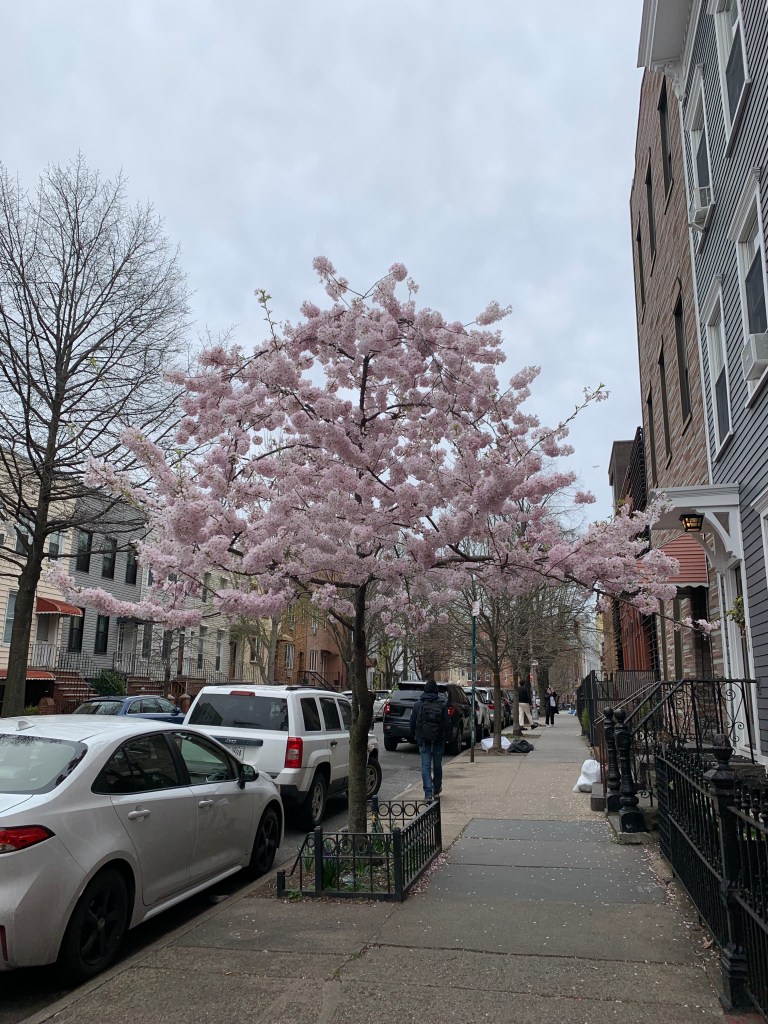
Just as the earlier cherry blossoms fade, the magnificent Kwanzan cherry trees are now reaching their peak bloom. These ornamental cherries are known for their large, fluffy, double pink blossoms that create a spectacular visual impact.
A Bit About Kwanzan Cherries: A popular cultivar of Japanese flowering cherry, Kwanzan trees are prized for their showy, long-lasting blooms and their upright, vase-shaped form. They typically bloom a bit later than other cherry varieties, extending the cherry blossom season in NYC.
Where to Find Kwanzan Cherries in NYC:
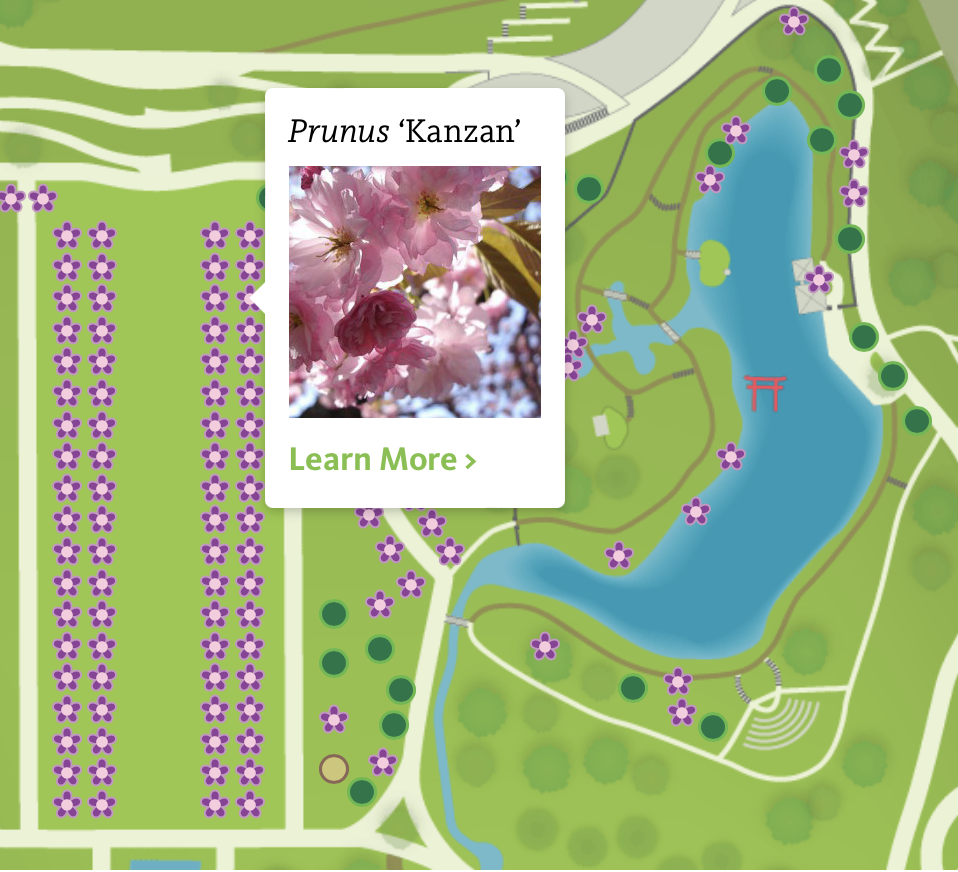
Riverside Park (Upper West Side): You can find pockets of Kwanzan cherry trees adding their vibrant color to the landscape.
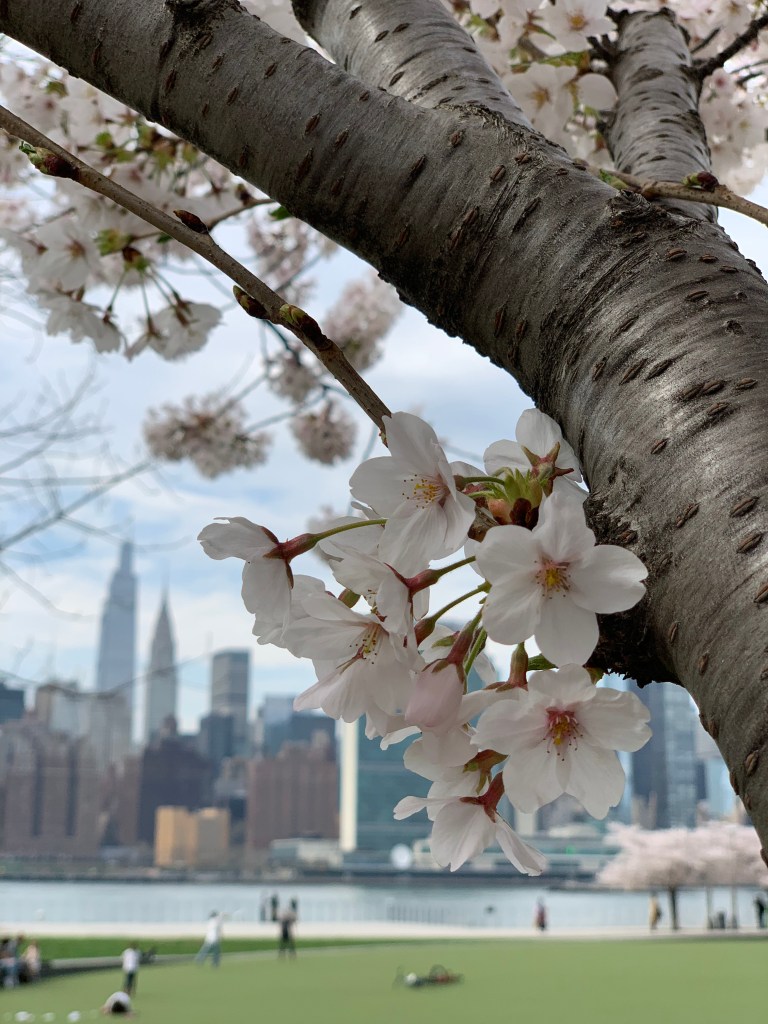
Roosevelt Island: The promenade along the East River offers stunning views of hundreds of Kwanzan cherry trees in full bloom, creating a pink paradise with the Manhattan skyline as a backdrop.
Central Park (various locations): Look for them along the pathways near the Reservoir, in the Conservatory Water area, and scattered throughout the park.
Brooklyn Botanic Garden: The Cherry Esplanade will likely still have some late-blooming Kwanzan cherries providing a beautiful display.
Flushing Meadows Corona Park, Queens: This large park features numerous cherry trees, including Kwanzans, that create beautiful pink vistas.
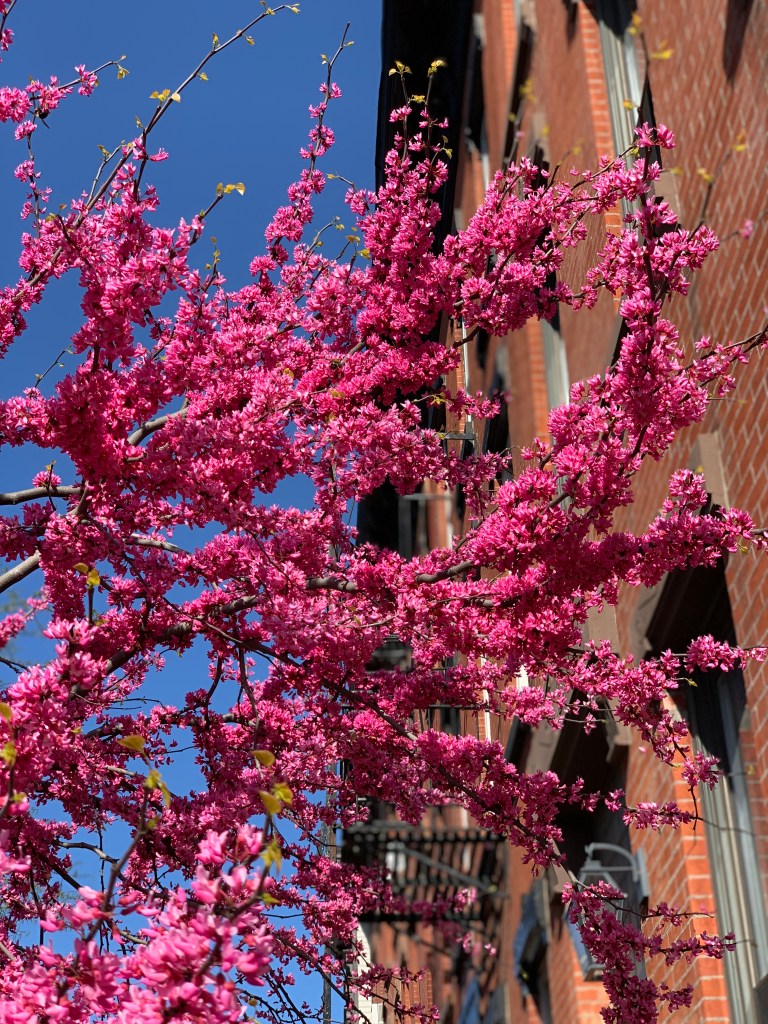
Redbud Peak Bloom:
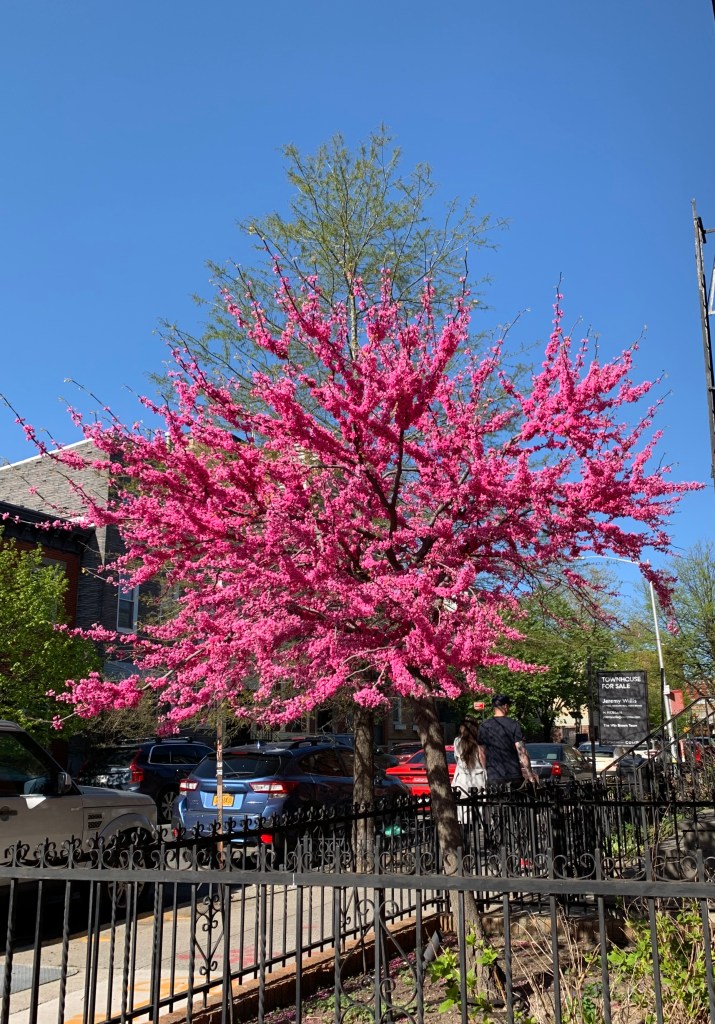
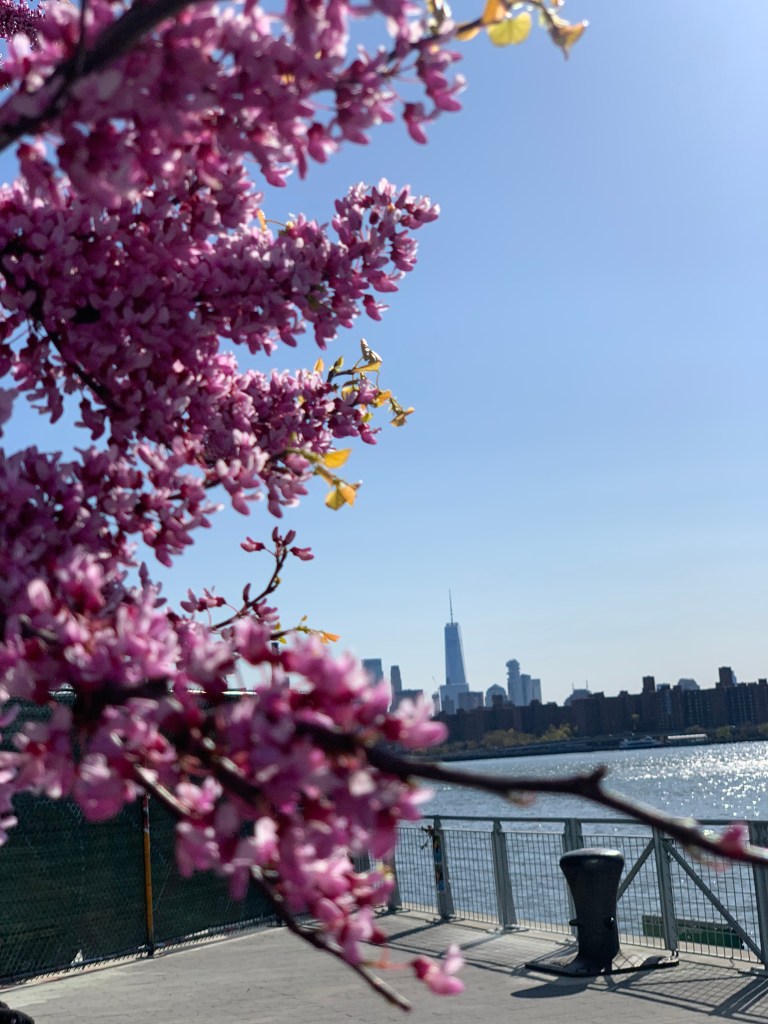
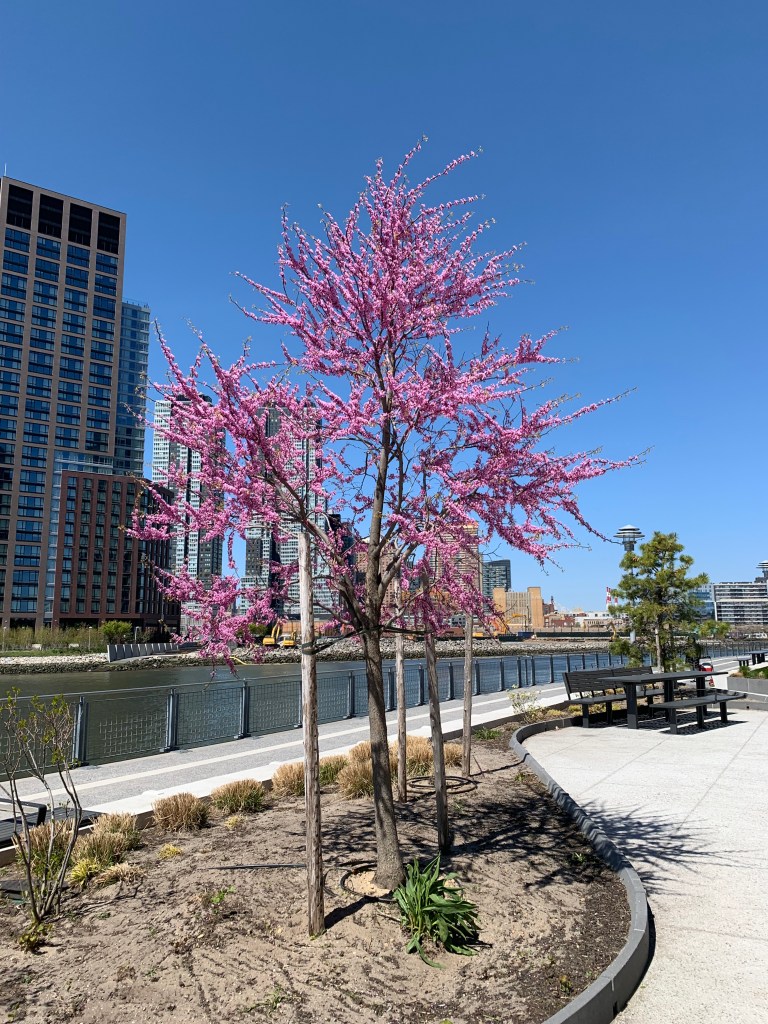
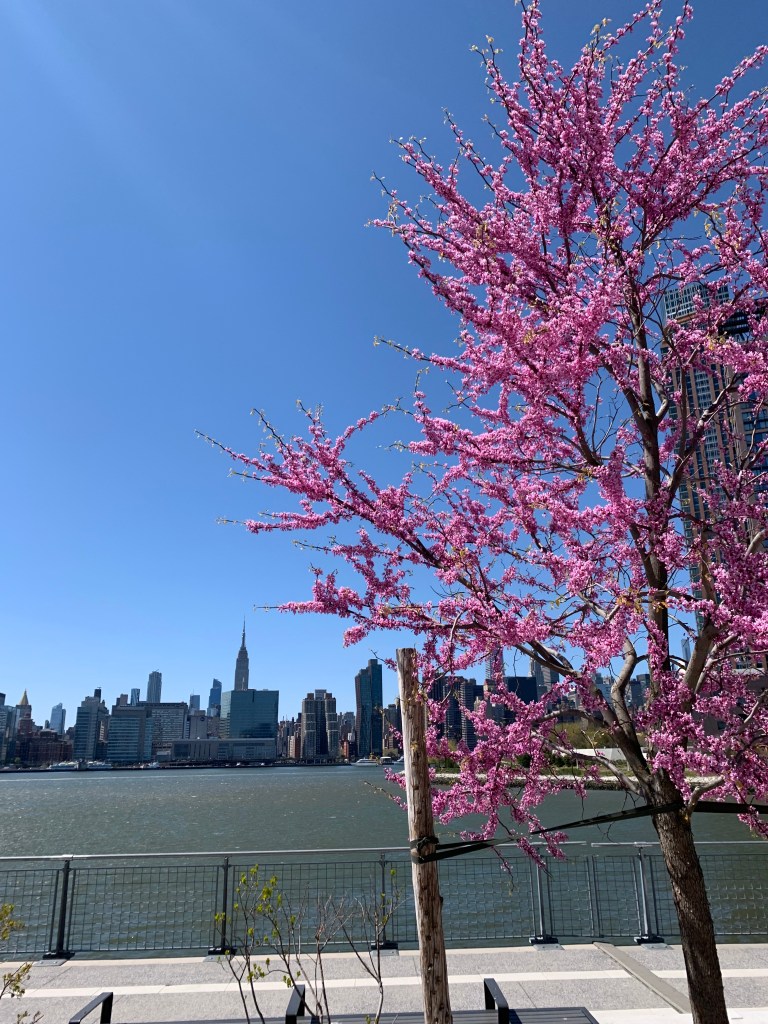
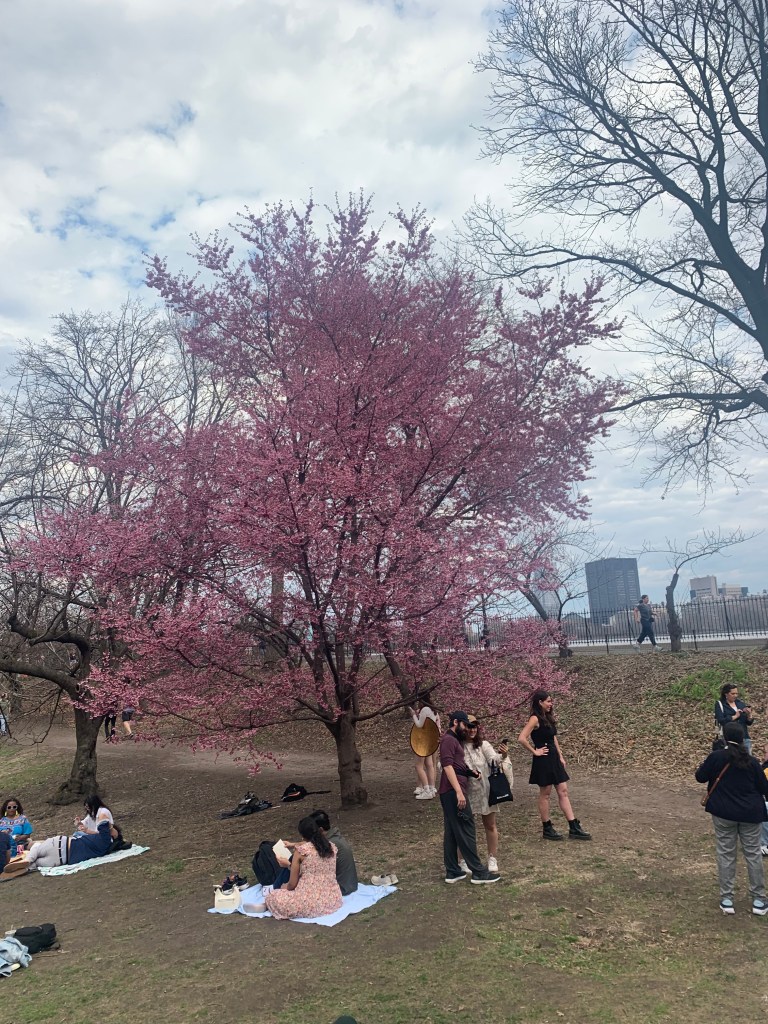
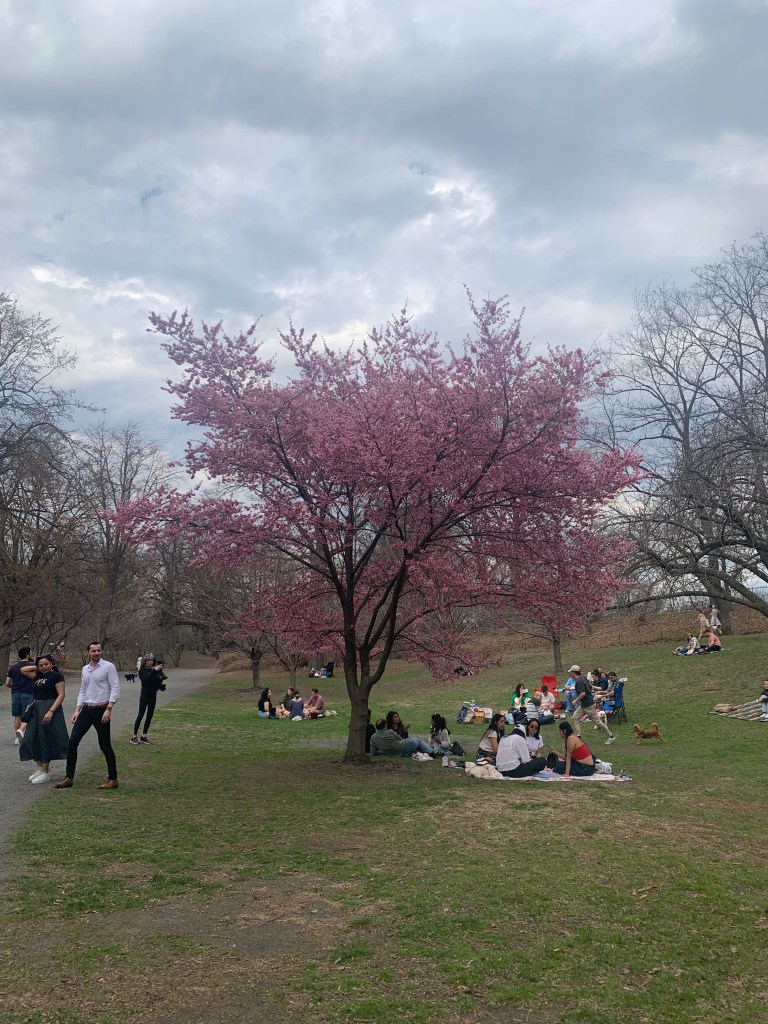
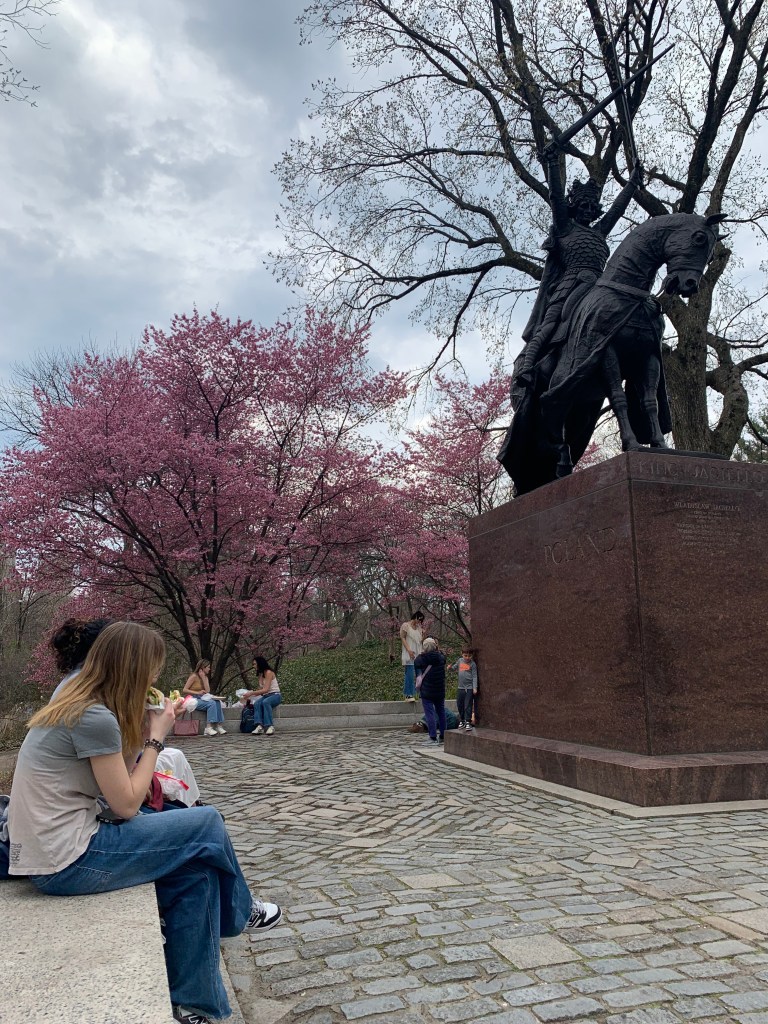
Adding a touch of delicate magenta and pink to the spring palette are the Eastern Redbud trees, now likely at their peak bloom. Their small, pea-like flowers emerge directly from the branches and trunks, creating a unique and beautiful effect.
A Bit About Redbuds: Native to eastern North America, redbud trees are relatively small and known for their early spring blooms that appear before their heart-shaped leaves fully emerge. They are a sign of spring’s gentle beauty.
Where to Find Redbuds in NYC:
Street Trees: Keep an eye out for redbuds planted as street trees in various neighborhoods, their vibrant pink a lovely contrast to the urban landscape.
New York Botanical Garden (Bronx): The diverse collections here will showcase redbuds in various locations, allowing you to appreciate their unique floral display.
Prospect Park (Brooklyn): Look for redbuds scattered throughout the park, often adding pops of pink along pathways and woodland edges.
Central Park: You can find redbuds in more naturalistic areas of the park, often near wooded sections and along less formal paths.
Azalea Peak Bloom:
A Bit About Azaleas: These members of the rhododendron family are known for their profusion of colorful, trumpet-shaped flowers in shades of pink, red, purple, white, and orange. They often bloom in mid to late spring, creating vibrant displays.
Where to Find Azaleas in NYC:
New York Botanical Garden (Bronx): Their extensive collections will offer a breathtaking array of azaleas in various gardens and along pathways.
Brooklyn Botanic Garden: The Japanese Hill-and-Pond Garden and other areas often feature beautiful azalea displays.
Conservatory Garden, Central Park: Look for azaleas adding splashes of color in different sections of this formal garden.
Crab Apple Peak Bloom:
Adding another layer of beauty to the late spring tapestry are the crab apple trees, with their delicate blossoms in shades of white, pink, and even red. These trees offer a profusion of flowers, creating a delightful contrast to the emerging greenery.
A Bit About Crab Apples: Crab apples are known for their showy spring blooms and their small, apple-like fruits that persist into the fall and winter, providing food for birds. They are often used as ornamental trees in parks and gardens.
Where to Find Crab Apples in NYC:
Central Park (Conservatory Garden): The Conservatory Garden features beautiful rows of crabapple trees.
Riverside Park: You can find crabapple trees around 91st Street and along the riverfront from 100th to 125th Streets.
Brooklyn Botanic Garden: Check their website for specific locations and bloom updates.
Brooklyn Botanic Garden’s Cherry Tracker:
The Brooklyn Botanic Garden has officially launched its cherry blossom tracker, offering real-time updates on the status of various cherry varieties. Visitors can track the progress of Okame, Yoshino, Kwanzan, and Weeping Cherry trees, each of which blooms at different times, creating an extended cherry blossom season.
Okame Cherry – One of the earliest bloomers, these deep pink flowers signal the arrival of spring.
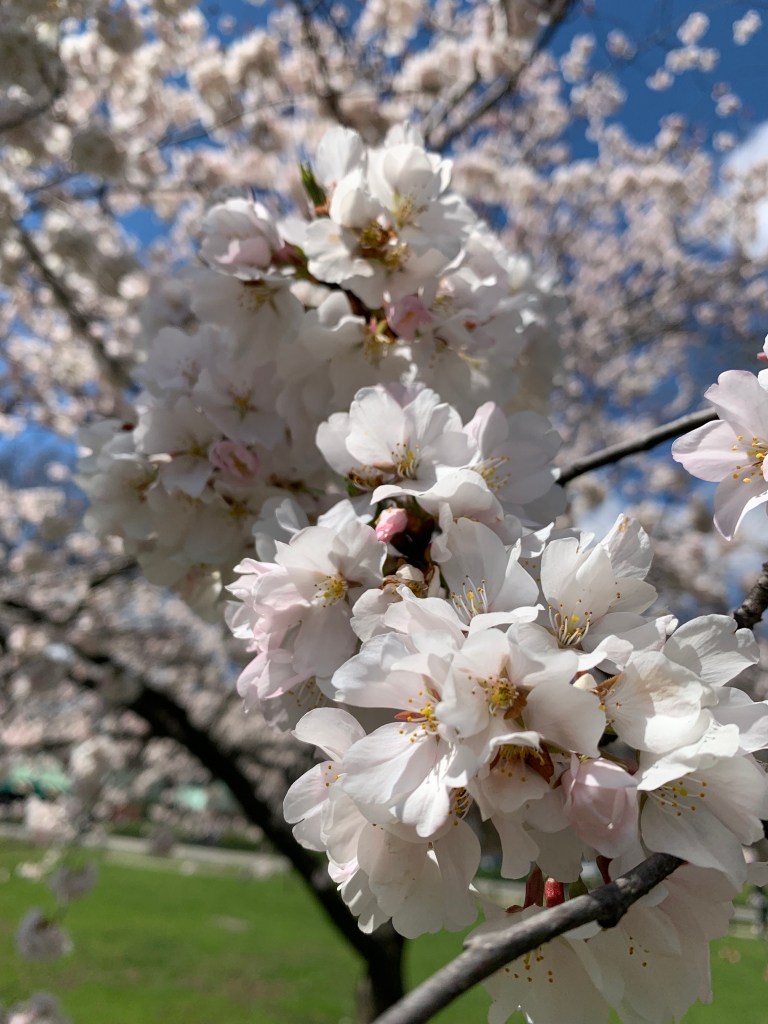
Yoshino Cherry – The most famous variety, known for its soft pink and white flowers that create iconic cherry blossom tunnels.
Kwanzan Cherry – A late-blooming variety with double-layered, rich pink blossoms, adding a vibrant splash of color later in the season.
Weeping Cherry – Recognized for its gracefully drooping branches covered in delicate pink flowers, creating a stunning cascading effect.
Check out their tracker here for the latest bloom reports and plan your visit accordingly.
The Greening Canopy: Beyond the spectacular blooms, notice the increasing lushness of the city’s trees. The leaves are now unfurling in earnest, painting the urban landscape in fresh shades of green. This vibrant foliage provides a beautiful backdrop to the remaining spring flowers and signals the arrival of summer’s verdant embrace. Soon, we’ll be enjoying the shade and the full glory of our leafy city!
What’s Next on the Blooming Horizon:
The floral show in NYC continues! Keep an eye out for the fragrant lilacs with their purple, white, and pink clusters, especially at the New York and Brooklyn Botanic Gardens, and Central Park’s Conservatory Garden. Soon after, the lush peonies will burst forth in shades of pink, white, and red, often found in the same botanical gardens and even in local gardens. Finally, expect the vibrant blooms of rhododendrons in various colors at the botanical gardens and larger parks. Beyond the individual flowers, the greening of the city’s trees will become even more pronounced, creating a lush, green backdrop for the next wave of beauty. Get ready for more color and fragrance!
Late spring in New York City is a truly magical time, with a succession of stunning blooms and the welcome return of vibrant greenery. Get out and explore the parks, gardens, and even your own neighborhood to witness this incredible transformation. Don’t forget to share your own observations and photos in the comments below! What are your favorite late spring sights in NYC?
Subscribe to stay updated and follow us on Instagram to get more reports, pictures, and videos.
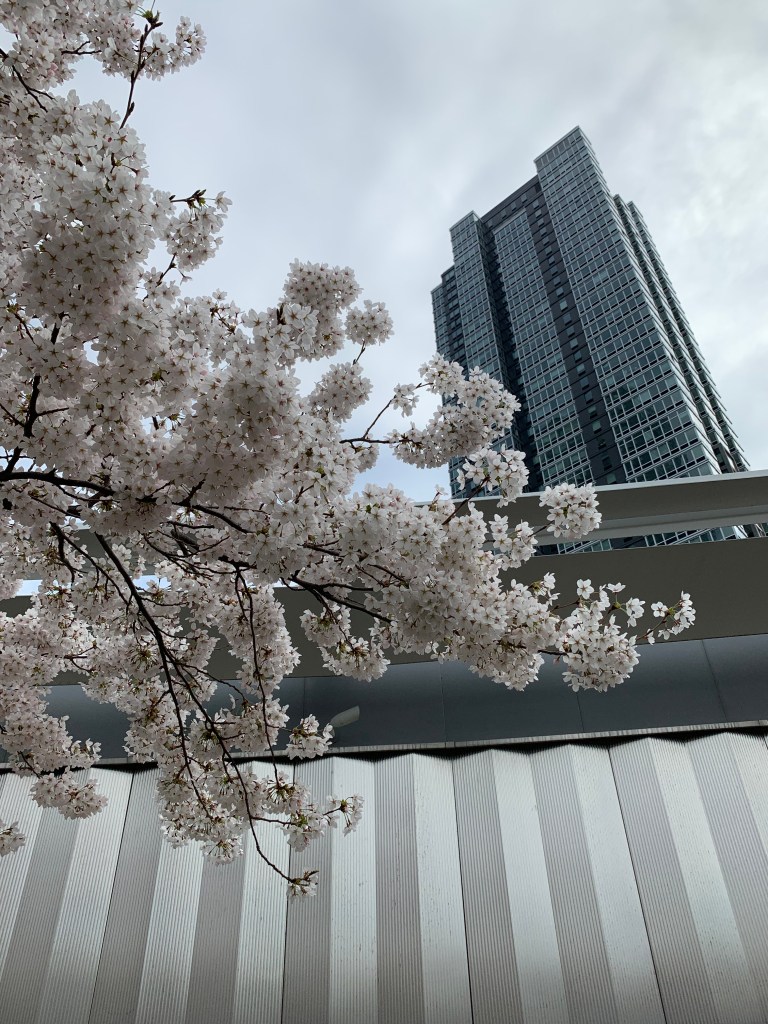
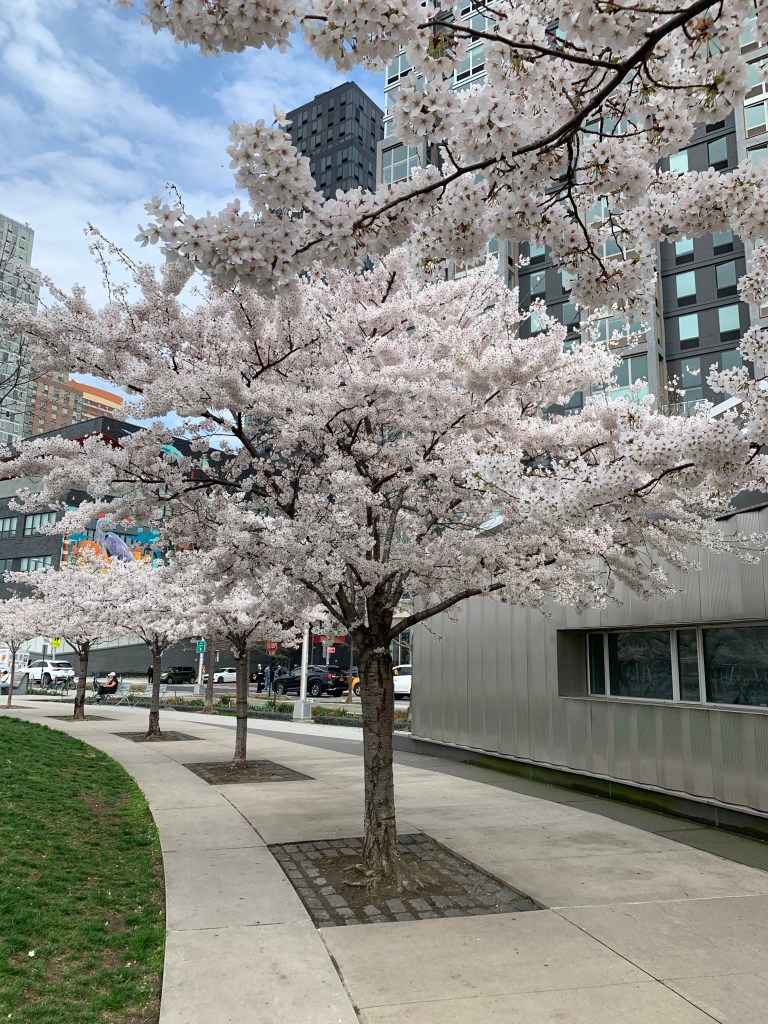
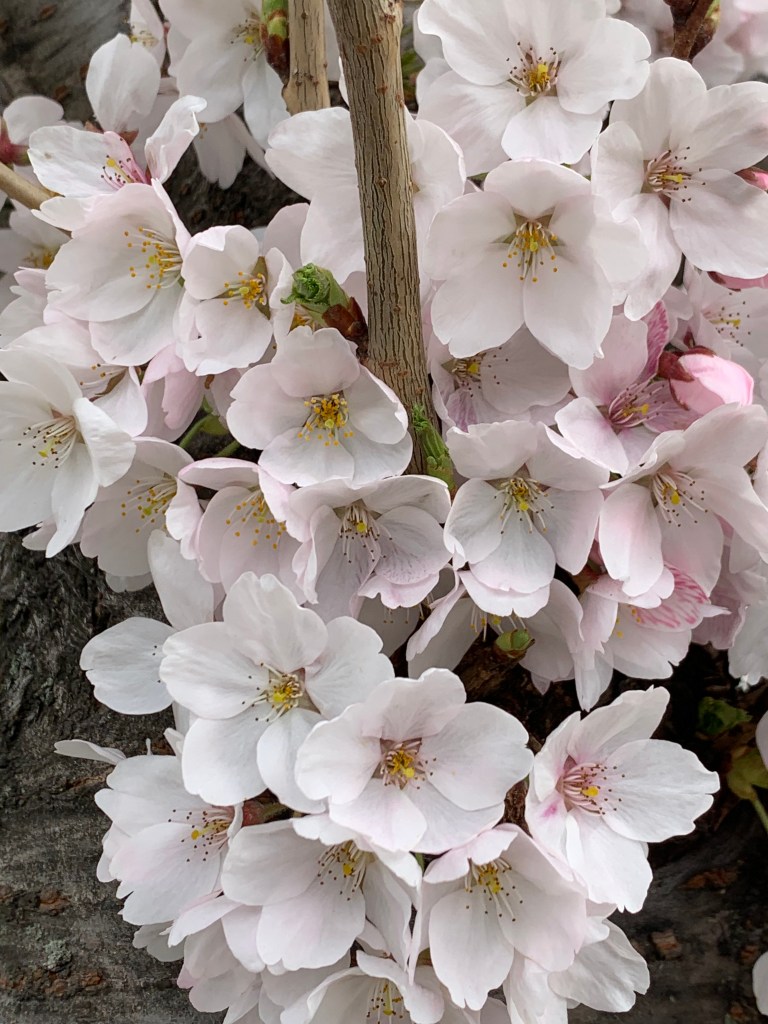
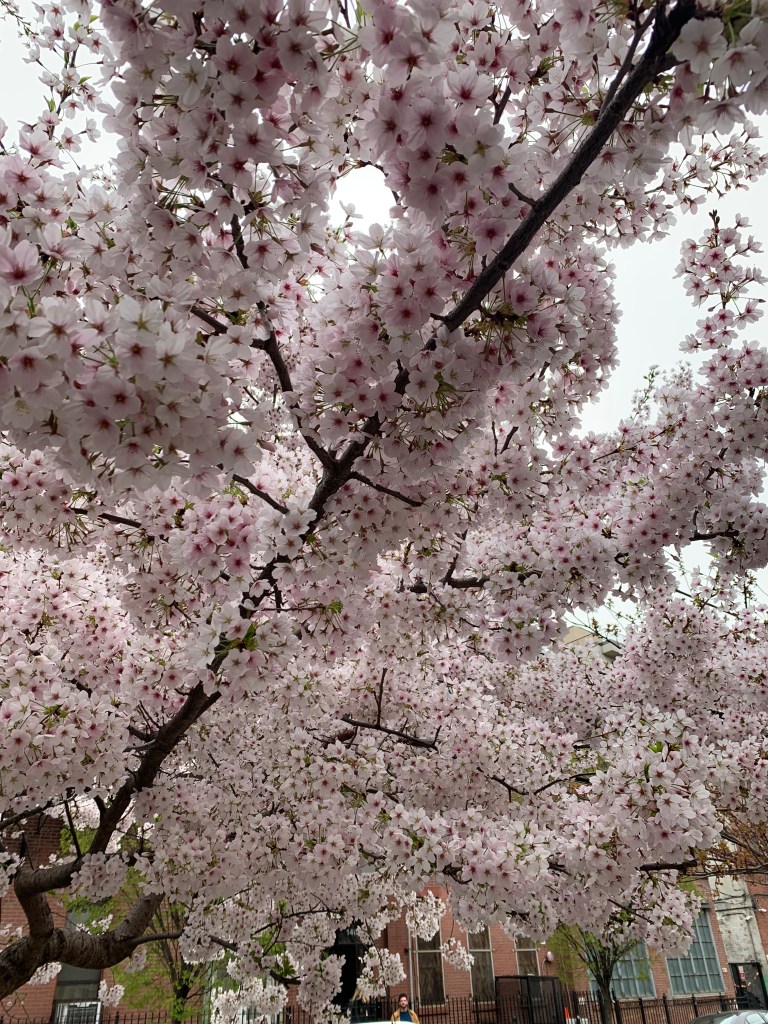
Spring in New York City is a spectacle of blossoming beauty, and this week is no exception! Despite a few lingering chilly days, the city is bursting with vibrant floral displays. From the delicate pinks of cherry blossoms, the vibrant colors of tulips, to the pristine whites of pear and magnolia trees, nature’s palette is on full display. Let’s take a stroll through the city’s parks and discover where you can witness these breathtaking sights.
April 06, 2025 –
Yoshino Cherries in Peak Bloom:
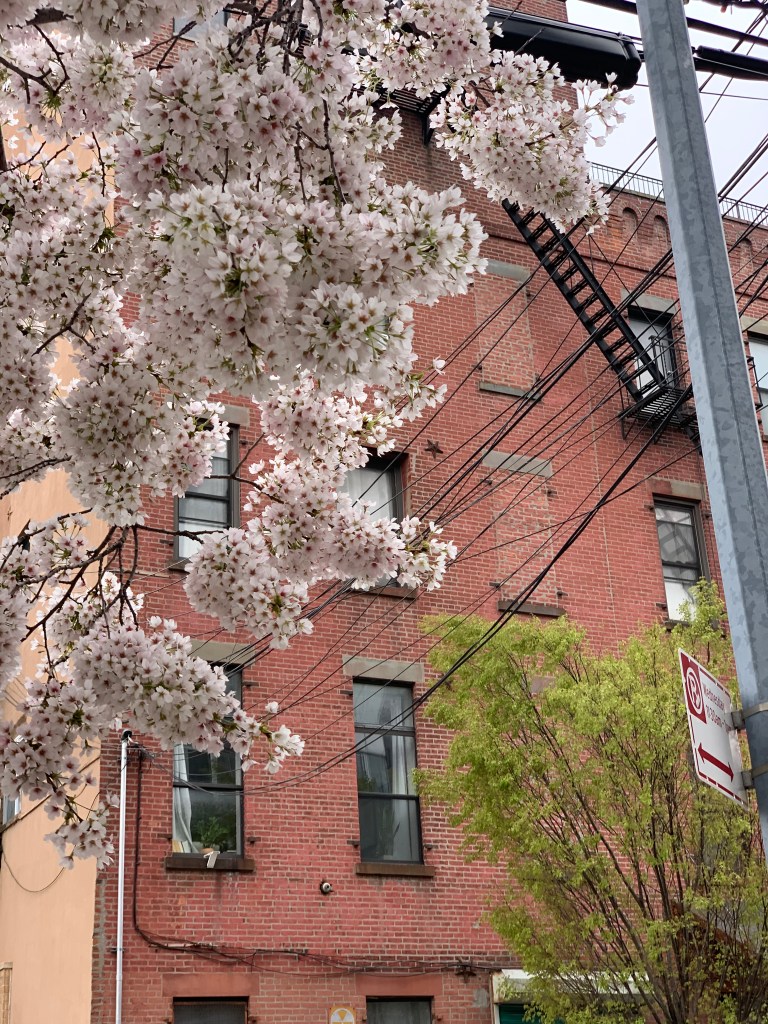
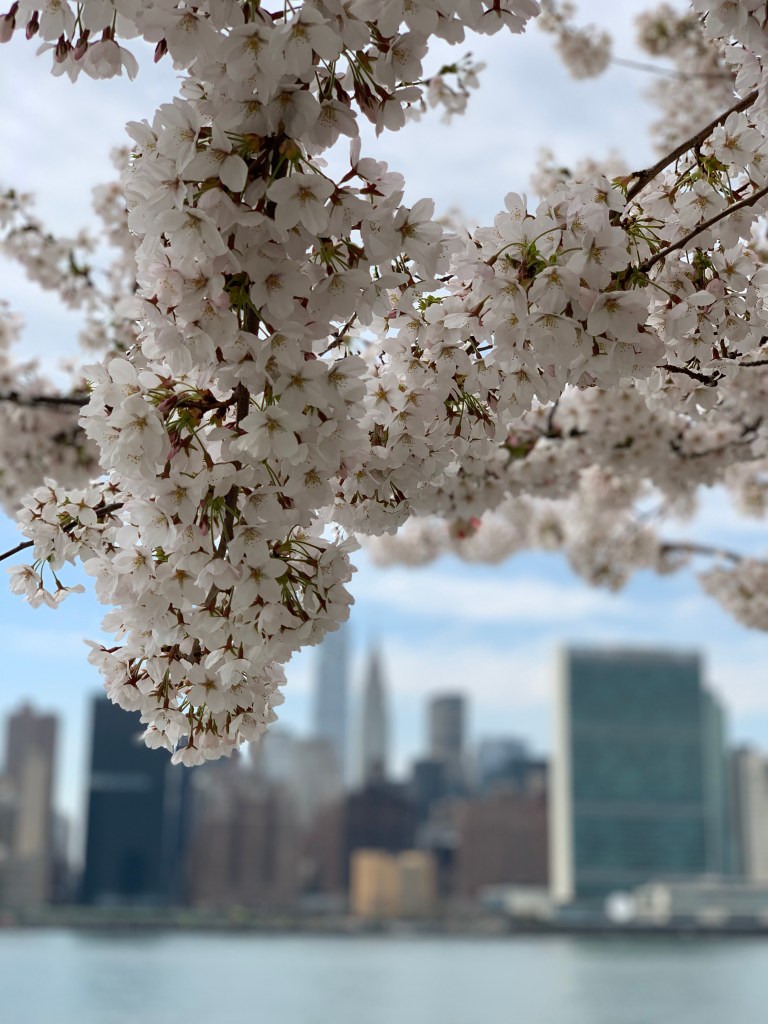
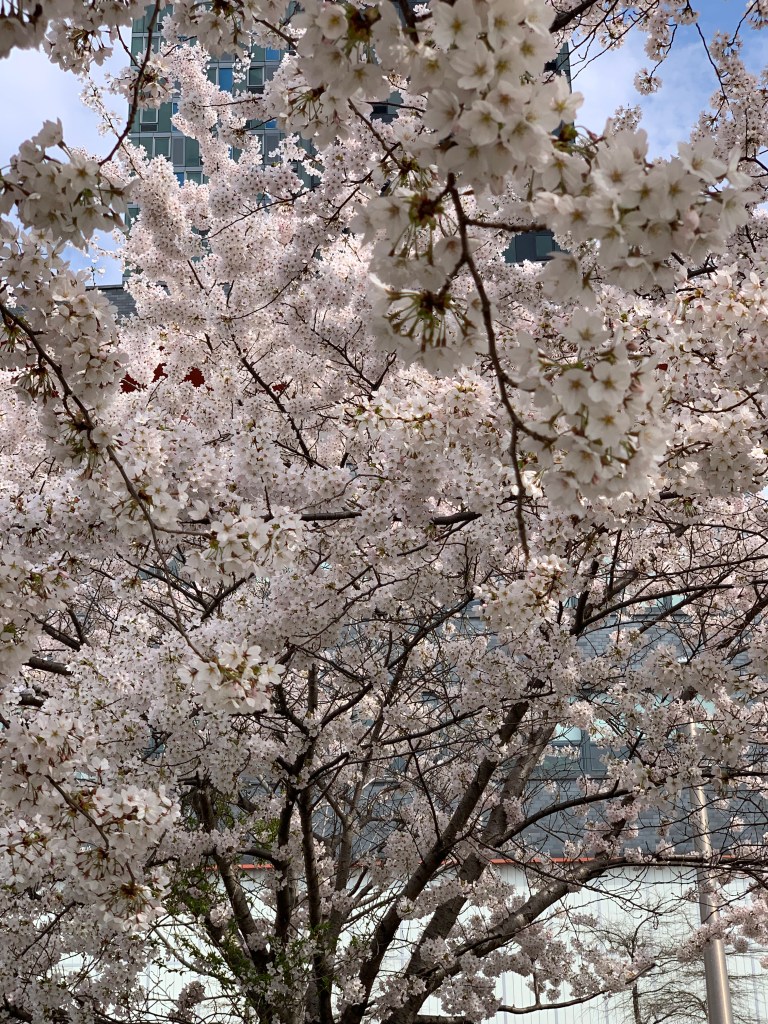
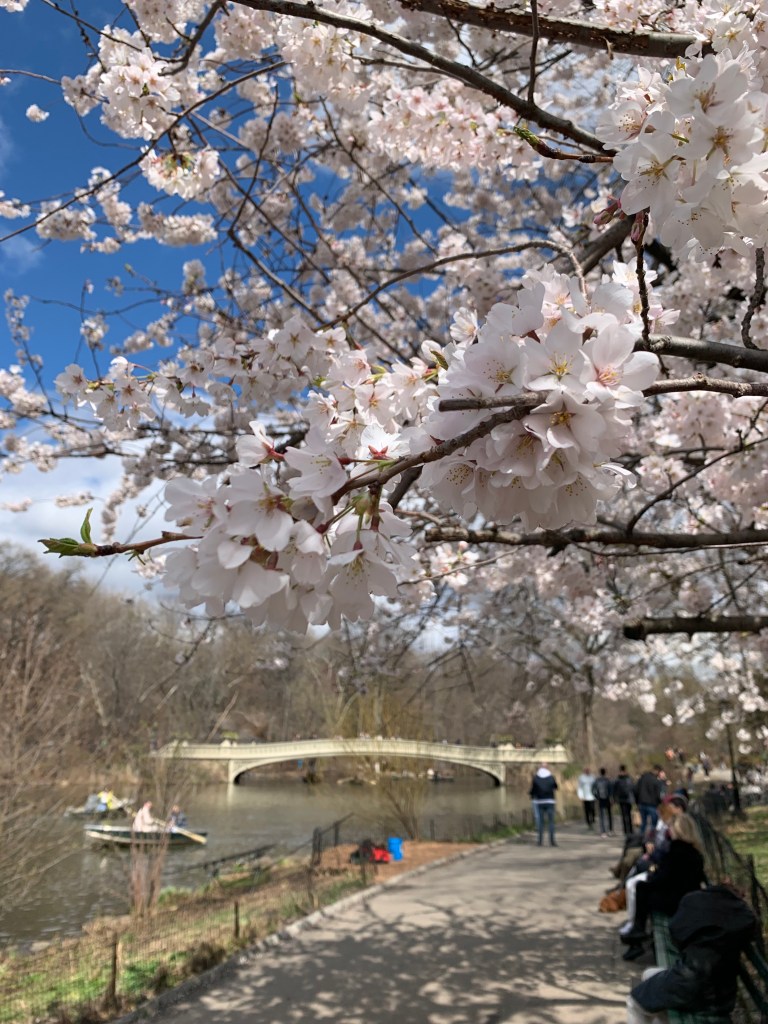
The iconic Yoshino cherry trees are currently at their peak, painting the city in soft, ethereal hues. These delicate blossoms, with their pale pink and white petals, create a dreamy atmosphere that’s perfect for a spring walk. The past week’s unseasonably warm temperatures significantly accelerated the progress of the cherry blossoms, propelling them into their peak bloom over this weekend. This timing aligns with our historical observations, which show a consistent pattern: approximately two weeks after the Yoshino cherry blossoms reach their peak in Washington D.C., they reach their peak bloom in New York City. This predictable sequence allows us to anticipate and enjoy this fleeting but spectacular display.
Where to find them:
Randall’s Island.
Central Park’s Cherry Hill and along the Reservoir.
Brooklyn Botanic Garden’s Cherry Esplanade.
Riverside Park, particularly around the 100th Street area.
Queens Botanical Garden.
Callery Pears: A White Wave of Blooms:
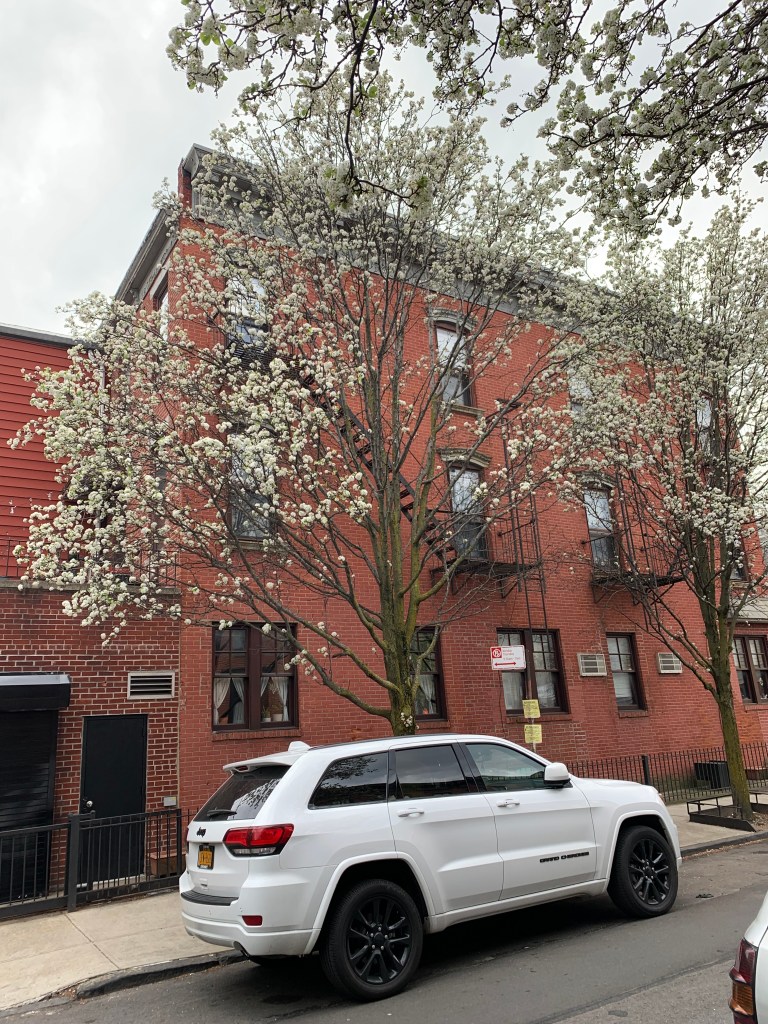
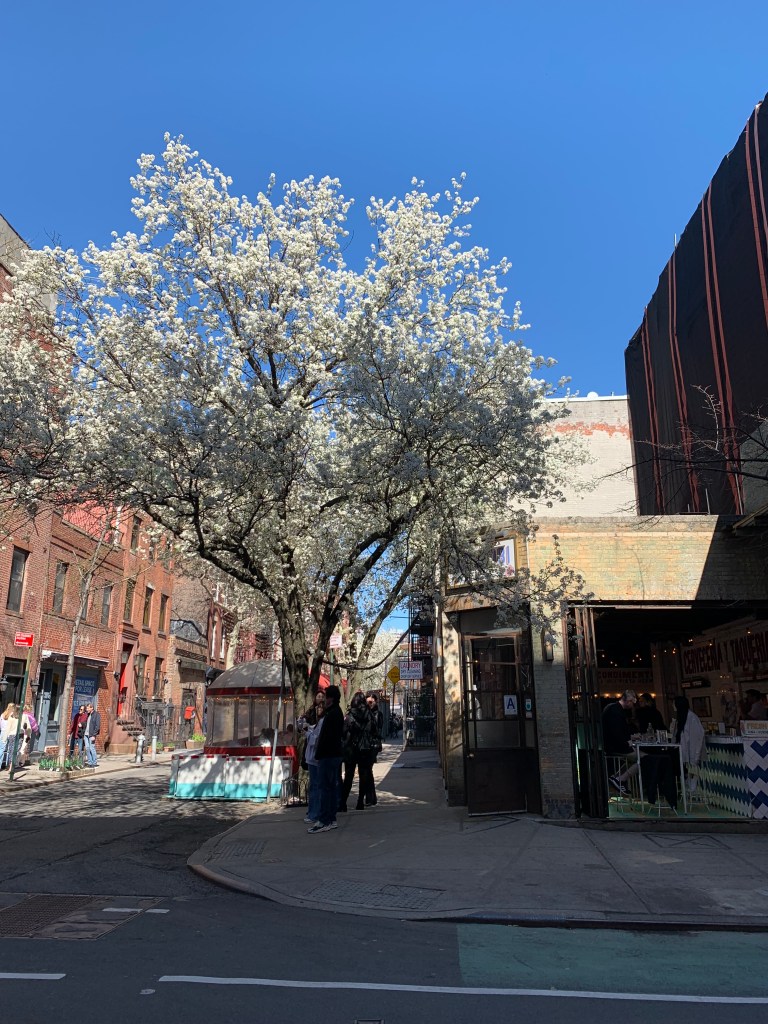
The Callery pear trees are also making their presence known, with their abundant white blossoms creating a stunning contrast against the city’s urban backdrop. The recent cold weather has slightly delayed their full bloom, but they are rapidly approaching their peak and will be magnificent this week. While beautiful, it is worth remembering that these trees are considered invasive.
Magnolias: Saucer and Star in Full Splendor, and Tulips in a Rainbow of Hues:
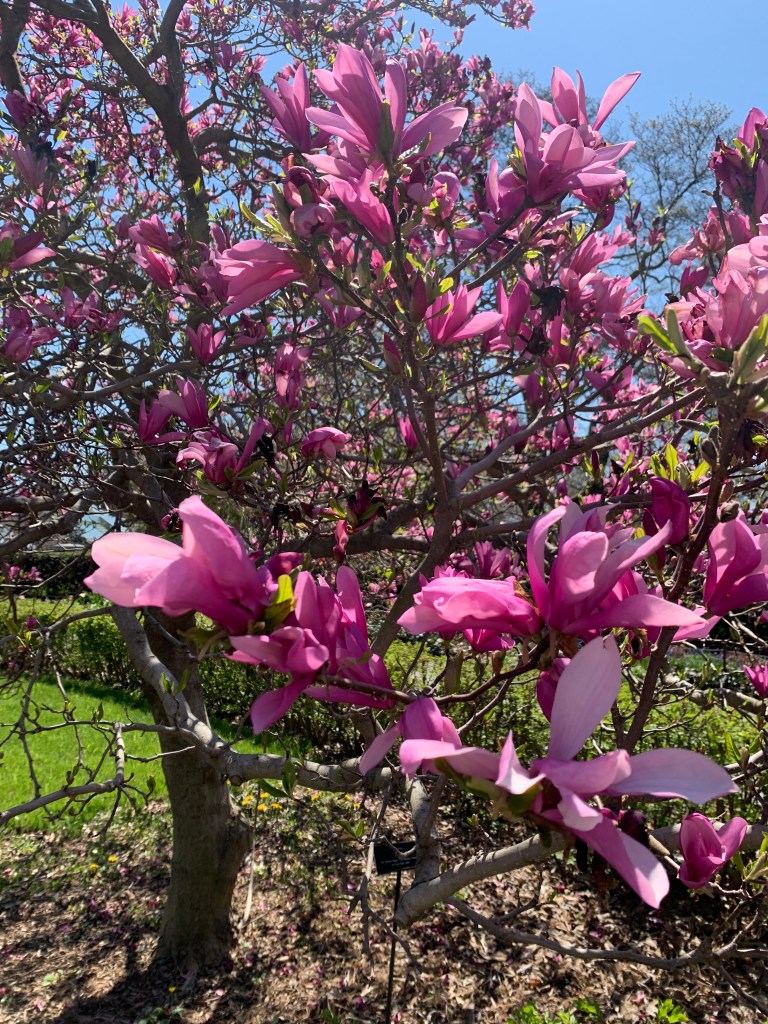
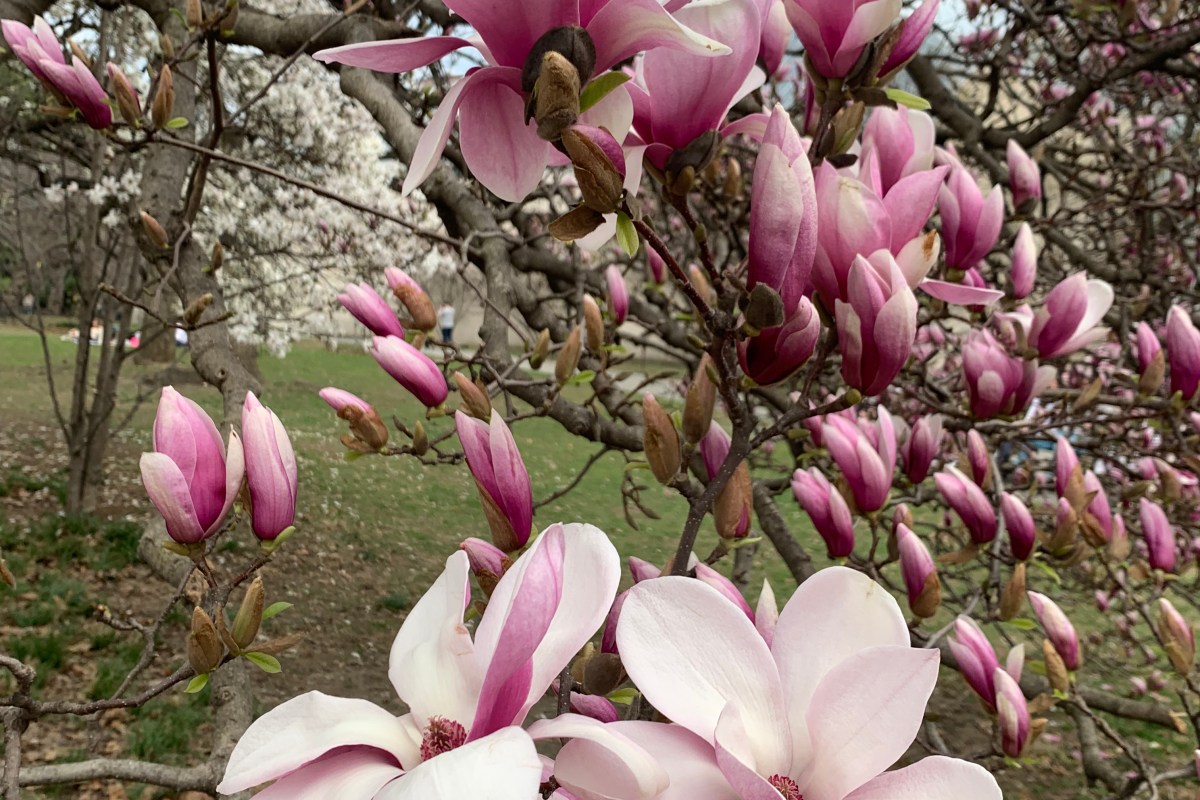
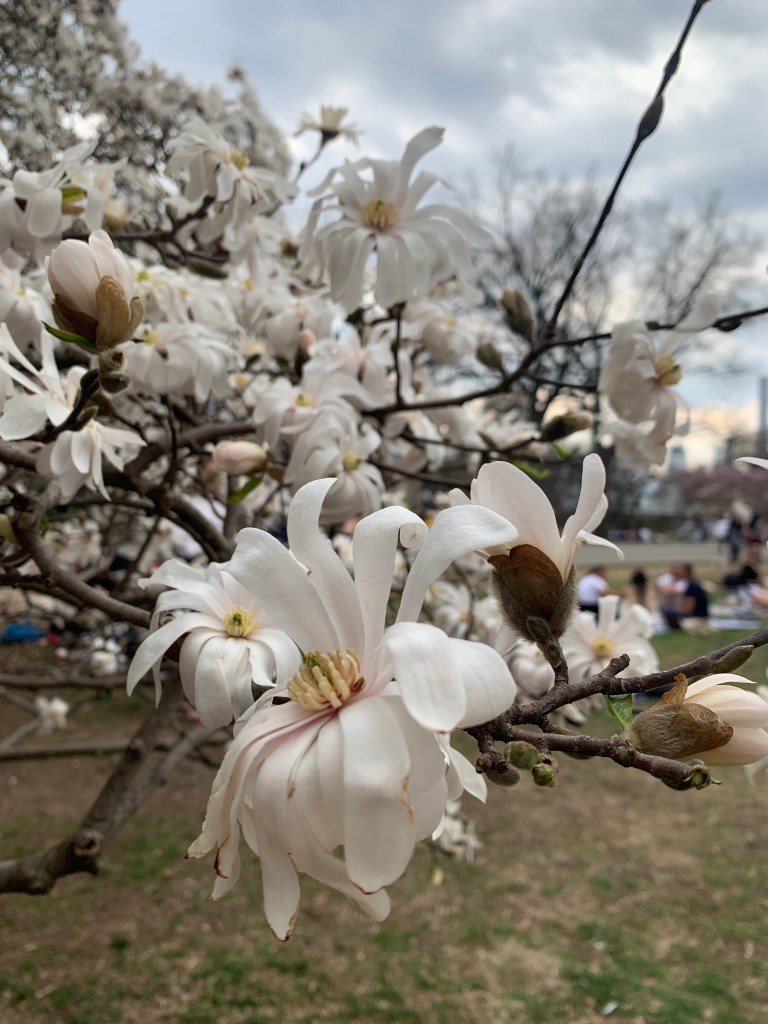
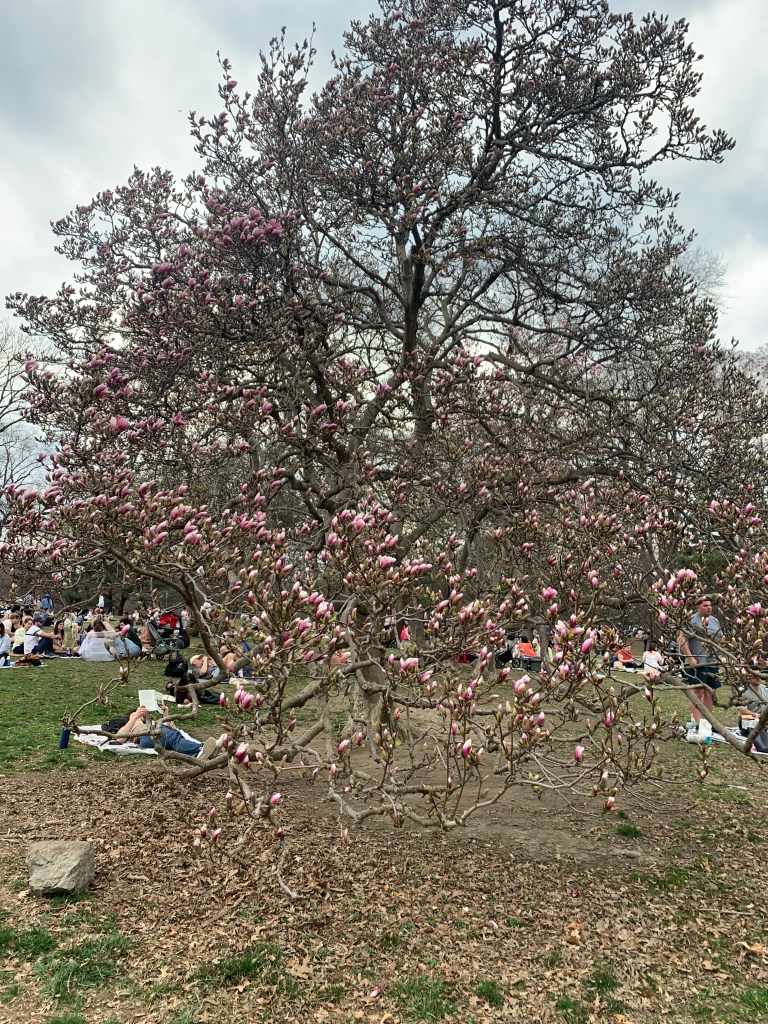
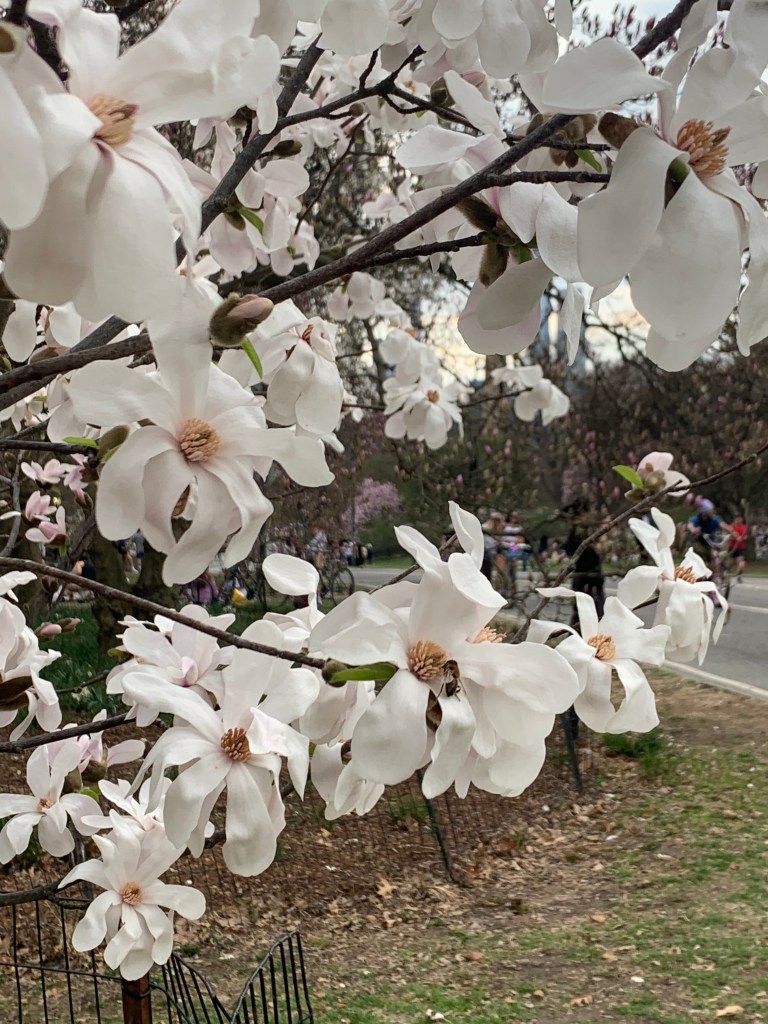
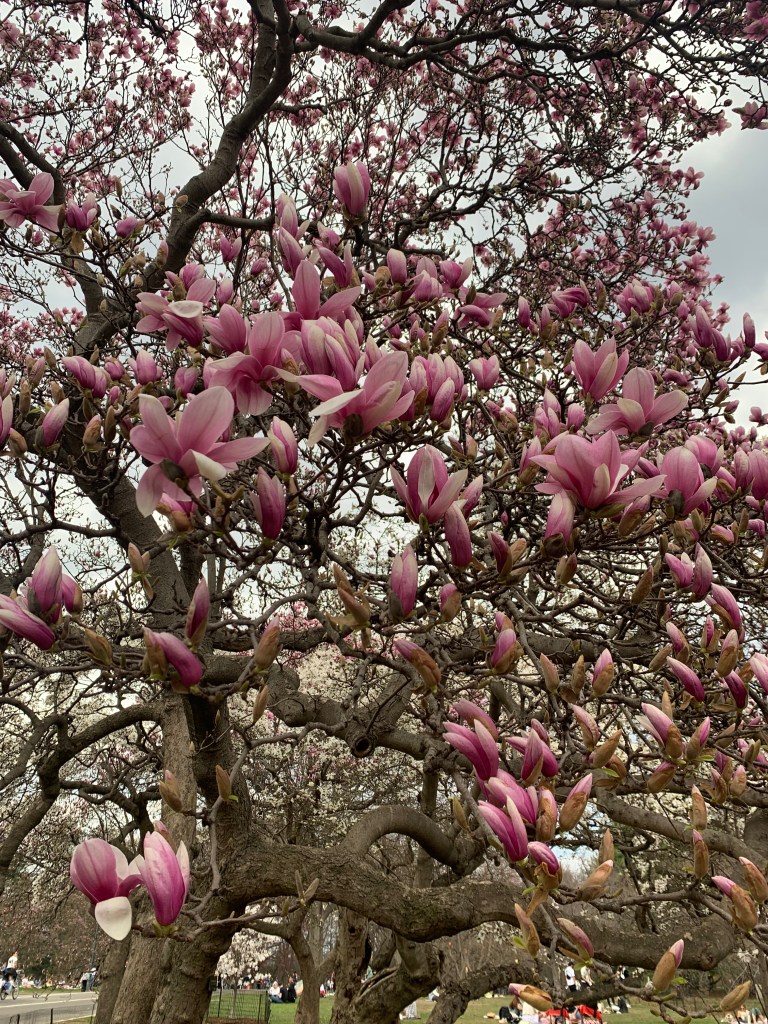
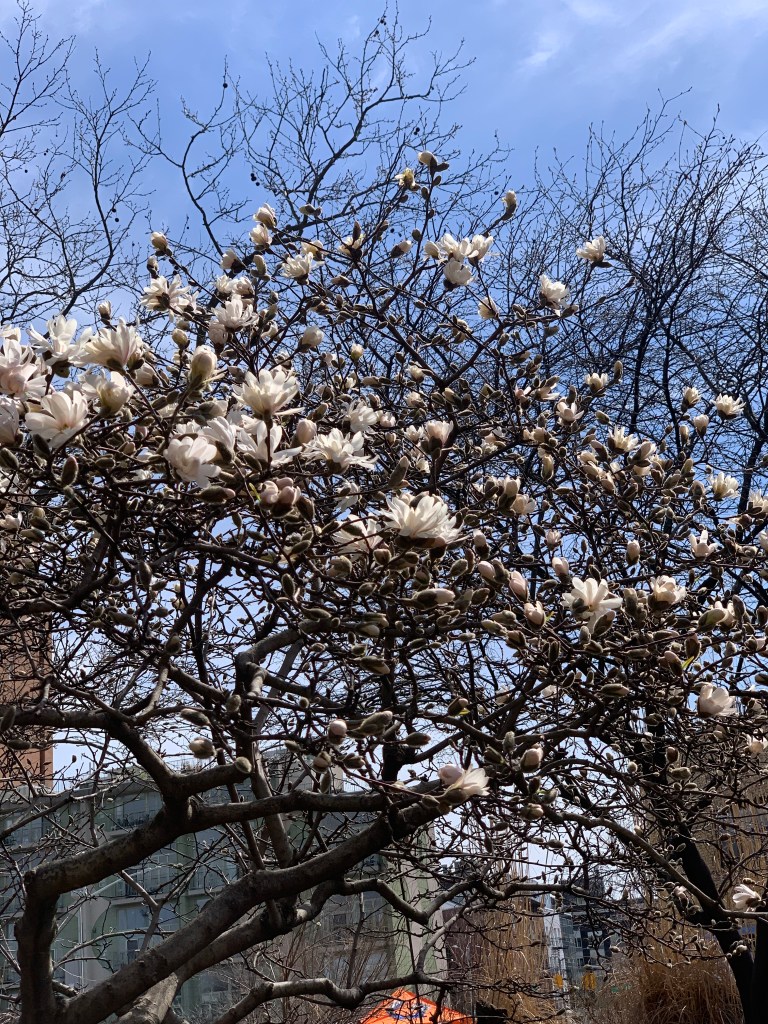
Magnolia trees, both saucer and star varieties, are in their full glory. Their large, showy blooms, ranging from deep pinks to pure whites, are a sight to behold. The current cooler temperatures are helping to extend their bloom time, allowing us to enjoy their beauty for a little longer. Adding to the vibrant spring display are the tulips, which are popping up throughout the city in a rainbow of colors. From deep reds and yellows to soft pinks and purples, these cheerful flowers bring a burst of energy to parks and gardens.
Where to find Tulips:
Park Avenue:
Known for its stunning displays, Park Avenue’s meticulously planted tulip beds create a breathtaking urban spectacle. This is a very popular location.
Central Park:
Specifically, the Conservatory Garden, the Olmsted Flower Bed, and areas around the Reservoir offer beautiful tulip displays.
Brooklyn Botanic Garden:
The Lily Pool Terrace within the Brooklyn Botanic Garden is renowned for its coordinated and visually striking tulip arrangements.
Pumphouse Park:
This hidden gem in Battery Park City provides a more tranquil setting to enjoy vibrant tulip displays along the Hudson River.
West Side Community Garden:
This community garden boasts a large and diverse collection of tulips, creating a colorful and charming atmosphere.
New York Public Library:
The area surrounding the New York Public Library main branch, also has beautiful tulip plantings.
It is also worth noting that many smaller parks and street side flower beds throughout the city will also have tulip displays.
Brooklyn Botanic Garden’s Cherry Tracker:
The Brooklyn Botanic Garden has officially launched its cherry blossom tracker, offering real-time updates on the status of various cherry varieties. Visitors can track the progress of Okame, Yoshino, Kwanzan, and Weeping Cherry trees, each of which blooms at different times, creating an extended cherry blossom season.
Okame Cherry – One of the earliest bloomers, these deep pink flowers signal the arrival of spring.
Yoshino Cherry – The most famous variety, known for its soft pink and white flowers that create iconic cherry blossom tunnels.
Kwanzan Cherry – A late-blooming variety with double-layered, rich pink blossoms, adding a vibrant splash of color later in the season.
Weeping Cherry – Recognized for its gracefully drooping branches covered in delicate pink flowers, creating a stunning cascading effect.
Check out their tracker here for the latest bloom reports and plan your visit accordingly.
What’s Next on the Blooming Horizon:
As we savor the current floral displays, we can look forward to the next wave of spring blooms:
Flowering Dogwood: These elegant trees, with their white or pink bracts, will bring a touch of woodland charm to the city.
Crab Apples: These trees will soon add their vibrant pink and white blossoms to the city’s landscape, creating a delightful spectacle.
Redbuds: The striking magenta flowers of the redbud trees will add a splash of color to the parks and gardens.
Spring in NYC is a fleeting but magical time, and this week’s floral displays are a testament to nature’s resilience and beauty. Take advantage of the pleasant weather and explore the city’s parks to witness these stunning sights. Stay tuned for updates on the upcoming blooms and continue to enjoy the ever-changing seasons of New York City!
Subscribe to stay updated and follow us on Instagram to get more reports, pictures, and videos.
This weekend marks a turning point in NYC’s spring bloom! With the highest temperatures of the season arriving today, Saturday, March 29, 2025, the warmth will accelerate blooms across the city, making this a perfect time to head outdoors and witness nature’s transformation.
March 29, 2025 –
Magnolia Magic:
If you love magnolias, now is the time to enjoy them in full bloom.
Saucer Magnolia (Magnolia × soulangeana) – At its peak, this variety showcases large, cup-shaped pink and white petals that brighten up parks and gardens, particularly in Central Park and the Brooklyn Botanic Garden. These trees are known for their striking contrast against the still-bare branches of other trees.
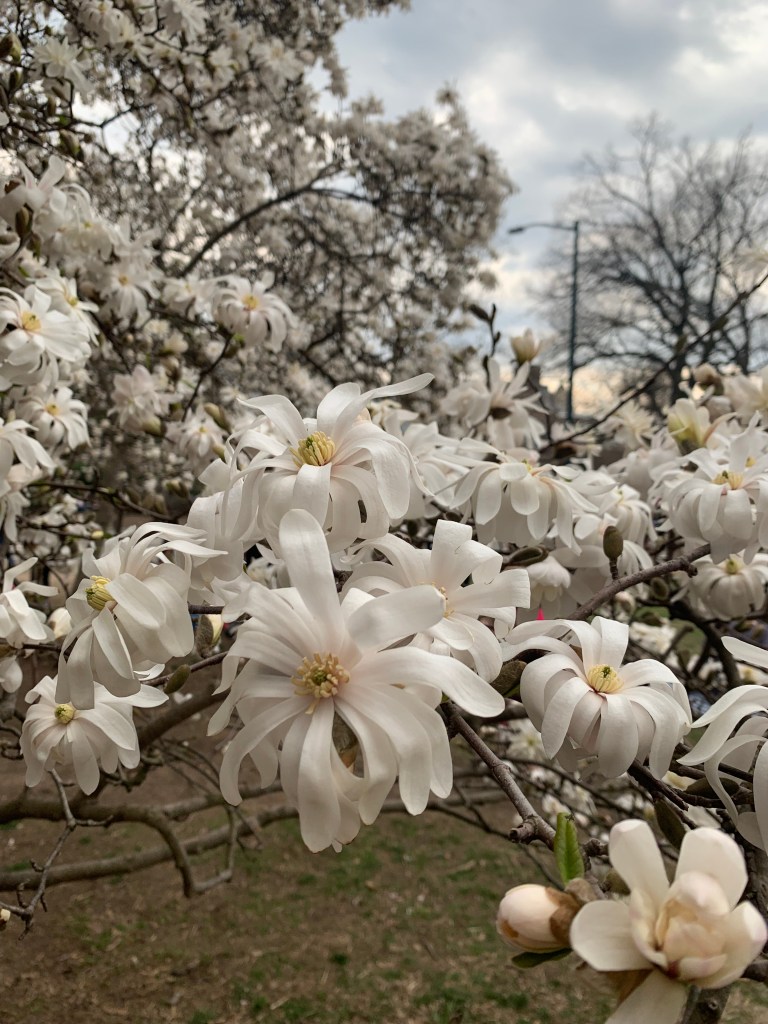
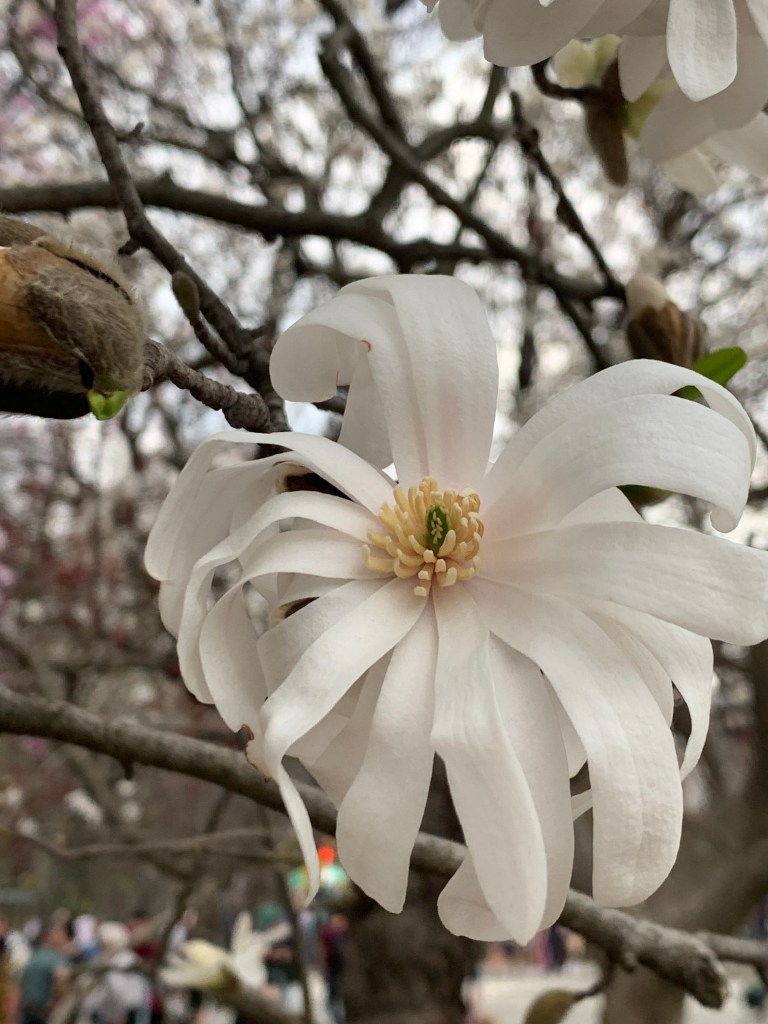
Star Magnolia (Magnolia stellata) – Also at peak bloom, this variety features delicate, star-shaped white blossoms that add an ethereal beauty to the cityscape. Their smaller, fragrant flowers are particularly captivating in areas like the New York Botanical Garden and smaller neighborhood parks.
These magnolias won’t stay in bloom for long, so be sure to catch their stunning display while you can!
Okame Cherry Blossoms: A Stunning Display:
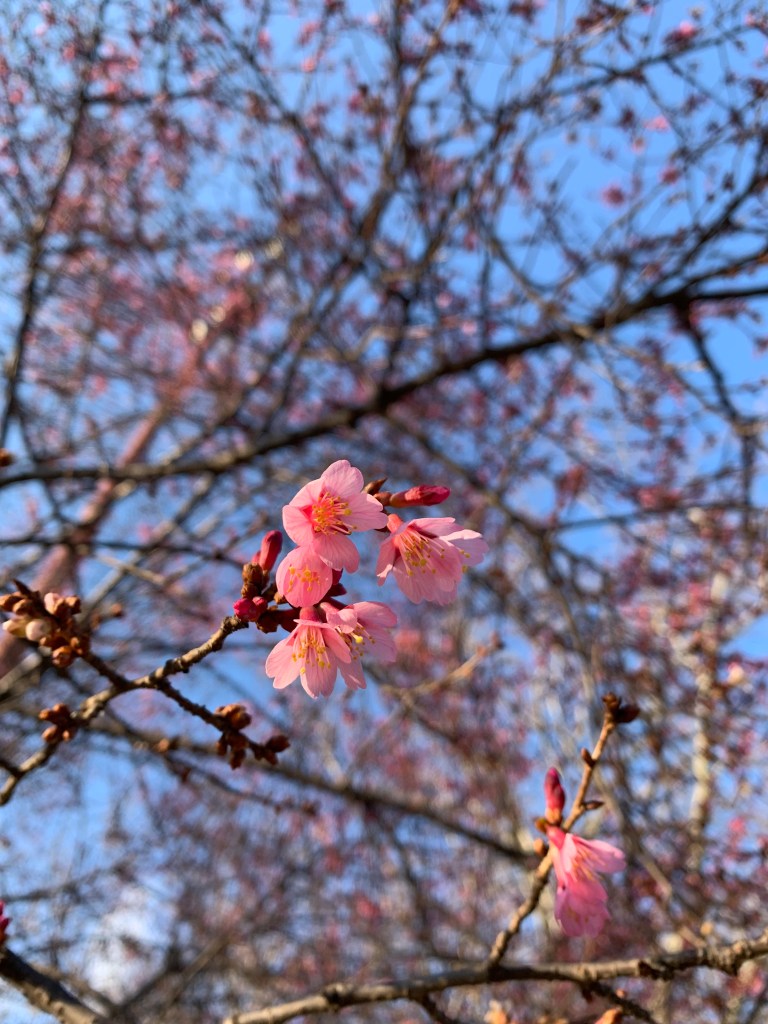
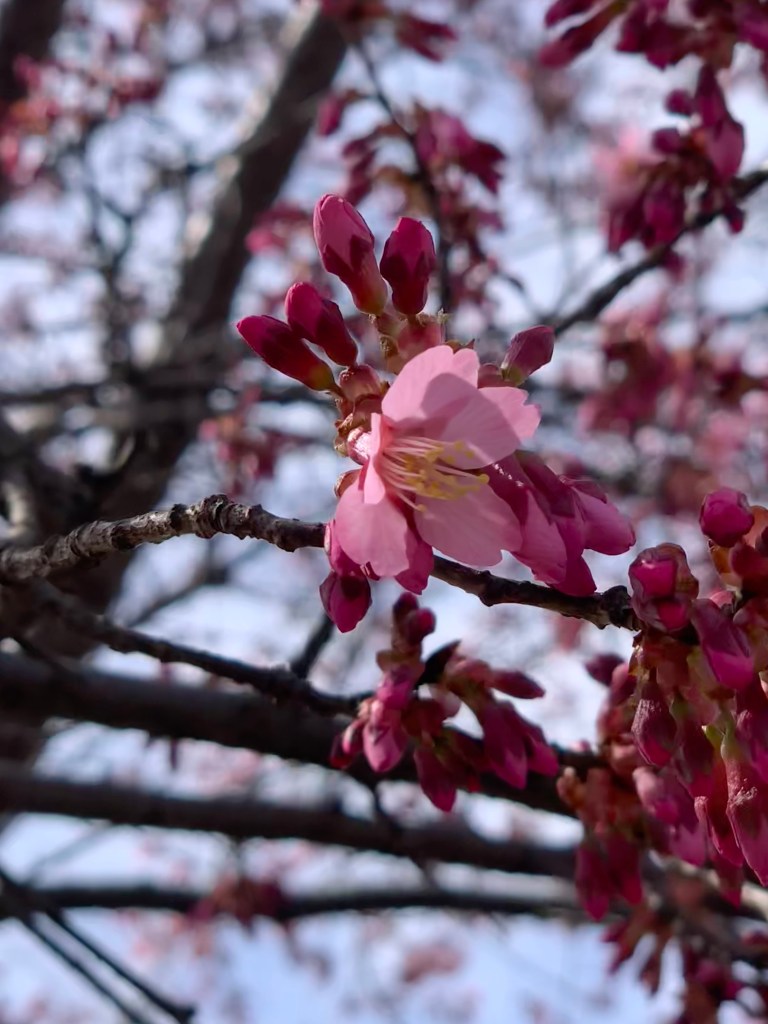
Distinguishing Okame from Yoshino: Okame cherries are known for their deep pink blooms and early flowering. Yoshino cherries, on the other hand, boast pale pink to white blossoms and bloom a bit later. Keep an eye on the color and timing to tell them apart! Yoshino cherries typically bloom a week or two after Okame.
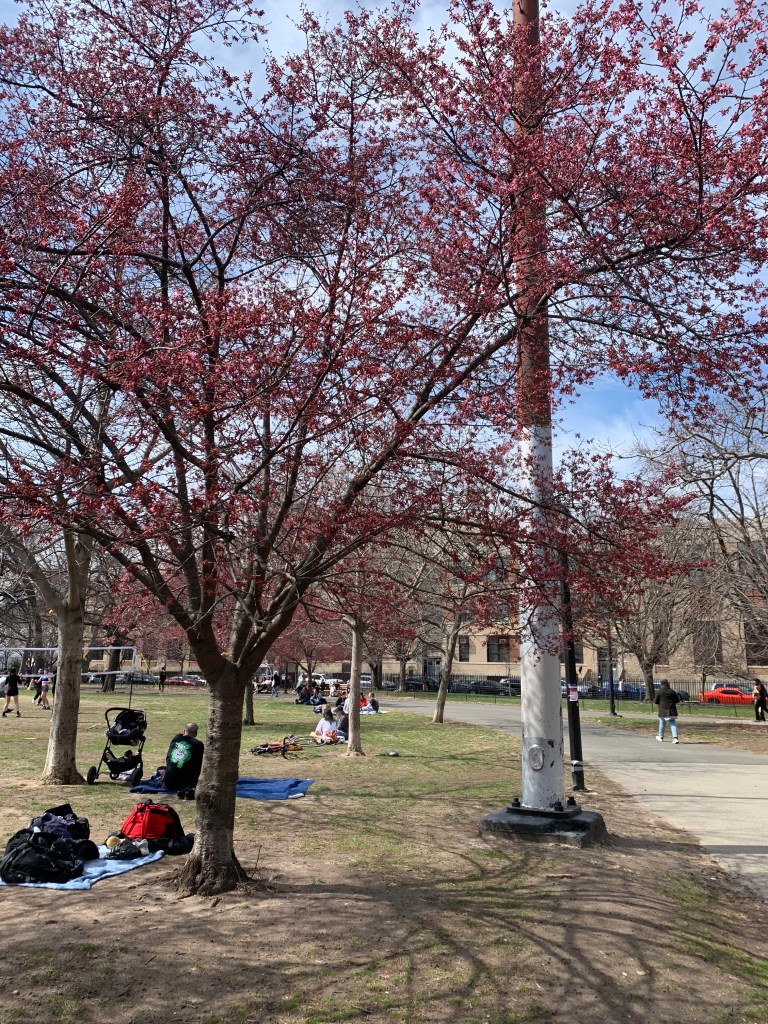
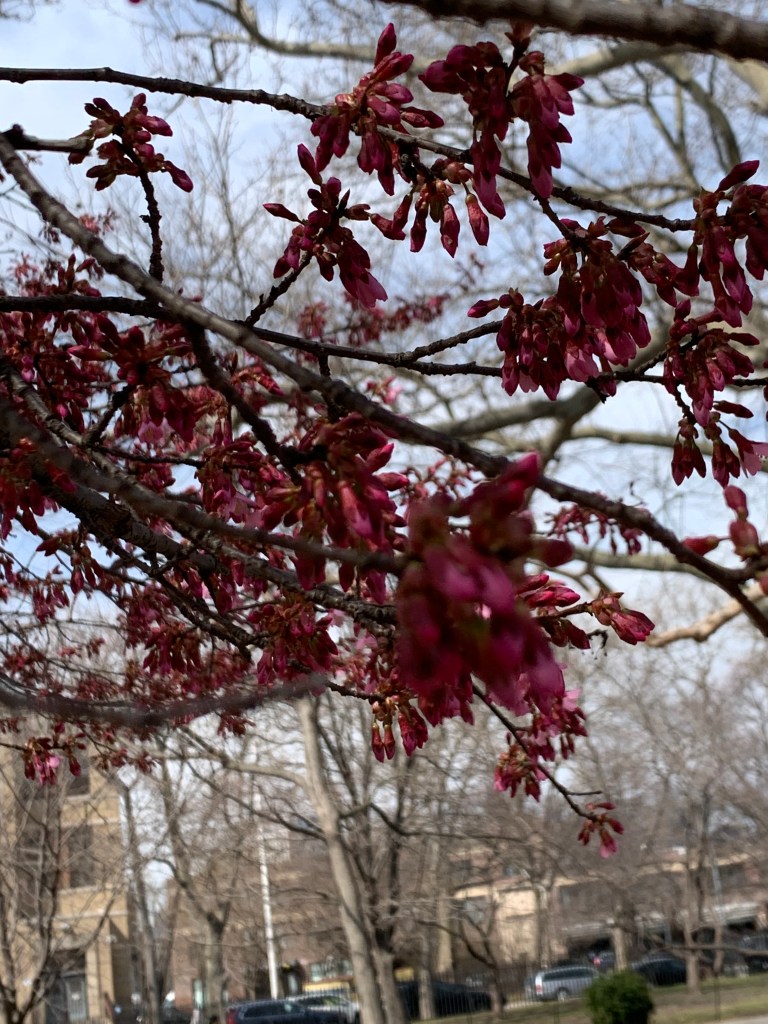
Okame cherry trees are putting on a remarkable show this weekend. Some trees have reached their peak bloom, their vibrant pink flowers fully open, creating a stunning contrast against the early spring sky. Others are still in the process of blooming, with buds unfurling gradually, adding depth to the display. This staggered bloom makes for an especially picturesque scene, offering visitors the chance to witness different stages of the bloom cycle in one outing. These early-blooming cherries, known for their deep pink petals and graceful, airy canopies, provide one of the first spectacular signs of spring. Be sure to visit popular spots like the Brooklyn Botanic Garden, Flushing Meadows-Corona Park, and Central Park’s Cherry Hill to experience their beauty before the petals begin to fall.
Yoshino Cherry: On Track for Peak Bloom
The famous Yoshino cherry trees have now reached the third stage of their bloom cycle, with buds swelling and the first hints of flowers beginning to emerge. As Washington, D.C., is currently experiencing peak bloom for these iconic trees, we can expect NYC’s Yoshino cherries to follow suit within the next two weeks—likely reaching full bloom by early to mid-April.
For those eager to track their progress, the best spots to observe Yoshino cherries include Central Park’s Cherry Hill, the Reservoir area, Roosevelt Island’s Cherry Walk, and the Brooklyn Botanic Garden’s Cherry Esplanade. These locations will soon transform into breathtaking tunnels of soft pink and white blossoms, making for an unforgettable spring experience.
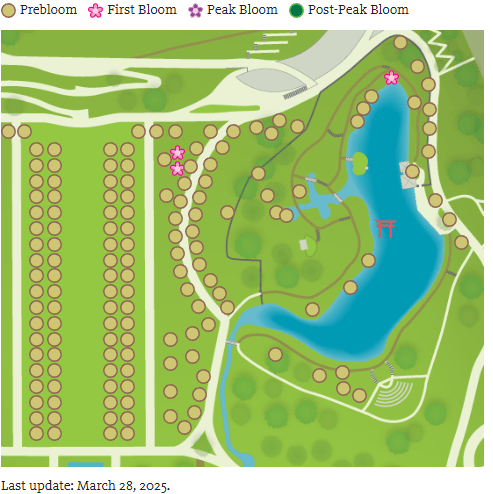
Brooklyn Botanic Garden’s Cherry Tracker is Live!
The Brooklyn Botanic Garden has officially launched its cherry blossom tracker, offering real-time updates on the status of various cherry varieties. Visitors can track the progress of Okame, Yoshino, Kwanzan, and Weeping Cherry trees, each of which blooms at different times, creating an extended cherry blossom season.
Okame Cherry – One of the earliest bloomers, these deep pink flowers signal the arrival of spring.
Yoshino Cherry – The most famous variety, known for its soft pink and white flowers that create iconic cherry blossom tunnels.
Kwanzan Cherry – A late-blooming variety with double-layered, rich pink blossoms, adding a vibrant splash of color later in the season.
Weeping Cherry – Recognized for its gracefully drooping branches covered in delicate pink flowers, creating a stunning cascading effect.
Check out their tracker here for the latest bloom reports and plan your visit accordingly.
Daffodils & the First Signs of Tulips
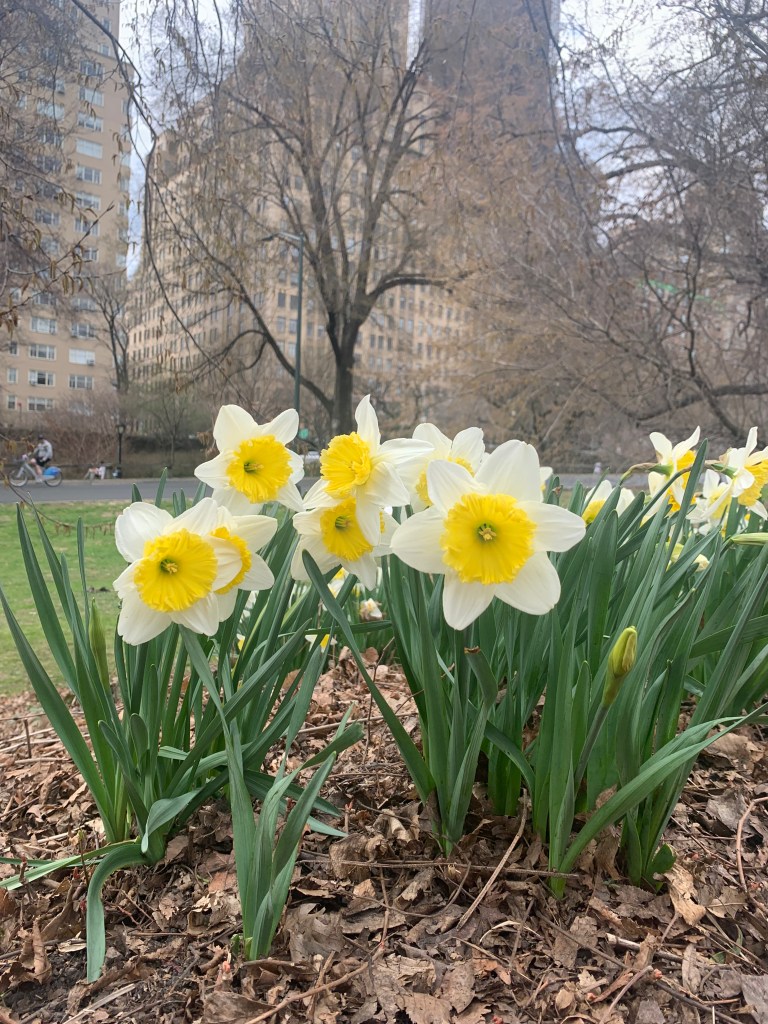
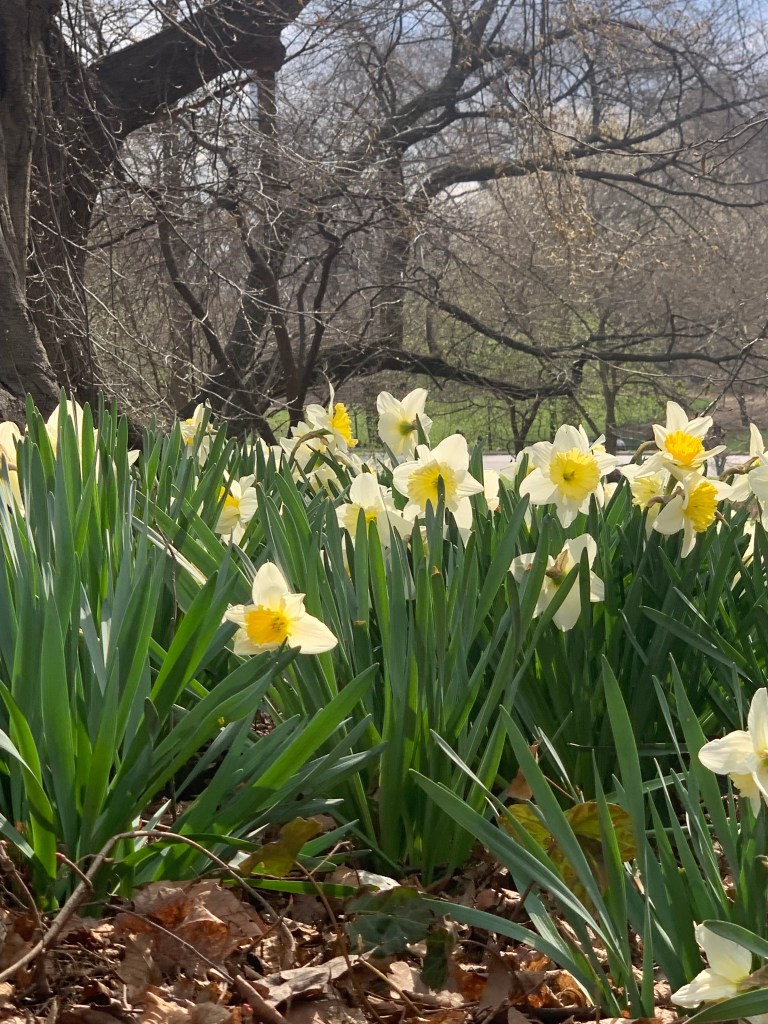
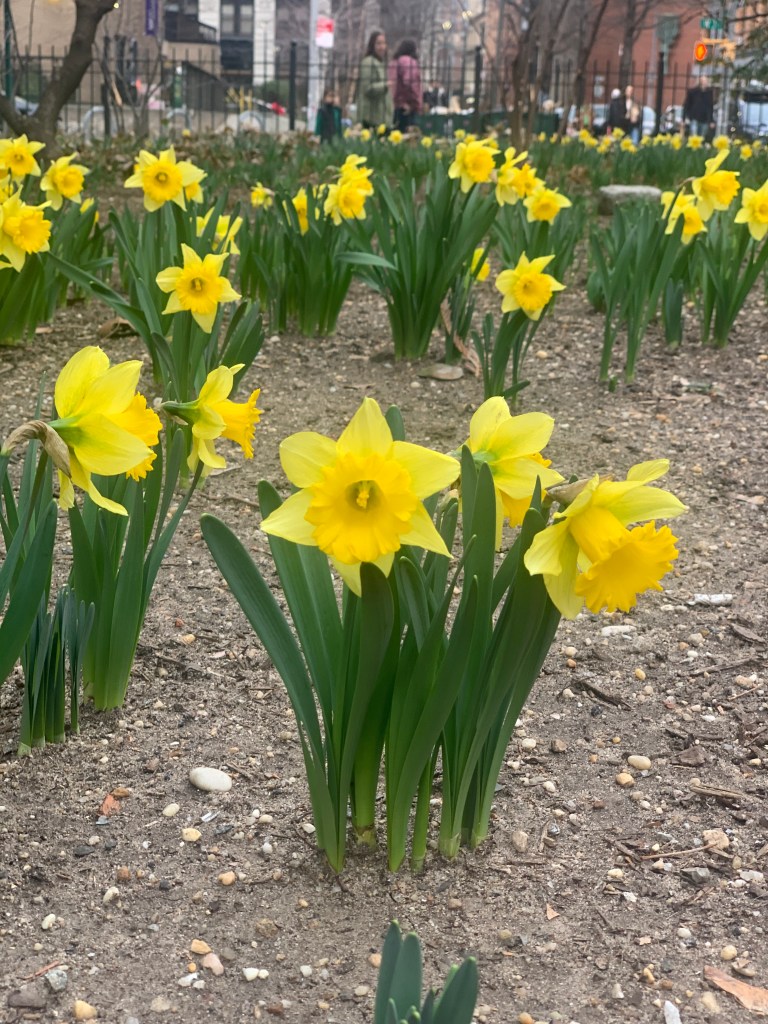
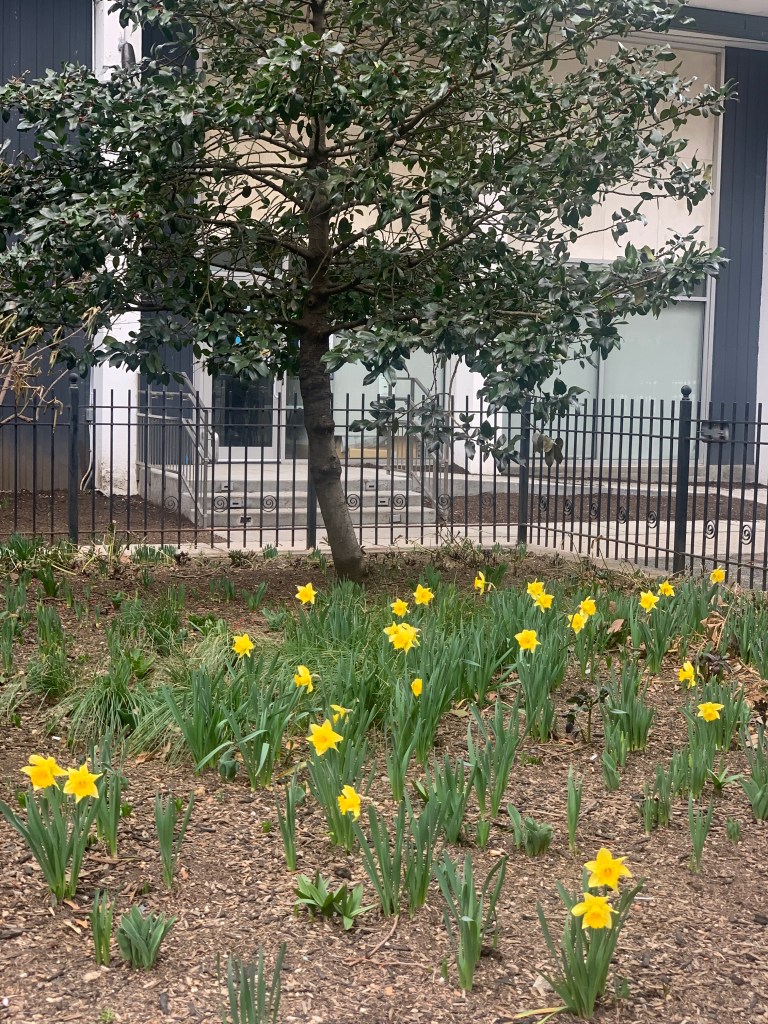
Daffodils are brightening up all five boroughs, adding cheerful pops of yellow to parks and sidewalks. Meanwhile, the first signs of tulip blooms are beginning to emerge. While it’s still early for tulips, we can expect to see more of them flowering in the next week or two as temperatures continue to rise.
Spring is unfolding rapidly in NYC, so make sure to get out and enjoy these seasonal wonders while they last. Stay tuned for more updates on the city’s bloom progression!
Cherry Blossom – NYC Vs Washington DC
Cherry blossoms have officially reached peak bloom in Washington, D.C., creating breathtaking pink and white landscapes around the Tidal Basin. This serves as a key indicator for NYC’s own bloom timeline, as the Yoshino cherry trees here typically follow within a couple of weeks. If you’re planning a trip to D.C. to witness their full glory, now is the perfect time to go!
For comparison, in 2021, cherry blossom in DC had peaked bloom on March 21. NYC reached the peak bloom on April 7.
In 2022, cherry blossom had peaked bloom on March 22, while NYC reached the peak bloom on April 8.
In 2023, cherry blossom had peaked bloom on March 23, while NYC reached the peak bloom on April 8.
In 2024, cherry blossom had peaked bloom on March 17, while NYC reached the peak bloom on April 5.
This year, with D.C.’s cherry blossoms peaking around the same timeframe, we can estimate that NYC’s Yoshino cherries will reach peak bloom between April 10–12, 2025. This aligns with previous years and suggests that we are on track for another stunning early-April display in the city’s parks and gardens.
The city is buzzing with the electric anticipation of spring, and your trusty blossom watch is here with fantastic news! We’re seeing real progress all around, with more and more pops of color emerging every day. Get ready to grab your camera and explore, because there’s a whole new palette of spring to discover!
March 22, 2025 –
Magnolia Magic:
Saucer Magnolias: The elegant Saucer Magnolias are teasing us with glimpses of pink! Delicate petals are peeking out, promising a spectacular display in just a few days. Keep your eyes peeled for these large, showy blooms.
Star Magnolias: Not to be outdone, the Star Magnolias are also making their debut, showcasing their pristine white, star-shaped flowers.
Spotting the Difference: How can you tell them apart? Saucer Magnolias generally have larger, cup-shaped flowers, often with pink or purple hues, while Star Magnolias have smaller, pure white, and more pointed petals.
Okame Cherry Blossoms: A Pink Promise:
Distinguishing Okame from Yoshino: Okame cherries are known for their deep pink blooms and early flowering. Yoshino cherries, on the other hand, boast pale pink to white blossoms and bloom a bit later. Keep an eye on the color and timing to tell them apart! Yoshino cherries typically bloom a week or two after Okame.
The Okame cherry trees, the city’s heralds of cherry blossom season, are making significant strides! More and more pink petals are unfurling, painting the landscape with a soft, rosy glow. While last year’s peak arrived around this time, a colder winter has pushed things back slightly. Expect their glorious peak in just a few more days.
Red Maple’s Fiery Flourish:
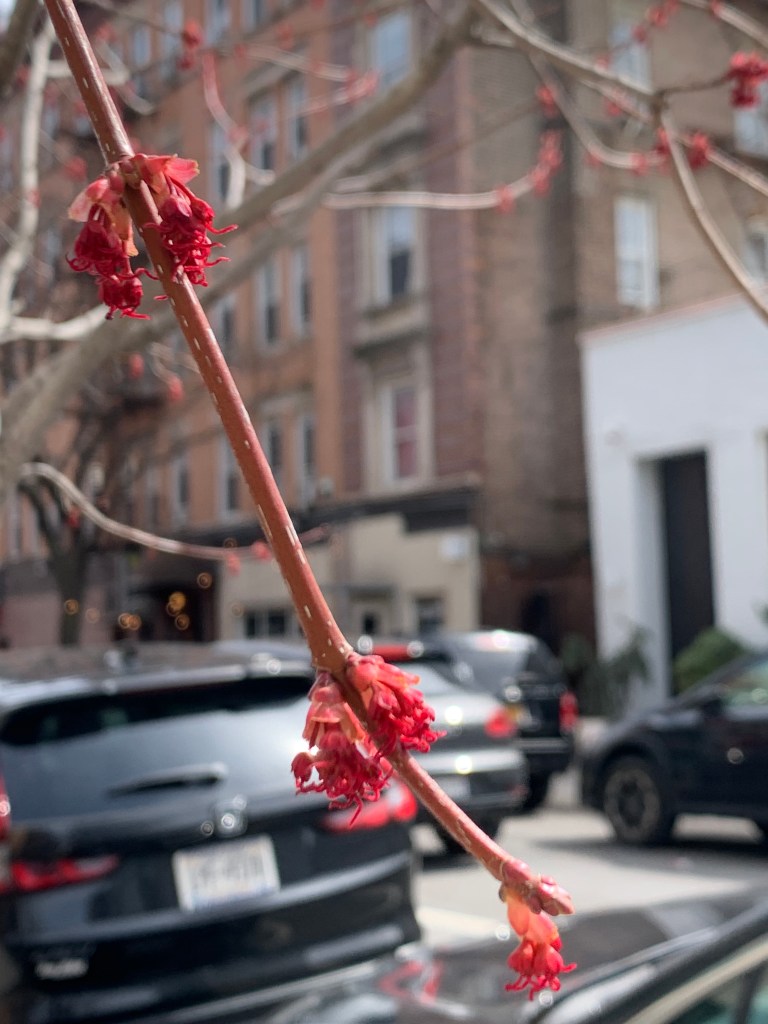
The Red Maple trees, among the first to signal spring’s arrival, have reached their peak bloom! Their vibrant red spike flowers create a stunning contrast against the still-bare branches. A truly wonderful sight.
What’s Blooming Next?
After the Red Maples and Okame Cherries have had their moment, we can anticipate a cascade of further blooms. Here’s a general timeline:
Within the next week: Expect to see the peak of the Saucer and Star Magnolias.
Following the Magnolias, approximately 1-2 weeks later: Yoshino Cherry trees will begin their peak bloom.
Following the Yoshino Cherries, approximately 1-2 weeks later: Crabapple trees and Dogwood trees will begin to bloom.
Get ready for an explosion of color as the city transforms into a floral wonderland! Stay tuned for more updates, and happy blossom hunting!
This is just the beginning of a spectacular spring bloom season! Stay tuned to our blog for more updates, including bloom predictions for other trees and plants. We’ll be your guide to experiencing the best of spring in the city. Follow us on Instagram and here in the blog for more detailed reports. Happy blooming!
Cherry Blossom – NYC Vs Washington DC
There are three predictions of when the Cherry blossom will reach its peak bloom in Tidal Basin at Washington DC.
National Park Service: March 28 – 31.
Washington Post: March 23 – 27.
NBC Storm Team 4: March 28 – April 3.
They all usually update the predictions during the season.
Depends on the weather, It usually takes 2-3 more weeks for the NYC to reach its peak bloom, .
For comparison, in 2021, cherry blossom in DC had peaked bloom on March 21. NYC reached the peak bloom on April 7.
In 2022, cherry blossom had peaked bloom on March 22, while NYC reached the peak bloom on April 8.
In 2023, cherry blossom had peaked bloom on March 23, while NYC reached the peak bloom on April 8.
In 2024, cherry blossom had peaked bloom on March 17, while NYC reached the peak bloom on April 5.
A warm Sunday sun coaxed even more signs of spring to life! From vibrant crocuses to cheerful daffodils, and the first delicate blooms on the plum cherry, nature’s awakening is in full swing. Read on for a closer look at what I spotted today.
March 16, 2025 –
Today, despite the cloudy skies, a gentle warmth permeated the air, signaling a palpable shift in the city’s rhythm. Spring, that long-awaited promise, is finally beginning to unfurl its vibrant tapestry across the urban landscape. My exploration of various parks and street-side gardens revealed a delightful progression in the city’s floral awakening.
The Delicate Debut of Plum Cherry:
The most exciting discovery of the day was undoubtedly the emergence of the first blossoms on a Plum Cherry (Prunus cerasifera) tree. These delicate, five-petaled flowers, a soft blush of white with hints of pink, were a welcome sight, signaling the start of the stone fruit season. The tree, still largely bare, was punctuated by these tiny beacons of spring, a testament to nature’s resilience even in the heart of the city.
Okame Cherry’s Steady Advance:
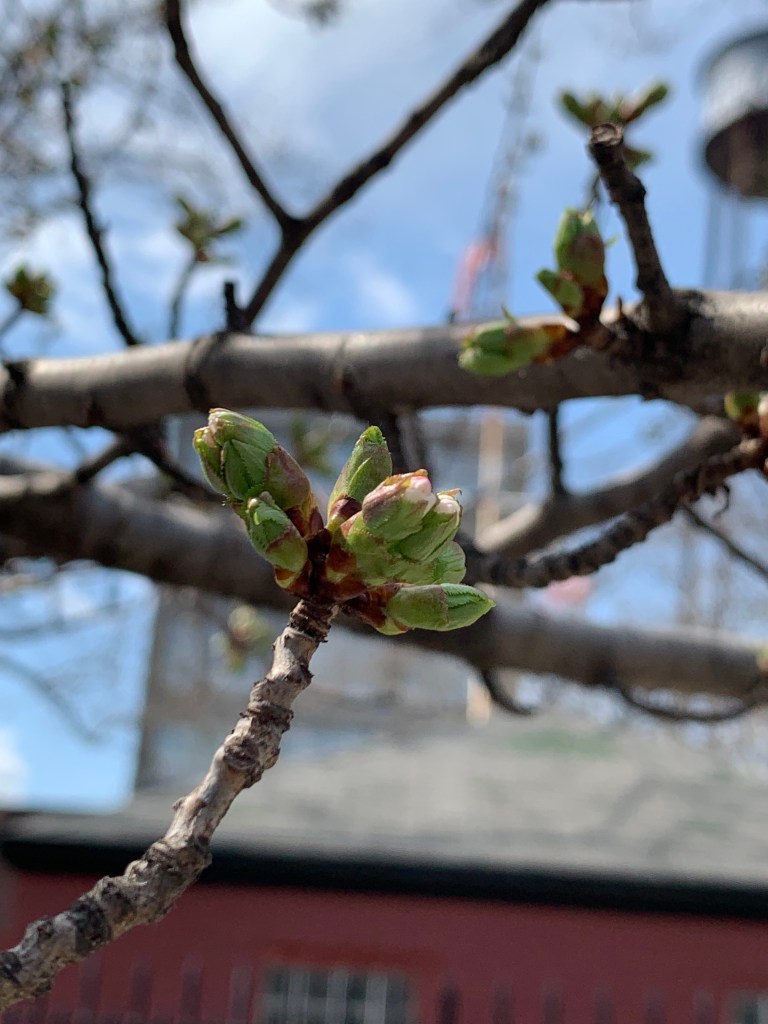
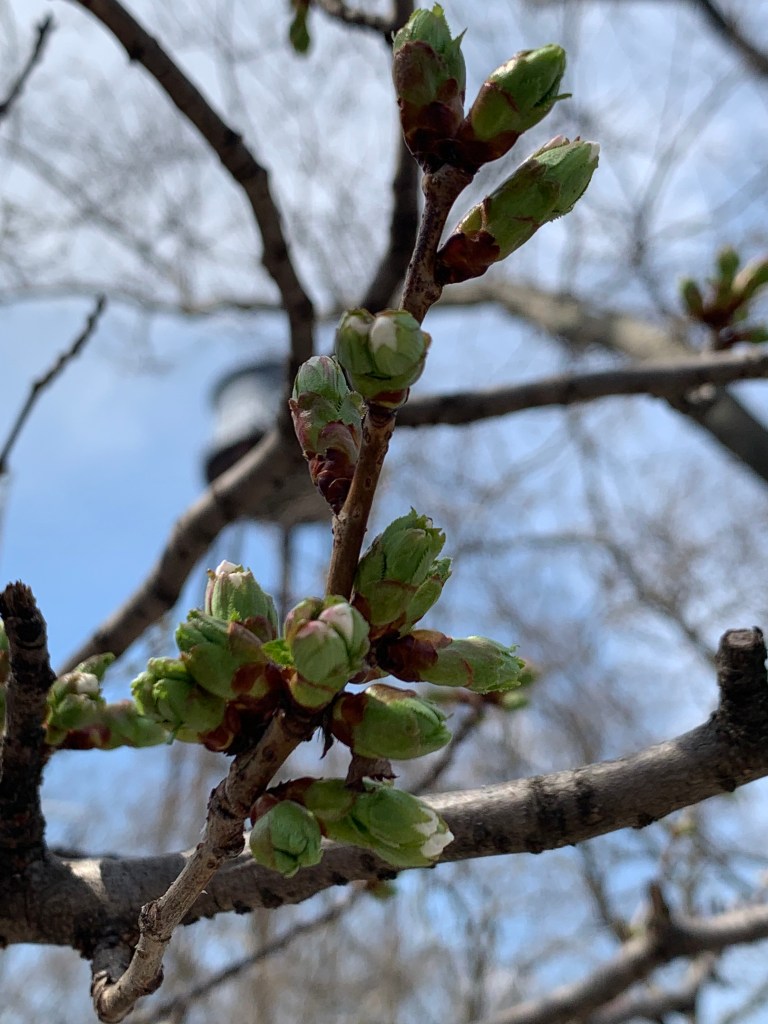
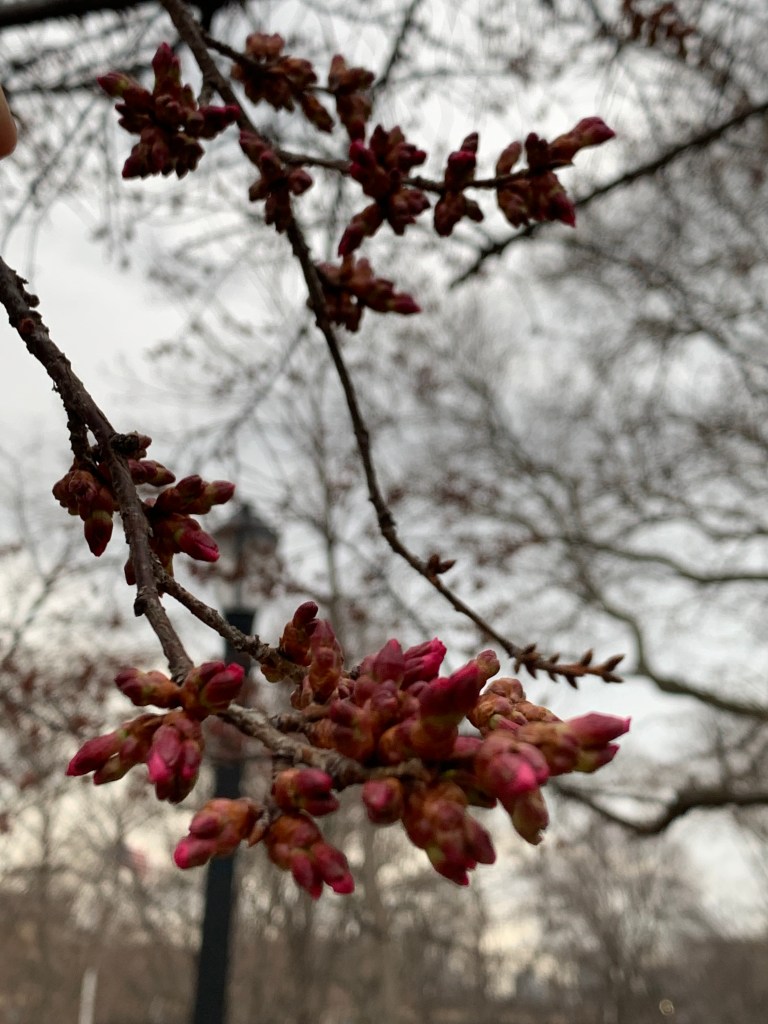
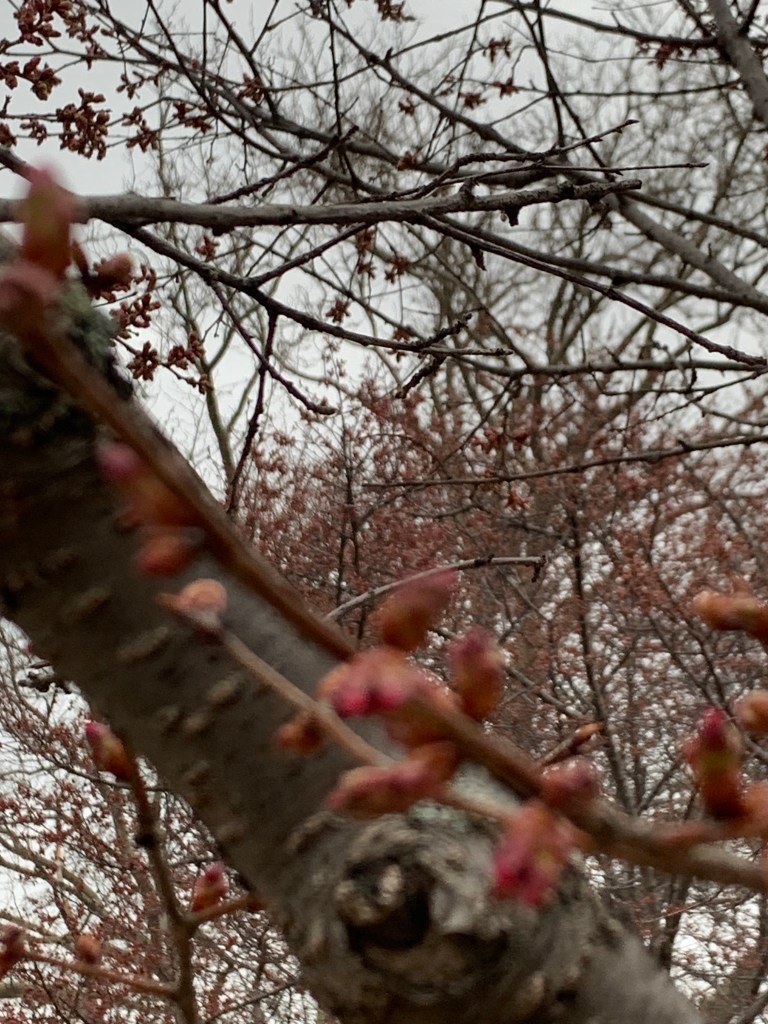
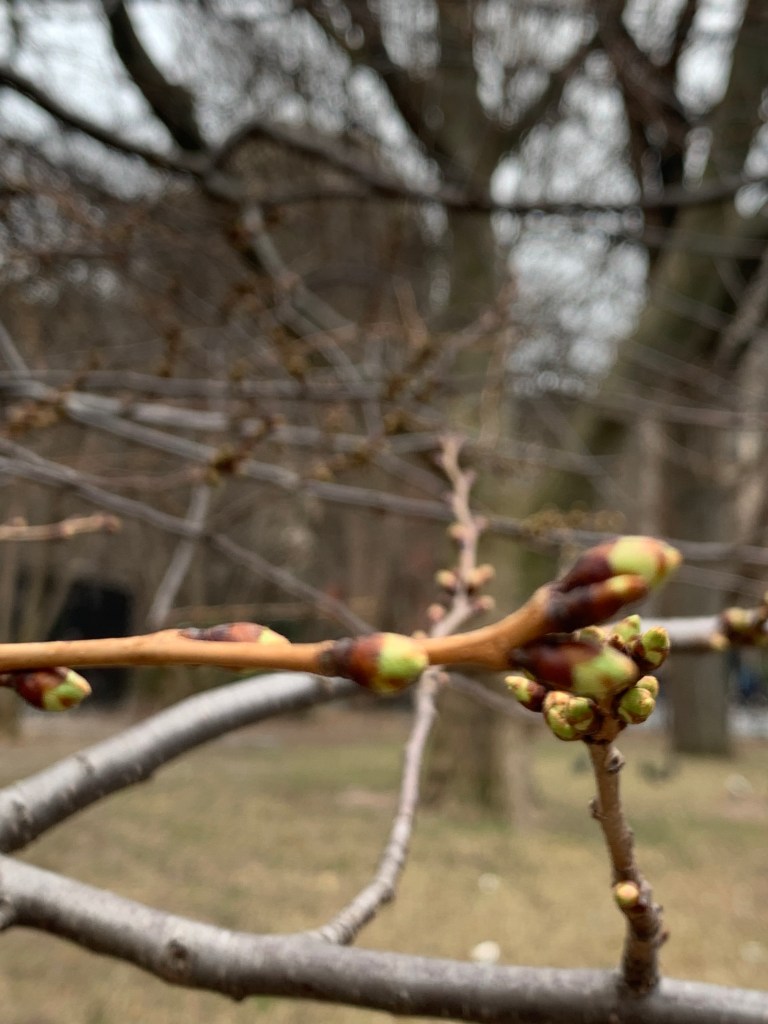
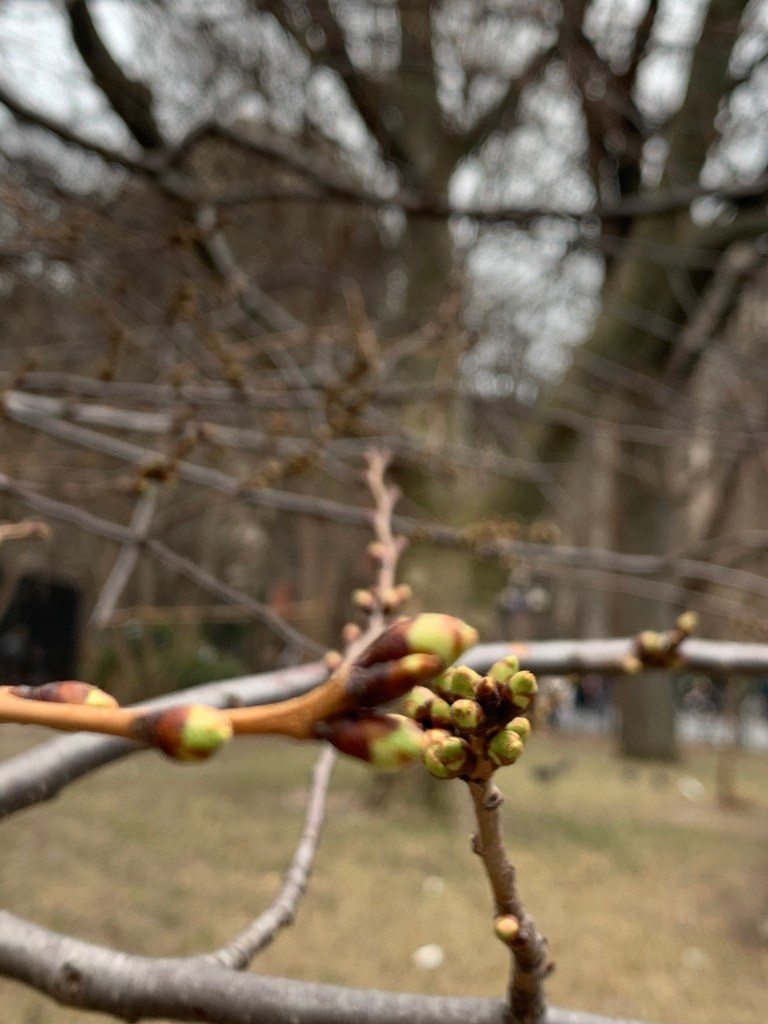
The Okame Cherry (Prunus incisa x Prunus campanulata), known as the first cherry tree to bloom in NYC, is making significant progress. The trees, which had previously shown signs of swelling buds, have now reached the second bloom stage: Florets Visible. The nodes, once mere whispers of green, have noticeably enlarged, revealing the tightly packed florets within. This stage promises a spectacular display in the coming days as the flowers begin to unfurl, painting the city with their characteristic deep pink hues. The progress of the Okame Cherry is a sign of the accelerating spring, and is a welcome sight to New Yorkers who are ready for some color.
Witch Hazel’s Golden Embrace:
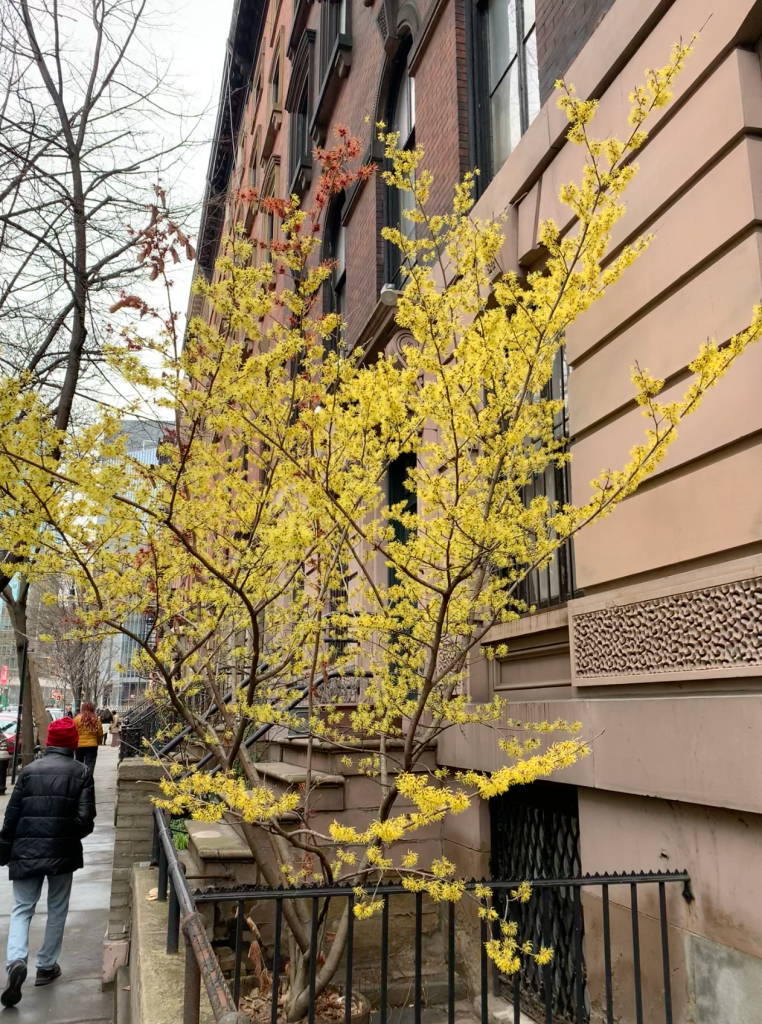
Across the city, the fragrant Witch Hazel (Hamamelis virginiana) bushes are in their full, glorious bloom. Their spidery, ribbon-like petals, a vibrant shade of yellow, create a striking contrast against the still-dormant branches of other trees. The Witch Hazel’s distinctive, slightly spicy scent filled the air, a subtle yet unmistakable sign of spring’s arrival. These hardy shrubs, often overlooked in the grand spectacle of cherry blossoms, provide a vital burst of color during this transitional period.
Yoshino Cherry’s Early Promise:
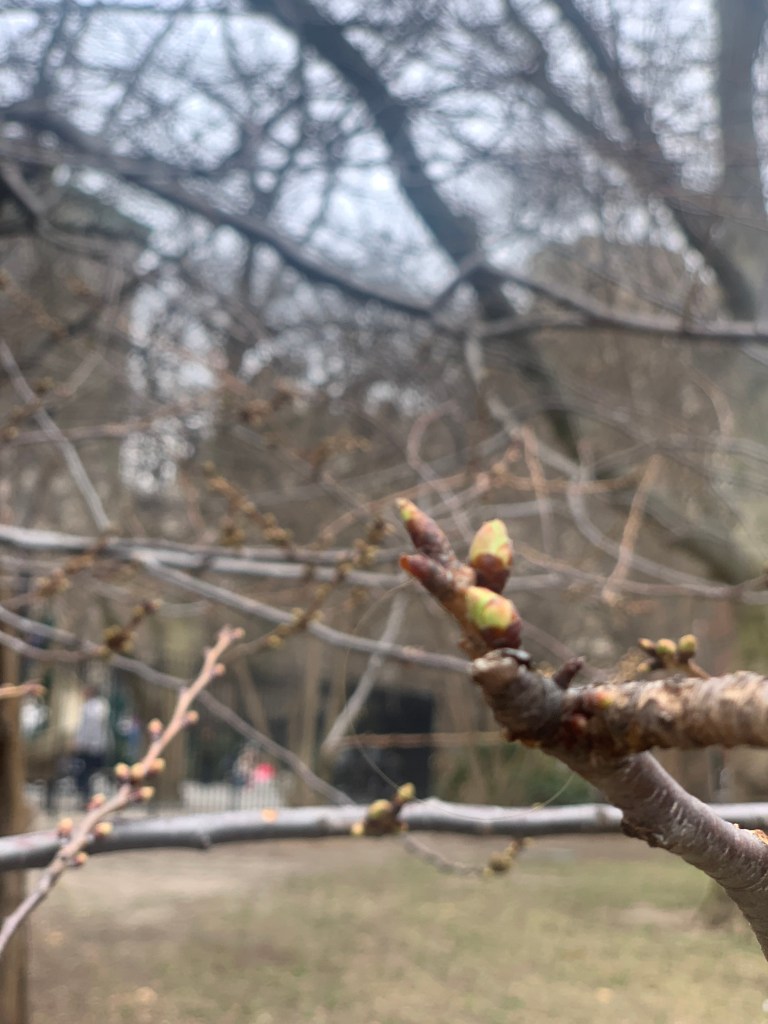
The iconic Yoshino Cherry (Prunus x yedoensis) trees, the stars of many a spring festival, are also beginning their journey towards full bloom. Today, they are firmly in the first bloom stage: Green Buds. Small, rounded nodes are visible at the tips of the twigs, promising the cloud-like display of white blossoms that will soon transform the city’s landscape. This initial stage, while subtle, is a crucial step in the Yoshino Cherry’s progression and a reminder of the anticipation that builds with each passing day. The progress of the Yoshino Cherry is a reminder of how the city anticipates the full bloom.
Star Magnolia’s Velvet Unfurling:
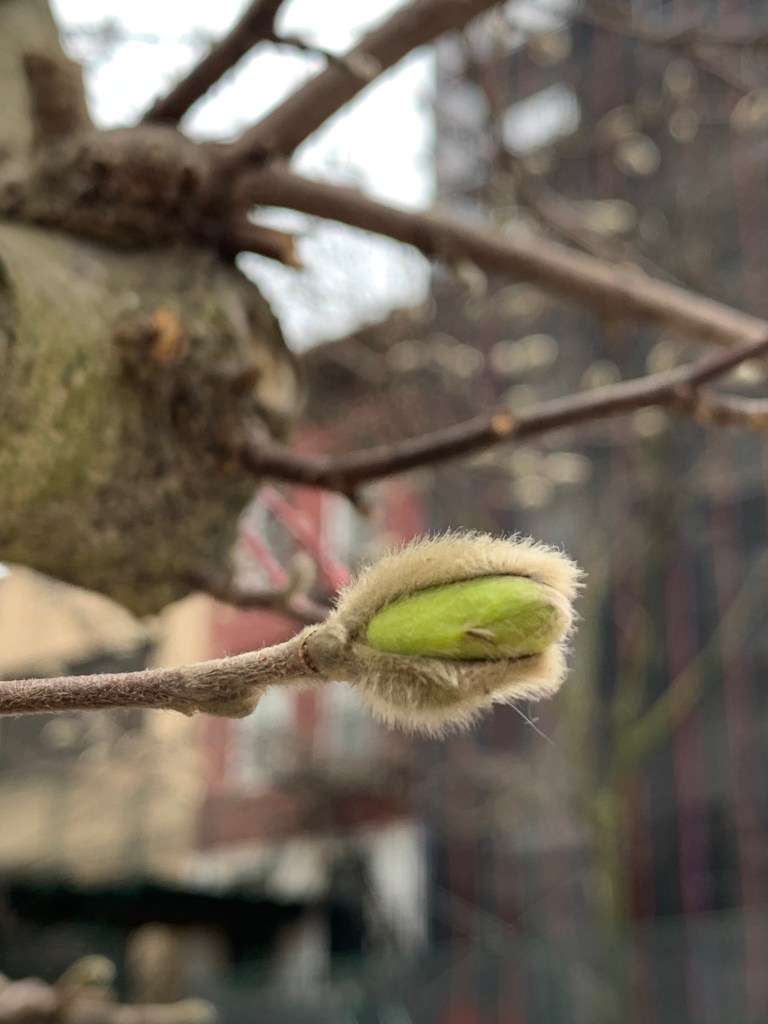
Adding to the symphony of spring, the Star Magnolia (Magnolia stellata) trees are showing significant progress. Their large, fuzzy buds, which have been patiently waiting out the winter chill, are now beginning to peel back, revealing the delicate, white petals within. This stage, where the velvety texture of the bud contrasts with the pristine whiteness of the emerging flower, is a beautiful and fleeting moment. The Star Magnolia’s unique, star-shaped blossoms, with their numerous slender petals, will soon transform these trees into ethereal clouds of white, adding a touch of elegance to the urban landscape. The sight of these buds unfurling is a gentle reminder of the delicate beauty that spring brings, and a testament to the patient unfolding of nature’s wonders.
Daffodils’ Sunny Cheer:
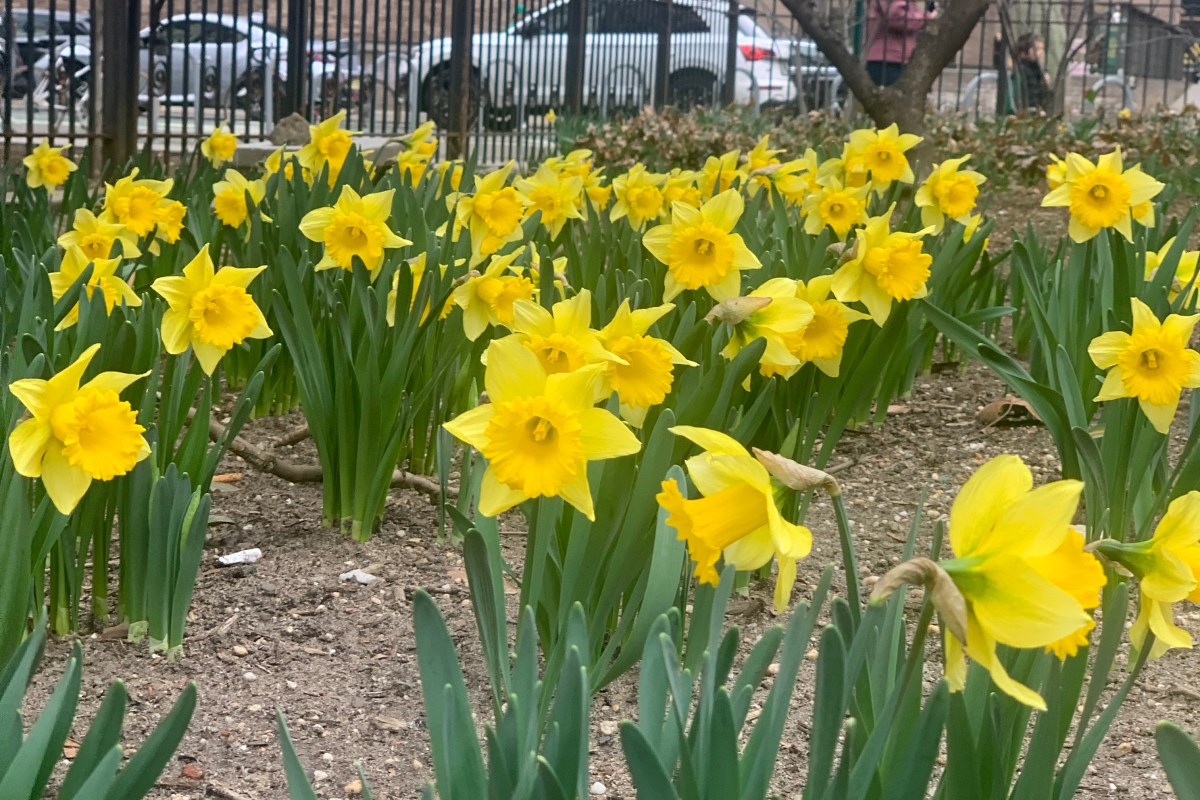
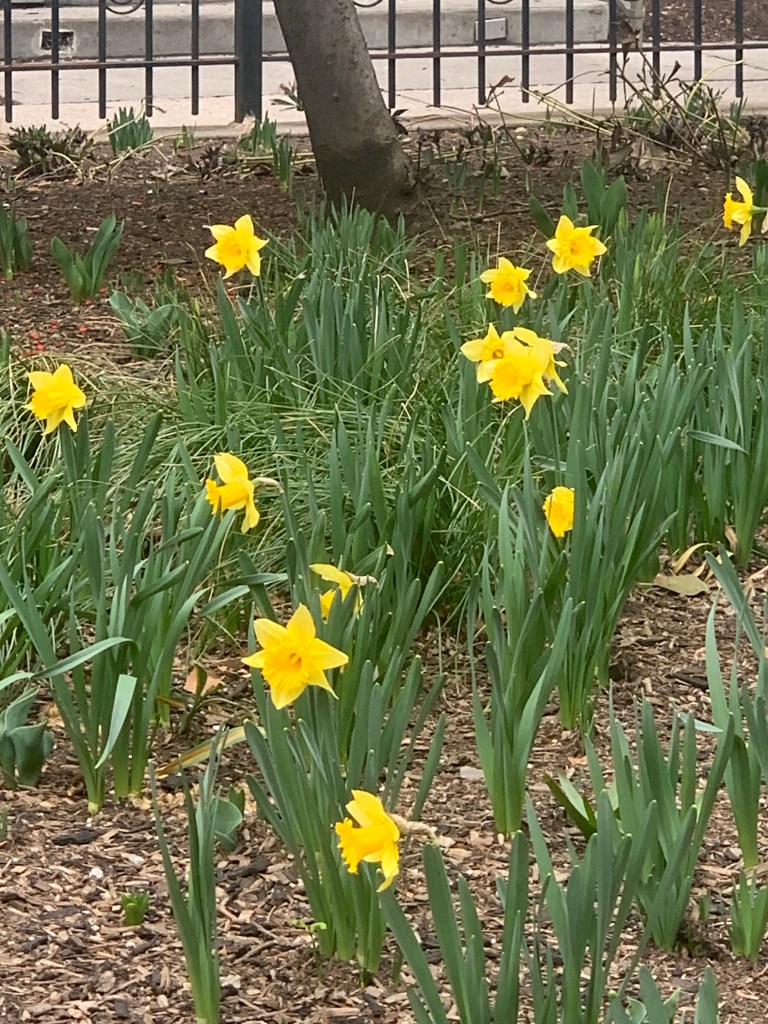
No spring bloom report would be complete without mentioning the cheerful Yellow Daffodils (Narcissus). These vibrant flowers, with their trumpet-shaped coronas and bright yellow petals, are popping up throughout the city’s parks and gardens. While some daffodils are already in full bloom, others are still in the bud stage, a testament to the varying microclimates and planting times within the city. The daffodils that are blooming provide a bright, sunny spot of color that is hard to miss.
Observations and Reflections:
The city’s spring awakening is a gradual process, a slow unfolding of color and fragrance. Each day brings new discoveries, new signs of life emerging from the winter slumber. Observing these subtle changes is a reminder of the resilience of nature, even in the midst of a bustling metropolis. The interplay of urban life and natural cycles creates a unique and captivating experience, one that I look forward to documenting in the weeks to come. The variety of bloom stages shows that the city is in a transition, and the next few weeks will bring an explosion of color.
Cherry Blossom – NYC Vs Washington DC
There are three predictions of when the Cherry blossom will reach its peak bloom in Tidal Basin at Washington DC.
National Park Service: March 28 – 31.
Washington Post: March 23 – 27.
NBC Storm Team 4: March 28 – April 3.
They all usually update the predictions during the season.
Depends on the weather, It usually takes 2-3 more weeks for the NYC to reach its peak bloom, .
For comparison, in 2021, cherry blossom in DC had peaked bloom on March 21. NYC reached the peak bloom on April 7.
In 2022, cherry blossom had peaked bloom on March 22, while NYC reached the peak bloom on April 8.
In 2023, cherry blossom had peaked bloom on March 23, while NYC reached the peak bloom on April 8.
In 2024, cherry blossom had peaked bloom on March 17, while NYC reached the peak bloom on April 5.
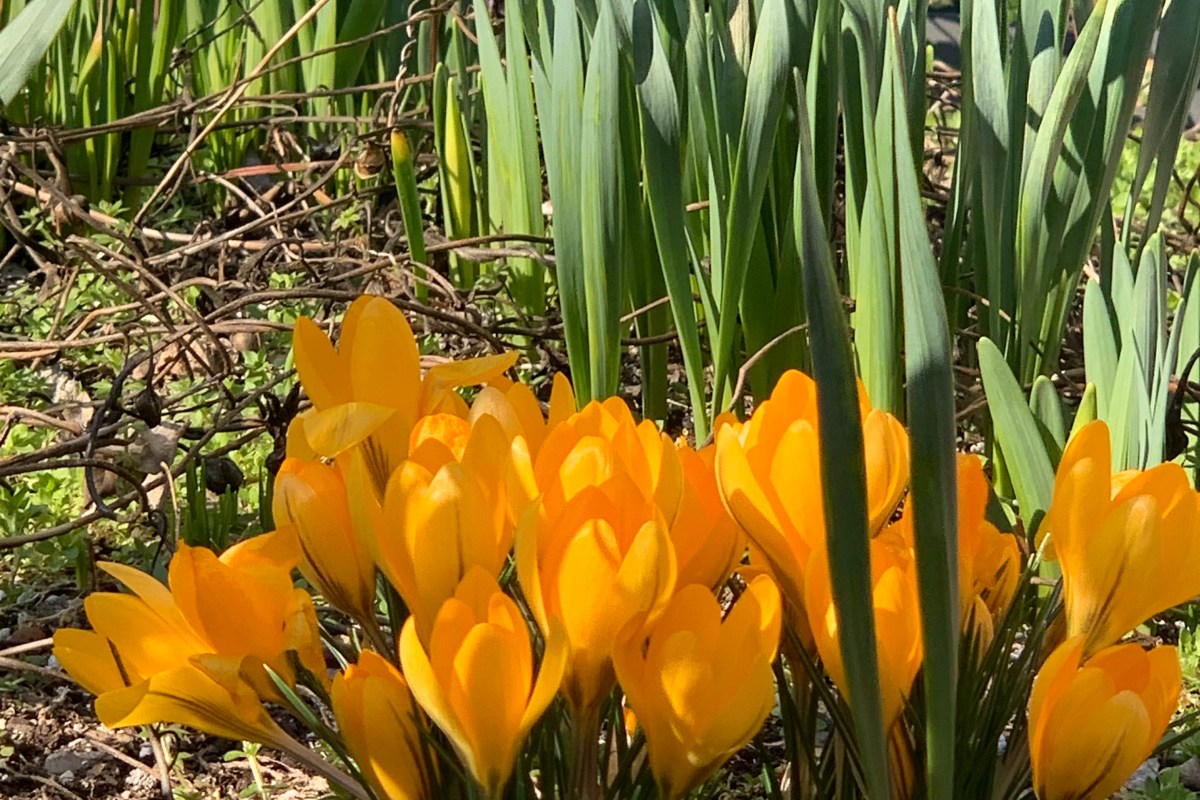
March marks the seasonal transition to spring, following a significantly colder winter, with the U.S. experiencing its coldest January since 2011 according to AccuWeather. Spring’s onset is approximately ten days behind last year’s schedule. Current weather patterns are characterized by temperature fluctuations, with daytime highs reaching 65 degrees and nighttime lows dropping into the 40s. These conditions present a potential threat to early-blooming flora, similar to the 2022 Saucer Magnolia frost damage. While daffodils are emerging, they are susceptible to freezing temperatures. Crocuses, however, demonstrate resilience, with their ability to regulate their blooms in response to light and temperature changes.
March 08, 2025 –
Spring’s first heralds, crocuses and snowdrops, paint the city with vibrant splashes of white, yellow, and purple. Joining them, the early-blooming hybrid witch hazels, with their distinctive yellow, spiky flowers, are a sure sign of the season’s arrival. These deciduous shrubs and small trees can be found throughout the city’s gardens and parks. For an impressive display, Madison Square Park boasts over 70 varieties, and they’re offering special lunchtime tours in early March. Check their Instagram for details:
Though last year’s Okame cherries blossomed by March 16th, they’re still in their starting phase this year. We’re eager to see how they develop in the coming week.
Cherry Blossom – NYC Vs Washington DC
There are three predictions of when the Cherry blossom will reach its peak bloom in Tidal Basin at Washington DC.
National Park Service: March 28 – 31.
Washington Post: March 23 – 27.
NBC Storm Team 4: March 28 – April 3.
They all usually update the predictions during the season.
Depends on the weather, It usually takes 2-3 more weeks for the NYC to reach its peak bloom, .
For comparison, in 2021, cherry blossom in DC had peaked bloom on March 21. NYC reached the peak bloom on April 7.
In 2022, cherry blossom had peaked bloom on March 22, while NYC reached the peak bloom on April 8.
In 2023, cherry blossom had peaked bloom on March 23, while NYC reached the peak bloom on April 8.
In 2024, cherry blossom had peaked bloom on March 17, while NYC reached the peak bloom on April 5.
As autumn begins to paint the city in vibrant hues, we’re excited to share our first foliage report. While our area is still lush green, a few early birds have already begun to change color.
We anticipate a later-than-usual peak foliage season in New York City, with the most stunning displays expected in late October or early November.
Stay tuned for regular updates on the city’s foliage progression and discover the best spots to experience the autumnal beauty, and the best spots to see the leaves.
Our home page now features a list of trees, updated in real time to show their current foliage status. Discover which trees are at their peak color and plan your autumn adventures accordingly.After witnessing breathtaking displays in 2021, 2022, and 2023, we eagerly anticipate another magnificent fall foliage season this year.
Summer Foliage – A Natural Phenomenon
Summer foliage refers to the early or prolonged loss of leaves by trees during the summer season. This is a protective mechanism, allowing trees to conserve water and regulate their temperature in response to the hot weather. While it’s a normal process, global warming has led to earlier and more extended summer foliage in some regions.
This extended period of stress can increase a tree’s vulnerability to diseases and pests. Therefore, it’s essential to provide extra care to trees experiencing summer foliage, ensuring they receive adequate water and nutrients.
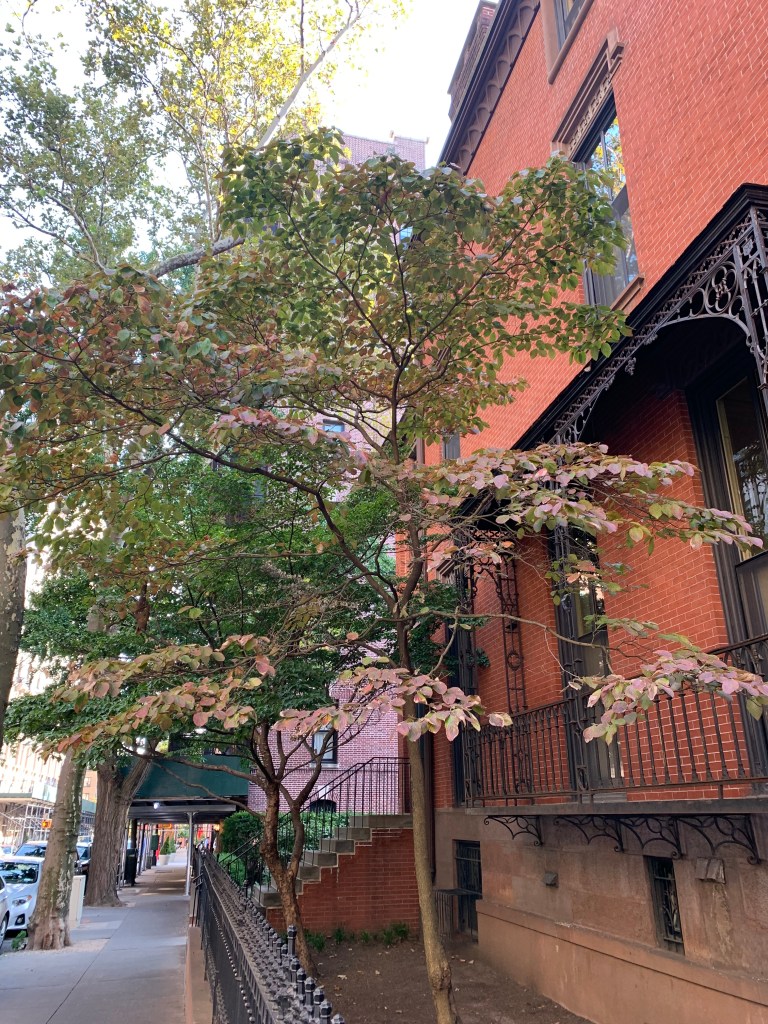
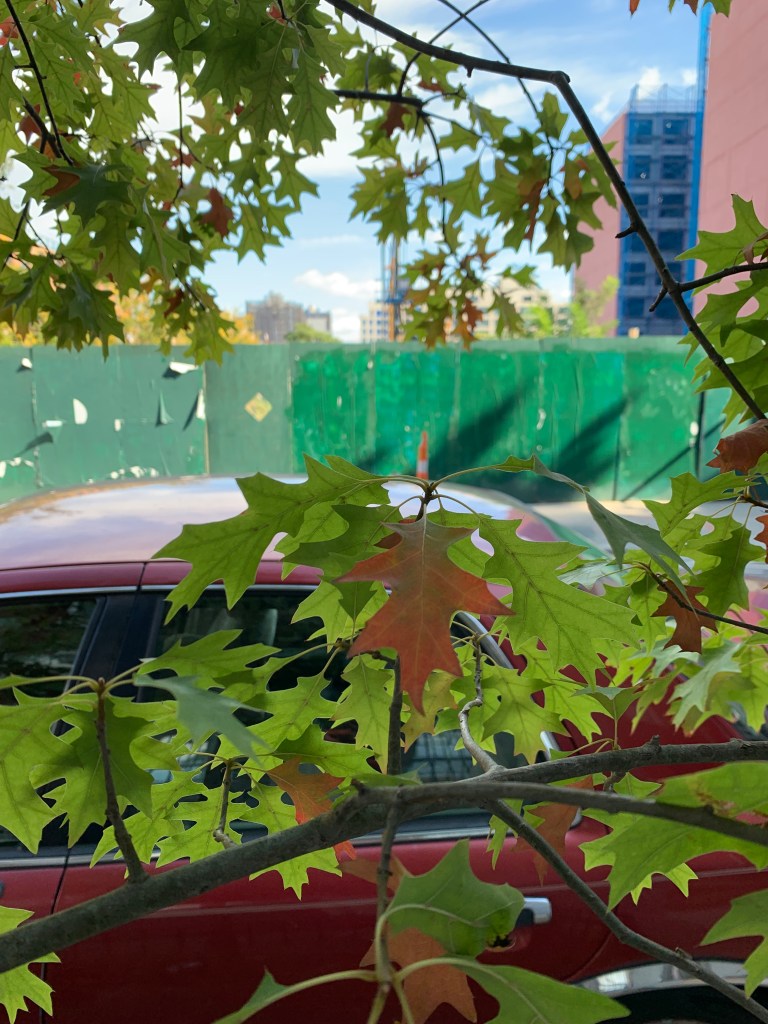
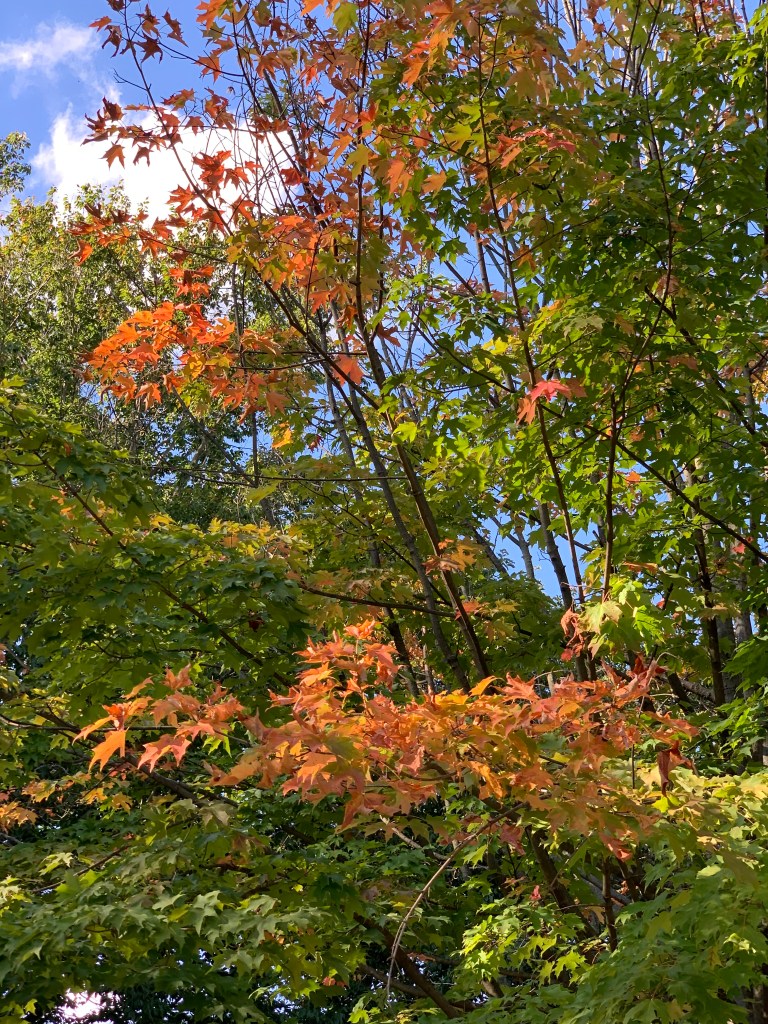
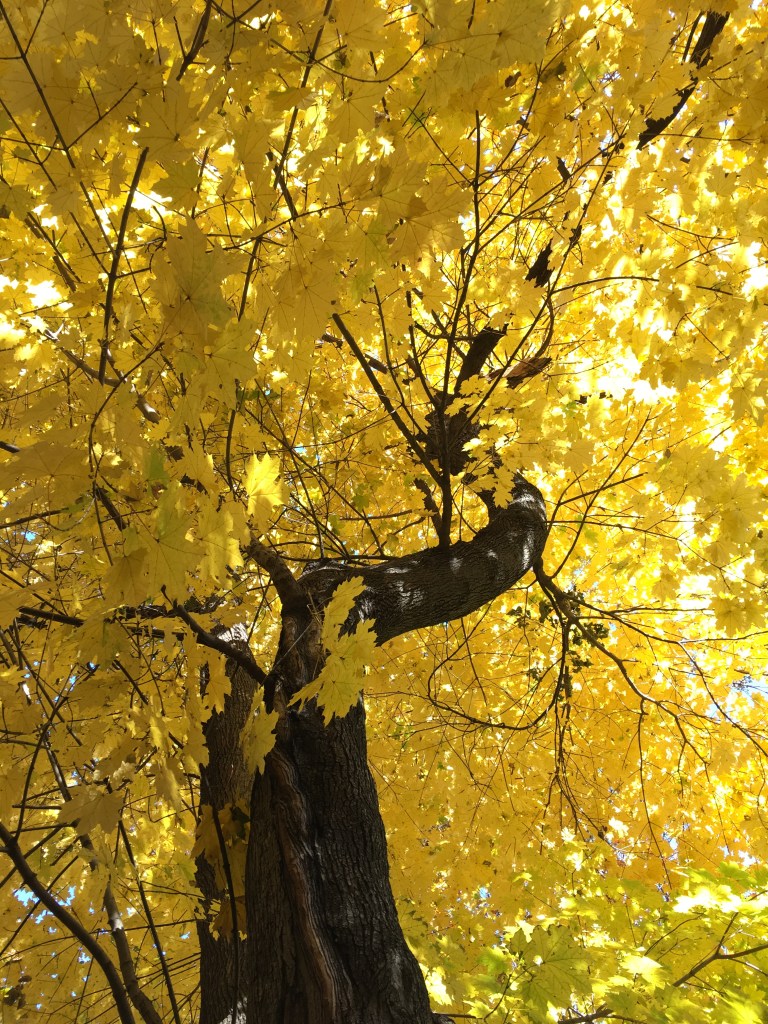
Here are some pictures of trees that are under summer foliage:
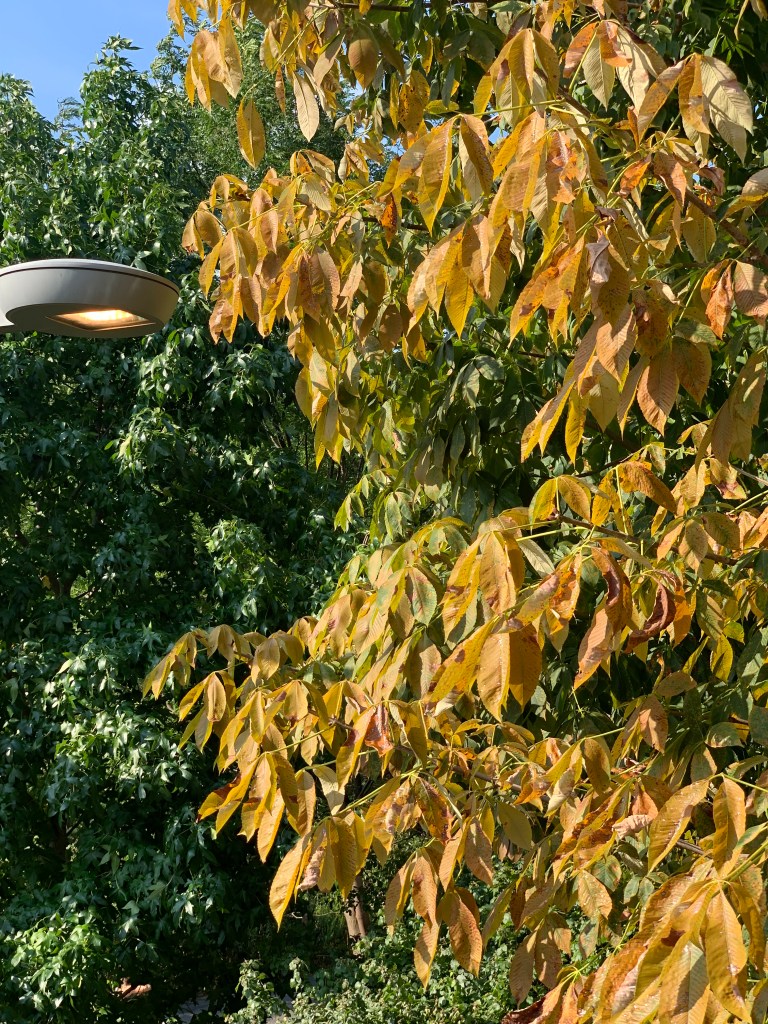
Meanwhile, early fall colors are emerging in a handful of Brooklyn trees:
Factors Influencing Fall Foliage
The vibrant hues of autumn foliage are a result of various environmental conditions. As days shorten and temperatures cool, these factors play a critical role in determining when leaves change color and eventually fall. While weather is a significant influence, understanding foliage progression conditions can help predict peak foliage seasons in different regions.
Sunlight: The amount of sunlight a leaf receives is a primary determinant of its color. Chlorophyll, the pigment responsible for the green color, requires sunlight to produce. As daylight decreases in autumn, chlorophyll production slows, revealing the underlying pigments of red, orange, and yellow.
Soil Type: The acidity or alkalinity of the soil can also impact fall colors. Leaves growing in acidic soil often exhibit red or purple hues, while those in alkaline soil tend to be yellow or orange.
Temperature: A combination of cool nights and warm days is optimal for producing vibrant fall colors. Extreme temperatures, either too hot or too cold, can diminish the intensity of the colors.
Leaf Moisture: Dry leaves tend to change color more rapidly than wet leaves. Adequate moisture is essential for maintaining leaf health and vibrant colors.
Don’t miss the latest updates, and subscribe now:
Visit our Instagram and watch our stories to get more live updates.






























































 NYC SEASON WATCH