New York City is changing, but it is not at peak yet. As of October 17, the city is showing early pockets of yellow, red and orange while much of the canopy remains green. The stronger color is north and west of the city: the Catskills are mostly at peak, New Paltz and parts of the mid-Hudson Valley are at peak, and Bear Mountain is near peak.
This NYC fall foliage report combines New York State field observations, Central Park’s arborist-updated tracker, current reports from botanical gardens and official foliage reports across the Northeast. The goal is simple: show you what is actually changing now, which trees are leading the transition and where your best color is this weekend.
Short on time? Let our AI pull the absolute bottom line of this guide for you in seconds.
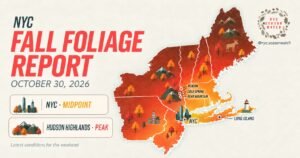

Report date: October 17, 2026 · Conditions covered: October 14–17 · Percentages describe foliage change reported at specific observation points, not every tree in a county or park.
NYC Fall Foliage Report at a Glance
| Location | Current stage | What the latest report shows |
|---|---|---|
| Central Park | Early / changing | More than 20% change; yellow leads, with touches of red. |
| Lower East Side | About 30% | Mostly yellow foliage. |
| Jackson Heights | About 15% | Bright touches of fall color within a mostly green streetscape. |
| Westchester | About 30% | Bright color is appearing, but the county is not at peak. |
| Bear Mountain | Near peak | More than 60% change with yellow, orange and hints of red. |
| New Paltz | Peak | 100% change with brilliant orange, red, yellow and gold. |
These figures come from the I LOVE NY report for October 14–20, which is compiled from more than 100 field observers. “Peak” means the best overall appearance at that location, taking color, brilliance and leaf drop into account.
What Is Changing in New York City?
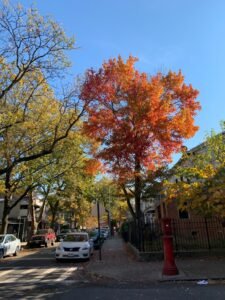
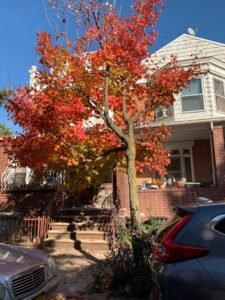
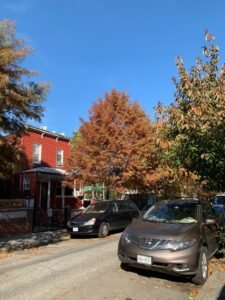
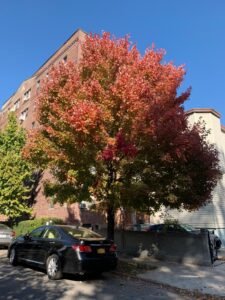
The city is in a transitional stage rather than a broad peak. That distinction matters: you can already find individual trees and small groves with excellent color, but wide views will still contain a large amount of green.
Central Park: Start in the North Woods, The Pool or The Ramble
The Central Park Conservancy’s live foliage tracker, updated by the arborists who care for the park’s 19,000 trees, currently marks four areas as Changing:
- North Woods: The 40-acre woodland includes scarlet oaks, red maples and black cherry trees. This is our first choice for a foliage-focused walk right now.
- The Pool: Look for a mixed transition among bald cypresses, hickories, red and sugar maples, sweetgums and tupelos, with reflections adding color even before the entire canopy changes.
- North Meadow: Dogwoods, sugar maples and hickories are part of the surrounding canopy.
- The Ramble: The woodland is beginning to change, and Tupelo Meadow is the key place to watch for the tupelo’s scarlet display.
The tracker still marks Great Hill, the Reservoir, The Mall and Literary Walk, and Hallett Nature Sanctuary as “No Change.” That helps explain why photos taken on the same day can look like different seasons: Central Park changes by habitat and tree species, not as one uniform canopy.
Which NYC Trees Are Turning First?
The current pattern is consistent with the mix of trees in Central Park’s changing zones. Red and sugar maples, black tupelo, dogwood, hickory, sweetgum and black cherry are the main trees to inspect for the first strong reds, oranges and yellows. At The Pool, bald cypress will add bronze as its needles progress.
Several of the park’s signature late-season displays are still ahead. The Great Hill’s American elms and pin oaks, the Reservoir’s cherry trees, The Mall’s American elm canopy and Hallett’s ginkgos are all located in zones still marked “No Change.” Oaks often extend the season with russet, bronze and deep red, while ginkgos provide one of the city’s last major waves of gold.
This does not mean every maple is colorful or every oak is green. Street exposure, soil moisture, shade, species and the health of an individual tree can move its timing forward or back.
What About the Bronx, Brooklyn and Queens?
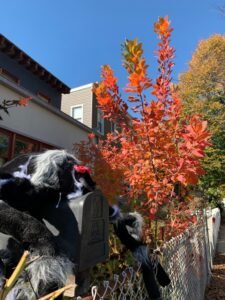
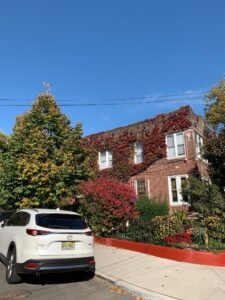
The strongest quantified city observations available this week are for Central Park, the Lower East Side and Jackson Heights. The New York Botanical Garden says visitors can now find the first red, orange and yellow leaves across its grounds, which supports an early-stage reading for the Bronx rather than a peak call.
At Brooklyn Botanic Garden, the best species to monitor are black tupelo, sweetgum, sumac and maples in the Native Flora Garden, Woodland Garden and Maple Grove. The Garden’s fall highlights guide explains where each display develops, but it does not currently provide a percentage-based live report. We are therefore not labeling Brooklyn or Prospect Park as peak without stronger dated evidence.
Where Is Peak Fall Foliage Near NYC?
If you want a fuller display this weekend, the strongest verified color has moved into the Catskills and the mid-Hudson Valley.
Catskills: Mostly Peak
New York State observers report peak color in much of the Catskills. Colchester, Roscoe and Downsville are at 90% change and peak; Hunter and Cornwallville are at 100% and peak; Forestburgh is above 95% and peak. Higher elevations around Hunter and Windham are starting to move just beyond peak, so this is a “go now” weekend rather than a trip to postpone.
Hudson Valley: Peak in New Paltz, Poughkeepsie and Newburgh
- New Paltz: 100% change and peak.
- Newburgh: 90% change and peak.
- Poughkeepsie: 75% change and peak.
- Bear Mountain: More than 60% change and near peak.
- Cold Spring: 40% change and near peak, with the strongest color at higher elevations.
- White Plains and Jefferson Valley: About 30% change.
For a day trip, New Paltz offers the strongest confirmed overall color. Bear Mountain is closer and already worthwhile, but it is not as advanced as the peak locations farther north.
Long Island: Highly Variable
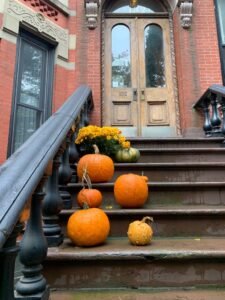
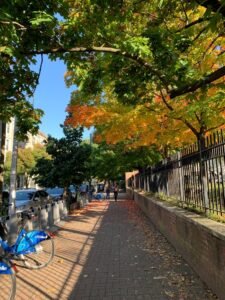
Long Island is a reminder that one regional label can be misleading. Mill Pond Park in Wantagh is reported at 70% and peak, and the trees around the lake at Belmont Lake State Park are also at 70% and peak. Yet nearby parkways and many golf-course landscapes remain only 5–20% changed. Choose a specific verified park instead of driving east and expecting continuous peak color.
Northeast Fall Foliage Update: October 17, 2026
Vermont: Peak to Just Past Peak
The Vermont Department of Forests, Parks and Recreation report for October 14 says most of the state is at peak or just past peak. Northern Vermont is past peak by the state’s classification, although many leaves and significant color remain. The best current drives include Route 100 from Wilmington toward Killington, Route 9 in southern Vermont and the White River Valley loop through Stockbridge, Bethel and Randolph. Maples and birches are supplying much of the orange and yellow.
New Hampshire: Follow the Color South
New Hampshire’s official October 16 report places the Great North Woods past peak and the White Mountains at peak to past peak. The Lakes Region is around 75% and peak, Dartmouth–Lake Sunapee and Monadnock are at 75–90%, the Merrimack Valley is at 65–80%, and the Seacoast is at 45–60%. For the freshest broad color, look south rather than driving to Pittsburg or the far north.
Maine: A Last-Chance Coastal and Downeast Trip
Maine issued its final seasonal report on October 14. The state says leaves are letting go and the 2026 foliage season is winding down. Northern and western Maine are no longer the safest choice for a foliage-first journey. Coastal and Downeast routes can still provide remaining color, with the official report highlighting the Bold Coast and the Camden area for a final autumn outing. Read the latest Maine foliage report before making a long drive.
Massachusetts: Near Peak West, Still Developing East
On-the-ground reports published by UMass Extension on October 16 place the Berkshires near peak and the Pioneer Valley at or just past peak. Central Massachusetts is around midpoint with more color ahead. In Boston, red and sugar maples, birches and healthy flowering dogwoods are showing color; the North Shore has a strong mix of yellow, red and orange, while southeastern Massachusetts and Cape Cod remain later-season options.
Pennsylvania: The Poconos Are at Peak
The Pennsylvania DCNR report for October 15–21 places Monroe County at full peak, with Pike County still colorful but declining. Oaks are finally adding deep red while hickory, birch and walnut supply gold, and red maples are showing brilliant red and orange. Farther south, Bucks and Northampton counties are approaching peak, while Philadelphia, Montgomery, Chester, Delaware and several neighboring counties are just starting.
New Jersey: Peak in the Northwest, Early Farther South
A current summary of the New Jersey State Parks and Forest Service map for October 16 places Sussex County, the Passaic Highlands and the western edge of Bergen County at peak. High Point, Stokes, Allamuchy and the northern Highlands are the strongest choices. Central Jersey, the Shore and South Jersey show some change but have more color ahead. See the October 16 New Jersey map summary and recheck the state’s newest Friday map before traveling.
Where Should You Go This Weekend?
- For the strongest verified color from NYC: Choose New Paltz, Newburgh or the Catskills. Go now; several higher locations are already edging past peak.
- For a closer day trip: Choose Bear Mountain. It is near peak, has limited leaf drop in the latest report and should offer a stronger landscape than the city.
- For Pennsylvania: Choose Monroe County and the Poconos. This is the region’s full-peak weekend.
- For New Jersey: Choose the northwest Highlands. Save central and southern New Jersey for a later update.
- For an easy city walk: Choose the North Woods, The Pool and The Ramble. Visit for the progression, not for a wall-to-wall peak display.
What Happens Next in NYC?
The city’s display should become noticeably broader as maples, tupelos, dogwoods, hickories and sweetgums continue to change. The next major layer will come from cherries, elms and oaks, followed later by the intense yellow of many ginkgos. Because wind and rain can shorten the best color on trees that have already turned, the most useful strategy is to follow individual parks rather than wait for one citywide “perfect day.”
Based on the current official readings, the coming one to three weeks remain the most promising period for New York City. This is an observational window, not a guaranteed peak forecast. We will update the picture as new state and park reports arrive.
How We Verify This NYC Fall Foliage Report
We prioritize dated field observations from state forestry and tourism agencies, park arborists, botanical gardens and extension horticulturists. Public photos and community reports are useful supporting evidence only when the location and capture date can be verified. We do not use an undated reel or an old photo as proof of current conditions.
Different trackers also use different definitions. A percentage may refer to the amount of color change, while “peak” can include brilliance and leaf drop. That is why this report keeps the original wording from each source and avoids treating every state’s scale as identical.
NYC Fall Foliage Report: Common Questions
Is Central Park at peak fall color?
No. Central Park is changing, with more than 20% foliage change in the latest New York State report. The park’s own tracker marks North Woods, The Pool, North Meadow and The Ramble as changing, while several famous areas remain at “No Change.”
Where is peak foliage closest to New York City?
Bear Mountain is near peak and is one of the closest strong options. New Paltz, Newburgh and Poughkeepsie have verified peak conditions farther north in the Hudson Valley.
Is it too early for fall foliage in NYC?
It is too early for a citywide peak, but not too early to find color. Northern Central Park and individual early-changing trees already provide worthwhile pockets of yellow, orange and red.
Which tree species are changing first in NYC?
Current changing areas contain red and sugar maples, black tupelo, dogwood, hickory, sweetgum and black cherry. Many elms, oaks, cherries and ginkgos in the park’s “No Change” zones should contribute later waves of color.
When will NYC fall foliage peak in 2026?
No official source can guarantee one peak date for the entire city. The present stage points toward late October into early November as the stronger viewing window, with each park and tree species progressing on its own schedule.
Sources and method: Conditions were reviewed on October 17, 2026. Primary sources include I LOVE NY, the Central Park Conservancy, Vermont Tourism and the Vermont Department of Forests, Parks and Recreation, Visit New Hampshire, the Maine Department of Agriculture, Conservation and Forestry, UMass Extension and Pennsylvania DCNR. New Jersey conditions are based on a dated summary of the state’s October 16 field map. Conditions can change quickly after wind, rain or a cold night; check park notices and the newest report before a long trip.

Hi, I’m the creator behind NYC Season Watch. As a local resident, I spend my weekends capturing the magic of the city, whether that’s during Summer, Winter, Spring or Fall. My goal is to give you honest, actionable guides so you can make the absolute most of every season in this beautiful city.