New York City has reached the middle of its fall color transition, while some of the strongest foliage of the season is now within an easy day trip. For the weekend of October 31–November 1, Bear Mountain is at peak, Beacon is at peak, Cold Spring is near peak to peak, and several Long Island parks are showing their best color. Central Park is visibly changing but has not reached a broad peak.
This NYC fall foliage report combines the newest I LOVE NY field observations, Central Park’s arborist-updated tracker, official park alerts, regional forestry reports and current weekend conditions. It is designed to answer two questions: what is changing in the city now, and where should you go for the best color this weekend?
Short on time? Let our AI pull the absolute bottom line of this guide for you in seconds.
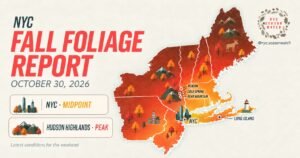
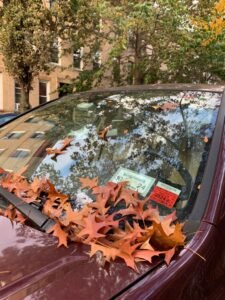

Report published: October 30, 2026 · Weekend covered: October 31–November 1 · Latest field-report window: October 28–November 3. Percentages describe reported change at specific observation points, not every tree in an entire park, borough or county.
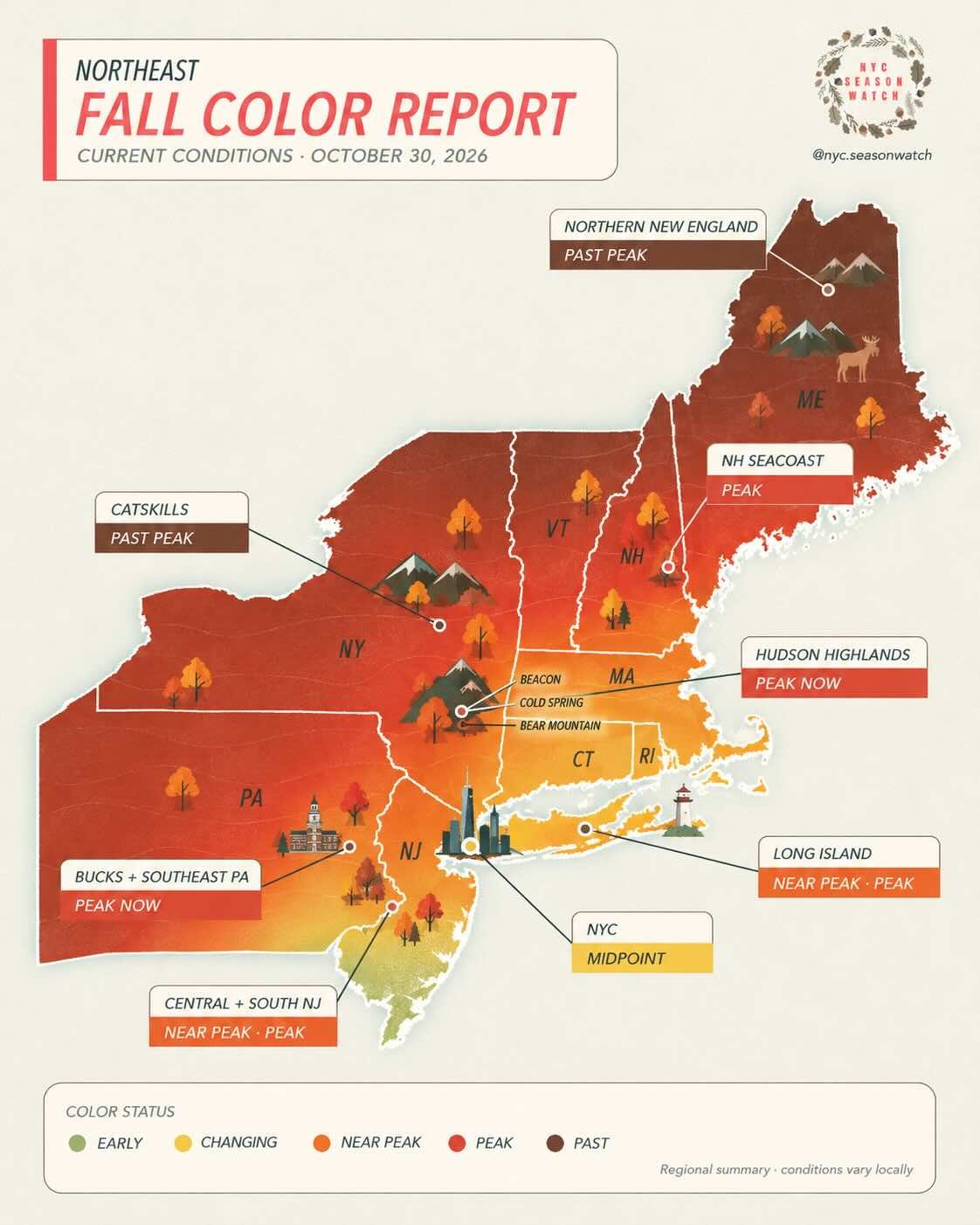
NYC Fall Foliage Report at a Glance
| Location | Current stage | What to expect |
|---|---|---|
| Central Park | Changing | All eight tracked areas are changing; expect strong pockets within a mixed green-and-color canopy. |
| Lower East Side | About 50% | Yellow is the dominant reported color. |
| Jackson Heights | About 50% | Bright yellow, orange and red with touches of purple. |
| Westchester | 50% · Near peak | Bright orange and yellow with some leaf drop. |
| Bear Mountain | 100% · Peak | Yellow and orange lead, with touches of red and purple. |
| Cold Spring | Up to 80% · Near peak to peak | Bright hillsides and Hudson River views, with some droppage. |
| Beacon | 70% · Peak | Mount Beacon and the surrounding Highlands are especially colorful. |
| Long Island | Near peak to peak | The strongest verified displays are in specific Nassau and western Suffolk parks. |
The statewide figures above come from the I LOVE NY report for October 28–November 3, compiled from more than 100 field observers. I LOVE NY defines “peak” as the best overall appearance at that reporting location after considering transition, brilliance and leaf drop.
NYC Fall Foliage Report: Is New York City at Peak?
No—not citywide. New York City is at the midpoint of its seasonal change. That means a walk can already produce excellent individual trees, colorful blocks and small groves, but wide views will still contain green. It also means the strongest broader display in many city parks is likely still ahead.
The current I LOVE NY observations place both the Lower East Side and Jackson Heights at approximately 50% change. The Lower East Side report is dominated by yellow; Jackson Heights has a broader mix of yellow, orange, red and purple. These two points support the midpoint reading in this NYC fall foliage report, but they should not be treated as a precise percentage for all five boroughs.
Central Park: Every Tracked Area Is Changing
The Central Park Conservancy’s live foliage tracker currently marks all eight monitored areas as Changing:
- North Woods
- Great Hill
- The Pool
- North Meadow
- Jacqueline Kennedy Onassis Reservoir
- The Ramble
- The Mall and Literary Walk
- Hallett Nature Sanctuary
None of these areas is marked peak yet. The important change since our October 17 NYC fall foliage report is that the transition now extends across the entire tracker. Great Hill, the Reservoir, The Mall and Hallett have joined the areas already changing earlier in the month.
The Best Central Park Route This Weekend
For the most varied current display, begin at The Pool near West 100th Street, continue through Great Hill and the North Woods, and finish near Harlem Meer. This route combines maples, hickories, tupelos, bald cypresses, black cherries, scarlet oaks, pin oaks and American elms. It offers more species diversity than waiting beside one famous tree or one open lawn.
For a classic central-park composition, choose the Ramble and the Lake. Tupelo Meadow can supply intense red while surrounding trees remain at different stages. The Mall is now changing, but its famous continuous golden elm canopy should not be assumed to be at full peak yet.
Where Else to Look Inside NYC
Because the city is at midpoint, northern and more wooded parks remain strong choices. Inwood Hill Park combines mature red oaks and tulip trees with Hudson and Palisades views. Fort Tryon Park offers elevated views toward the New Jersey cliffs, which are farther along than many Manhattan street trees. In the Bronx, the New York Botanical Garden and Wave Hill provide broad tree collections where maples, tupelos, dogwoods, hickories and other early-to-mid-season species can create concentrated displays.
In Brooklyn and Queens, look for black tupelo, sweetgum, sassafras, dogwood and maples for the strongest early color. Oaks and ginkgos will help extend the display later. Our guide to the best places to see fall foliage in NYC covers Central Park, Inwood Hill Park, Green-Wood Cemetery, botanical gardens and other reliable city locations.
NYC Fall Foliage Report: Where Is Peak This Weekend?
1. Bear Mountain: The Strongest Close-to-NYC Peak
Bear Mountain has reached 100% change and peak. The latest report describes average-to-bright yellow and orange leaves with touches of red and purple. This is the clearest choice for anyone who wants a full Hudson Highlands landscape without driving several hours north.
Expect a busy park during a dry peak weekend. Arrive early, check the New York State Parks page for current notices, and carry a backup plan. The view from Perkins Memorial Tower Road and the lakeside landscape near Bear Mountain Inn can deliver broad color without requiring the most difficult trails.
2. Cold Spring: Near Peak to Peak and Easy by Train
Cold Spring is reporting up to 80% change and near-peak-to-peak conditions. The hills and Hudson River views are showing bright yellow, deep red, orange and purple, with some leaf drop. Routes 301, 403, 9, 9D, 9W and the Taconic State Parkway are specifically highlighted for color.
Cold Spring is a strong car-free choice on the Metro-North Hudson Line. For a relaxed trip, combine the riverfront and village streets. For a trail day, choose a route that matches your fitness and available daylight; the steep Hudson Highlands trails should not be treated as casual walks.
3. Beacon: Peak Color Around Mount Beacon
Beacon is at 70% change and peak, with Mount Beacon and the surrounding Hudson Highlands described as especially radiant. It is another practical Metro-North option and combines foliage with a walkable Main Street and riverfront.
For many readers, Beacon is the most balanced trip this weekend: verified peak conditions, no need to drive, and several ways to enjoy the day without committing to a strenuous hike.
4. Rockland and Lower Hudson Valley
Peak color is also reported at Pomona, which is at 100% change, and at Van Houten Farms in Orangeburg, which is at 85% with bright orange, red and purple. Cornwall-on-Hudson is at 70% and peak. Newburgh and Poughkeepsie are now past peak, although bright color remains in places.
This southward movement is the main story of the week: destinations that were the best choices earlier in October are fading, while the lower Hudson Valley has become the center of the display.
5. Westchester: Near Peak Without the Long Drive
White Plains and Jefferson Valley are at roughly 50% change and near peak, with bright orange, yellow and some leaf drop. Westchester will not deliver the same mountain panorama as Bear Mountain, but it is a practical option for a shorter outing and should continue to improve.
Long Island Fall Foliage: Peak Color Is Arriving
Long Island is one of the best alternatives to the Hudson Valley this weekend, but the strongest color is concentrated in specific parks rather than spread uniformly across the island.
- Hempstead Lake State Park: More than 80% change and peak, with cranberry, cherry red, goldenrod, rust and tangerine.
- Manhasset Valley Park and Whitney Pond Park: 75% and peak, with red, purple, yellow and orange.
- Gerry Park in Roslyn: 80% and peak to past peak, with some bare trees.
- Nassau County Museum of Art and Preserve: 75% and near peak to peak, especially golden yellow and orange.
- Bethpage State Park: 90% and near peak around the clubhouse lots; the golf courses and bike trails are closer to 50%.
- Cold Spring Harbor State Park and Caleb Smith State Park: Part of a North Shore zone at about 80% and near peak, with very bright red and yellow.
- Belmont Lake State Park: 90%, with a mix of peak and past-peak trees around the lake and strong color along trails and picnic areas.
If you want the safest Long Island choice for broad color, use a named park from this list rather than relying on a general drive east. The parkways are showing a mixture of midpoint, near-peak and peak foliage depending on location.
New Jersey and Pennsylvania Fall Foliage Update
New Jersey: Shift the Focus to Central and Southern Areas
Northwestern New Jersey is moving past peak, although color remains. Current regional observations place the stronger new display in central and southern New Jersey, where conditions range from near peak to peak. Ringwood, Long Pond and the Wanaque-area Highlands can still offer color, but readers seeking the freshest progression should look farther south.
A practical close-to-NYC option is Cheesequake State Park in Matawan, where New Jersey State Parks is hosting a foliage hike on Saturday. The current NJ Hiking field summary also recommends central and southern New Jersey for the weekend while noting that northern parks can retain worthwhile color after their official peak.
Pennsylvania: Bucks County and the Southeast Are at Peak
The Pennsylvania DCNR report for October 29–November 4 places Bucks, Montgomery, Philadelphia, Delaware, Chester, Northampton, Lehigh and Berks counties at peak. Hickories and maples are providing the strongest color, with oaks joining the display.
The Poconos are now a late-season choice rather than the first recommendation. Monroe and Pike counties are still colorful but declining, and the official report says the best remaining color there may last only a few more days. If traveling from New York City, Bucks County and the Delaware River corridor now make more seasonal sense than driving farther north into the Poconos.
What About Vermont, New Hampshire and Maine?
For a foliage-first trip from New York City, there is no longer a good reason to chase color far north. Most of Vermont is past peak, with late oak, beech and aspen color remaining mainly in central and southern sections. Maine’s official weekly reporting season ended on October 14, and the statewide show is winding down.
New Hampshire is the exception in one limited area: the official October 27 report places the Seacoast at peak, including Exeter, Hampton and Rye. The Great North Woods and White Mountains are past peak. Unless New Hampshire itself is the destination, the Hudson Valley, Long Island, New Jersey and southeastern Pennsylvania provide stronger choices from NYC this weekend.
Weekend Weather, Marathon Closures and Daylight
The regional forecast favors a dry, cool weekend. Bear Mountain is expected to be mostly sunny and cooler on Saturday, with a high in the upper 50s, followed by a partly sunny and somewhat milder Sunday. Long Island is also expected to remain dry. Conditions can change, so check the National Weather Service New York forecast before a long drive or exposed hike.
- Saturday, October 31: The better day for Central Park if foliage is your priority. Some park drives and the southern loop have morning closures connected to marathon preparations.
- Sunday, November 1: The NYC Marathon affects roads, bridges, buses, Central Park entrances and the finish-line area. Use public transportation and allow extra time.
- Clock change: Daylight saving time ends at 2:00 a.m. Sunday. Clocks move back one hour.
- Early sunset: Sunset in New York City is around 4:52 p.m. Sunday. Start hikes early and do not plan a mountain descent around the old clock time.
For the latest citywide closure information, use the Notify NYC advisory. The marathon makes Sunday a memorable day in the city, but it also makes it a poor day to improvise a driving route across the five boroughs.
Where Should You Go This Weekend?
- For the strongest verified peak close to NYC: Bear Mountain.
- For a car-free peak day trip: Beacon.
- For river views, village streets and near-peak hills: Cold Spring.
- For a local NYC foliage walk: Central Park on Saturday, especially The Pool, Great Hill and North Woods.
- For Long Island: Hempstead Lake, Manhasset, Roslyn, Bethpage or Cold Spring Harbor.
- For Pennsylvania: Bucks County or another southeastern county currently marked peak.
- For New Jersey: Choose central or southern parks; treat the northwest as late-season color.
Which Trees Are Leading the NYC Color Change?
The current reds, oranges and yellows are coming mainly from maples, black tupelo, sweetgum, dogwood, hickory, sassafras and black cherry. Bald cypresses around water are moving toward bronze. These species and locations can create peak-looking photographs even while the wider city remains at midpoint.
American elms, many oaks and ginkgos will help shape the next phase. Oaks can hold russet, bronze and deep red well into November. Ginkgos often create one of the city’s last dramatic waves of gold, sometimes dropping their leaves within a short window after a cold night.
What Happens Next in New York City?
The latest evidence points to a stronger city display in early November. That does not guarantee one synchronized peak across all five boroughs. Central Park alone contains thousands of trees growing in different soils, exposures and habitats, and the Conservancy’s tracker shows how the park progresses area by area.
The practical strategy is to follow individual parks and tree groups rather than wait for one perfect citywide date. This weekend is already worthwhile for color. The next NYC fall foliage report will show whether the city’s maples, elms and oaks broaden the display enough to move key locations from “Changing” to “Peak.”
How We Verify This NYC Fall Foliage Report
NYC Season Watch prioritizes dated observations from state tourism and forestry agencies, park arborists, botanical gardens, extension horticulturists and official park alerts. Current public photos and community reports can support the picture when their place and date are clear, but an undated reel or a photograph from a previous season is not treated as proof of current conditions.
Trackers also use different scales. A percentage usually describes the amount of foliage that has changed, while “peak” evaluates the overall quality of the display and may account for brilliance and leaf drop. A location can therefore be called peak at 70% or be 100% changed but already past peak.
NYC Fall Foliage Report: Common Questions
Is Central Park at peak fall color this weekend?
No. All eight areas on the Central Park Conservancy’s tracker are marked “Changing,” but none is marked peak. Expect increasing color mixed with green.
Where is peak fall foliage closest to New York City?
Bear Mountain is at 100% change and peak. Beacon is at 70% and peak, while Cold Spring is up to 80% and near peak to peak.
Can I see peak foliage without a car?
Yes. Take Metro-North’s Hudson Line to Beacon or Cold Spring. Beacon has verified peak conditions, and Cold Spring is near peak to peak.
Is Saturday or Sunday better for Central Park?
Saturday is the easier foliage day. The New York City Marathon finishes in Central Park on Sunday and brings extensive closures, rerouting and crowds.
When will NYC fall foliage peak in 2026?
No single date applies to the entire city. New York City is at midpoint as of October 30, and early November remains the strongest current window for a broader display.
Where is the best color on Long Island?
Hempstead Lake State Park is at peak, while Manhasset, Roslyn, Bethpage, Cold Spring Harbor and several other named parks are near peak to peak.
Sources and method: Conditions were reviewed on October 30, 2026. Primary sources include the I LOVE NY report for October 28–November 3, the Central Park Conservancy live tracker and alerts, New York State Parks, Pennsylvania DCNR, Visit New Hampshire, Vermont Tourism, Maine’s Department of Agriculture, Conservation and Forestry, the National Weather Service, NYC Notify and current regional field reports. Conditions can change quickly after wind, rain or a cold night; check park notices and the newest forecast before traveling.

Hi, I’m the creator behind NYC Season Watch. As a local resident, I spend my weekends capturing the magic of the city, whether that’s during Summer, Winter, Spring or Fall. My goal is to give you honest, actionable guides so you can make the absolute most of every season in this beautiful city.